
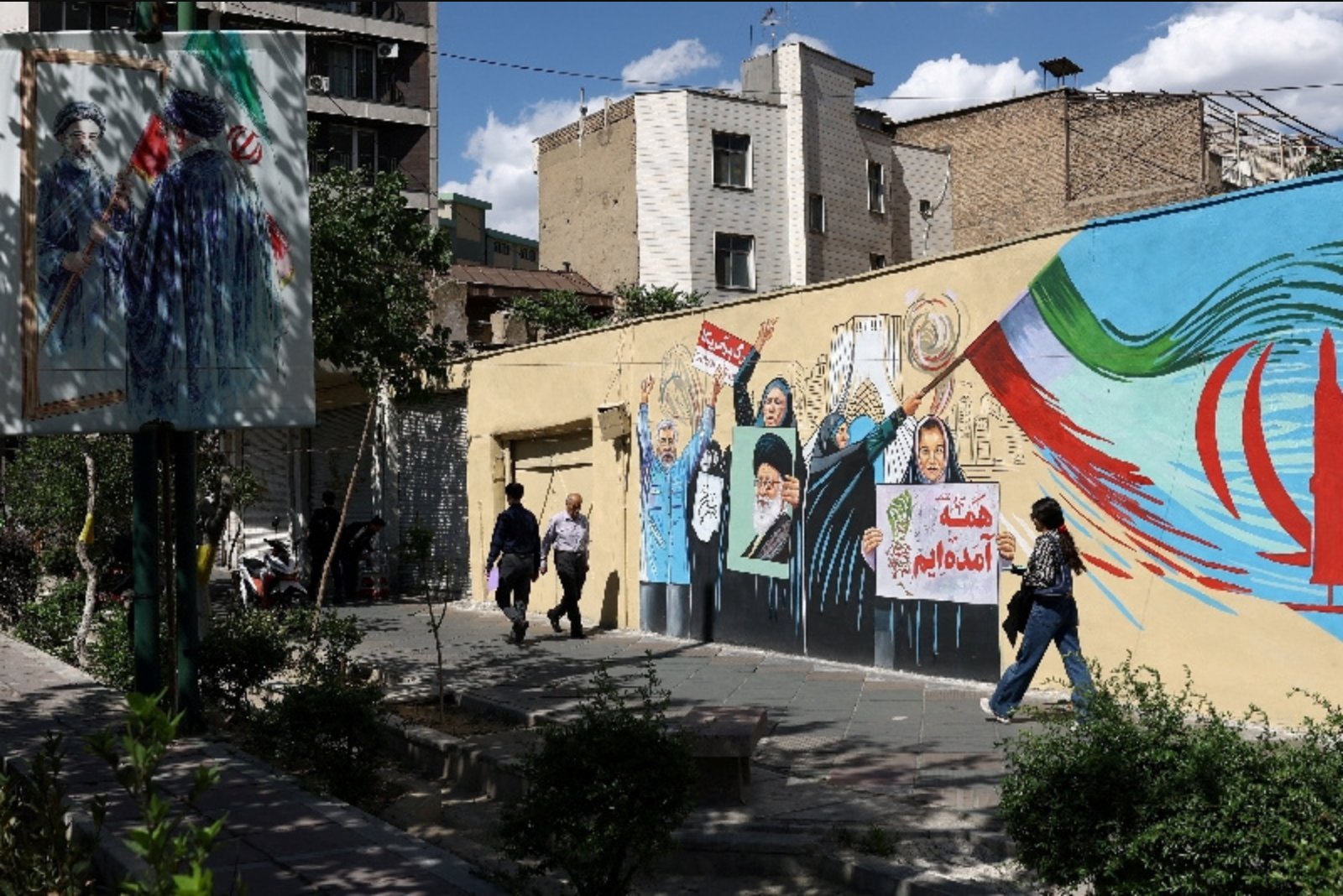
Three months on from coordinated U.S. and Israeli attacks on Iran, the situation between Washington and Tehran has settled into a stalemate that shows few signs of resolving itself. A U.S. blockade and Iranian control over the Strait of Hormuz have created a situation in which neither side is yielding, economic distress in Iran is deepening, and the risk of renewed military confrontation is on the rise.
Policymakers are increasingly focused not on if a deal will be struck but how long the current impasse can continue before a mistake - by Washington, Tehran, or a third actor - sparks fresh hostilities. Calls within the U.S. and Israeli establishments for additional strikes have continued to intensify, with some arguing that stepped-up pressure could erode Tehran's leverage and compel it back to negotiations. That argument, however, has strong detractors.
"There is one major problem with this theory: We have already tested it, repeatedly, and Iran did not capitulate," said Danny Citrinowicz, a senior researcher on Iran at Israel's Institute for National Security Studies and a former head of the Iran branch in Israeli Defense Intelligence. Citrinowicz's assessment points to the limits of coercion: despite sustained pressure, Iran has not surrendered its core positions.
One regional official described the present dynamic bluntly: "We're in a war of attrition with the prospect of a new U.S.-Israeli attack growing by the day." That view underscores how the conflict environment has shifted from episodic strikes to a prolonged contest over endurance - and control of strategic assets.
For Tehran, certain elements are not bargaining chips but foundational pillars of the regime's identity and survival. Iranian officials told interlocutors that concessions over the missile programme, nuclear capabilities, or command of the Strait of Hormuz would not be a compromise but a surrender. That framing helps explain why even extended military pressure has not altered Iran's declared red lines and why further escalation may fail to achieve the desired political outcomes.
Efforts to bridge the divide through indirect talks - mediated by Pakistan - have produced no tangible breakthroughs. Observers report that the negotiating gaps remain vast and that time is being used as a lever by both capitals rather than a pathway to concessions.
The United States' negotiating position calls for Iran to halt uranium enrichment for 20 years and to transfer its stockpiles of enriched material to the U.S. Iran, by contrast, is demanding an end to strikes against its territory, security guarantees, reparations for wartime damage and explicit recognition of its sovereign control over the Strait of Hormuz - terms that Washington has rejected. Officials from Iran's foreign ministry did not respond to requests for comment, and the U.S. State Department did not immediately reply to related inquiries.
President Donald Trump has ratcheted the rhetoric, warning Tehran that "the clock is ticking," and saying they "better get moving, FAST, or there won't be anything left of them." He further threatened that failure to reach a deal would bring "a very bad time" upon Tehran. The combination of tough public threats and uncompromising negotiation positions feeds into the sense of an escalating tension that neither side yet believes it can afford to back down from.
Ali Vaez of the International Crisis Group summarized the political deadlock succinctly: neither party has demonstrated a willingness to accept "the painful concessions" necessary to reach agreement. "Both believe time is on their side and they have the upper hand, and that perception is precisely what is making a deal impossible," he said.
The standoff plays out most ominously around one of the world's most vital maritime chokepoints. Before the war, the Strait of Hormuz was responsible for moving roughly 25% of global oil trade and about 20% of liquefied natural gas. With the waterway close to being sealed by Tehran's posture, the economic consequences are spreading through energy markets and supply chains.
Former U.S. State Department Iran official Alan Eyre, who participated in earlier talks with Iran, suggested that a negotiated settlement could be difficult to achieve. "These two sides will never reach a deal. Trump doesn't want to just win, he wants to humiliate Iran and be seen as having crushed Iran," Eyre said. Such assessments point to political objectives that complicate bargaining space and reduce the chance of compromise.
From Tehran's perspective, control of enriched uranium stocks and command of the Strait represent strategic assets central to national survival. A senior Iranian official emphasized that these elements are being used to guarantee national interests, and that capitulation is not an option. "We fight, we die, but we don't accept humiliation. Surrender is fundamentally incompatible with Iran's identity," he said, articulating a worldview in which symbolic and material sovereignty are intertwined.
Other Iranian voices framed the current situation as a type of victory in itself - not because Iran defeated the United States militarily, but because it has refused to bow to external demands. Weeks of strikes did not break Iran's determination, reinforcing the regime's view that its uranium stockpiles and control of Hormuz remain central to its deterrence calculus. The argument from this side of the debate is that more strikes would only hasten escalation while failing to alter the underlying calculations driving Iranian policy.
Yet even as Tehran projects defiance, sources close to Iran's establishment acknowledge a more complex reality at home. An extended "no war, no peace" condition is unattractive: inflation is rising, unemployment is worsening, and continued strikes on critical industries are eroding an already strained economy. That domestic stress creates incentives for Tehran to seek a preliminary settlement that would ease immediate economic pain.
Those Iranian interlocutors say Tehran is interested in an interim arrangement to end hostilities - proposing a reopening of Hormuz under Iranian oversight in return for lifting the U.S. blockade - as a first step before addressing more contentious matters like sanctions relief and long-term nuclear constraints. Washington, however, has maintained that ending the war must await subsequent talks on the broader issues.
On the nuclear dossier, Iranian sources indicate Tehran might be prepared to dilute its stockpile of 440 kg of highly enriched uranium or to transfer part of it overseas, preferably to Russia, with the stated intention of reclaiming it if Washington breached any agreement. The United States has declined that option. Iran is also reported to be pressing for a shorter enrichment halt than the U.S. demand of 20 years and for access to $30 billion in frozen assets. Washington, according to Iranian sources, has proposed releasing only one quarter of those assets on a staged timetable.
Control of the Strait is another stumbling block and one that analysts say could be harder to bridge than the nuclear question. Tehran is pushing for a new governance mechanism for Hormuz that would not revert to the pre-war status quo. Washington insists on unconditional reopening - without tolls or vetoes - and views any Iranian oversight as unacceptable. The dispute over maritime governance, former U.S. negotiator Aaron David Miller argues, will likely be the yardstick by which the success or failure of U.S. policy is ultimately judged.
Miller also warned that reopening the waterway absent a political settlement would, in his assessment, require a protracted American presence, potentially including ground forces on Iranian territory - a course that would be costly and politically fraught. Analysts such as Vaez contend there is no viable military fix for the Hormuz standoff short of that expensive option, suggesting negotiations remain the only practicable route out of the impasse.
Despite tactical gains by U.S. and Israeli forces, the strikes have not yielded a strategic knockout, according to Citrinowicz. "We didn't topple the regime - we have a more radicalised one. We didn't end Iran's missile capacity. And they still have the uranium," he said, summarizing the limited returns of a primarily coercive approach.
Citrinowicz cautioned that overestimating the leverage of pressure and underestimating Tehran's resilience carries acute risk. "It raises the risk that Washington once again enters a confrontation expecting coercion to produce capitulation, and discovers, too late, that the regime was prepared to absorb far more pain than anticipated," he said. That warning signals the potential for costly miscalculation if policymakers assume Iran will surrender under sustained pressure.
As the standoff continues, the strategic calculus on both sides appears driven by the dual beliefs that time favors their objectives. That mutual faith in endurance has produced a contest where neither party sees a clear incentive to make the painful compromises that would form the basis of a settlement. The result is a grinding contest centered on the Strait of Hormuz, with implications that already extend beyond the immediate battle space to global energy markets and economic stability.
Whether that impasse will be broken by diplomacy, further coercion, or a miscalculation remains uncertain. What is clear from the current posture is that the balance of risks is acute: prolonged economic strain inside Iran, mounting pressure for military options among some policymakers, and the persistent danger that missteps could cascade into broader conflict.