
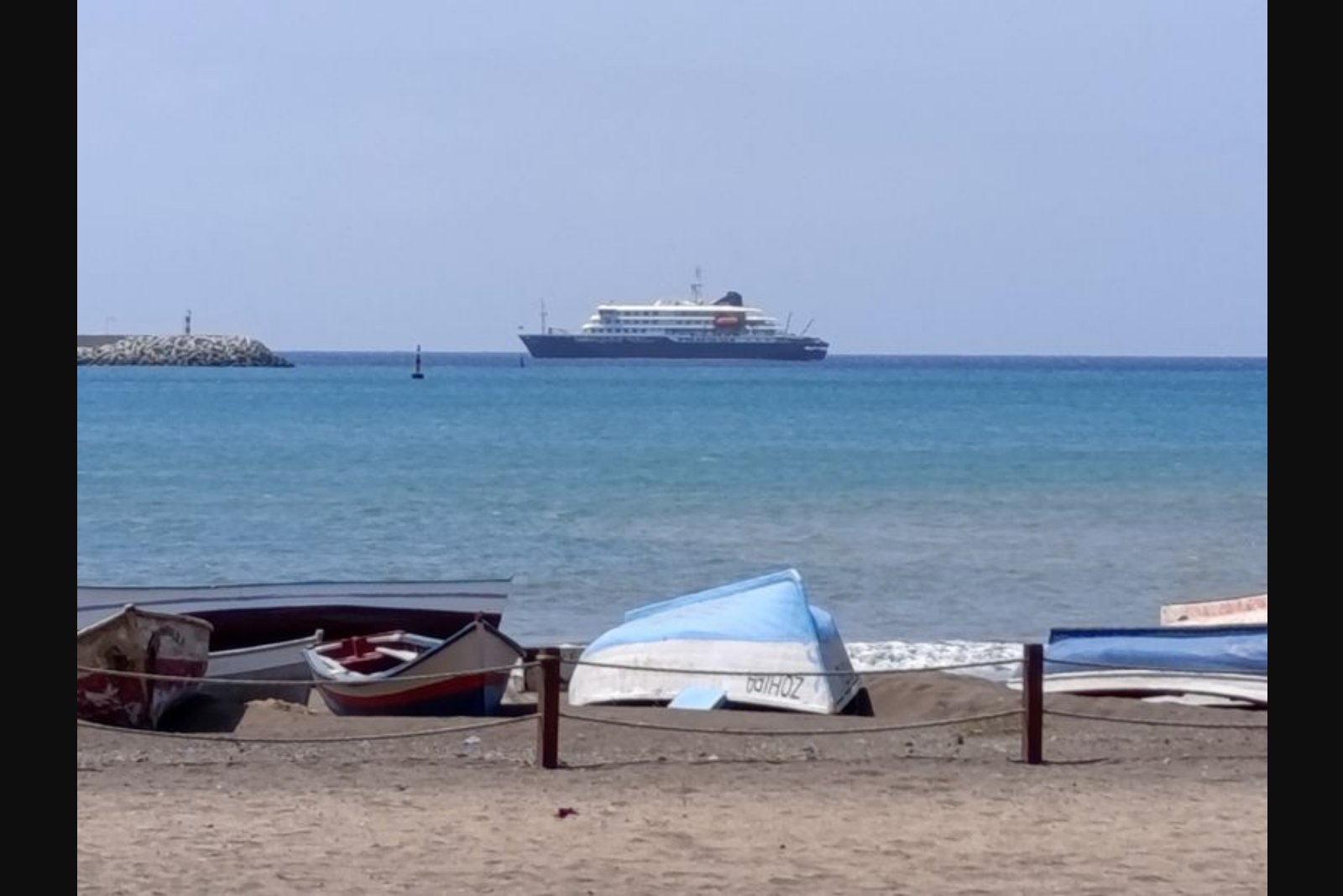
The United Nations health agency provided its most detailed account to date of a hantavirus outbreak linked to the Hondius, an expedition cruise ship currently being kept at sea in the Atlantic near Cape Verde.
According to the World Health Organization (WHO), two infections have been confirmed and an additional five cases are suspected among people who were travelling on the vessel. The seven cases encompass three deaths, one person in critical condition and three individuals exhibiting only mild symptoms.
The fatalities identified by authorities consist of a Dutch couple and a German national. Officials also reported that a British passenger was evacuated from Ascension Island and is receiving treatment in South Africa.
Oceanwide Expeditions, the operator of the Hondius, said in a statement that "the atmosphere on board m/v Hondius remains calm, with passengers generally composed." The company added that it is coordinating passenger screening and disembarkation and is weighing options to sail to either Las Palmas or Tenerife in Spain to facilitate those procedures.
WHO reiterated its assessment that the risk to the wider public is low. The agency noted that hantavirus is typically transmitted from infected rodents and only rarely passes between people.
Cape Verdean authorities have requested that the ship remain at sea as a precautionary measure while the situation is managed, officials said.
Authorities provided a timeline for the initial cluster of illness aboard the Hondius. The first passenger to fall ill, a Dutch man, died on April 11 as the ship was en route to Tristan da Cunha. His body remained aboard until April 24, when it was disembarked at St Helena; his wife accompanied the repatriation, according to Oceanwide Expeditions.
Three days after the repatriation, the Dutch man’s wife became unwell and later died. Around that same period another passenger, a British national, became seriously ill and was medically evacuated to South Africa. South African authorities have since confirmed that the British patient, who is being treated in a Johannesburg hospital, tested positive for hantavirus. The Netherlands has confirmed the virus in the Dutch woman who died.
Maritime tracking data cited by officials indicate that the Hondius has been visiting some of the most remote points on the globe, including Tristan da Cunha in the South Atlantic, situated between Argentina and South Africa. Company documentation shows the vessel departed Ushuaia in southern Argentina in March on a voyage marketed as an Antarctic nature expedition.
Berth prices for that voyage, as stated in the company’s materials, ranged from 14,000 to 22,000 euros ($16,000 to $25,000).
With roughly 150 people still on board, many of whom are British, American and Spanish nationals, Oceanwide Expeditions and public health authorities continue to manage screening and the logistics of disembarkation while monitoring the health status of passengers and crew. The WHO has emphasized the limited risk to the general population, attributing transmission primarily to rodent exposure rather than routine human-to-human spread.
As the situation evolves, officials and the ship operator have signalled that they are seeking appropriate ports for screening and care, balancing the need to protect public health with the logistics of moving a largely international passenger list from a remote vessel to shore-based medical support.