
Major Gulf bourses weakened in early trading on Tuesday after a series of drone and missile strikes intensified the confrontation over the Strait of Hormuz, a vital global energy chokepoint.
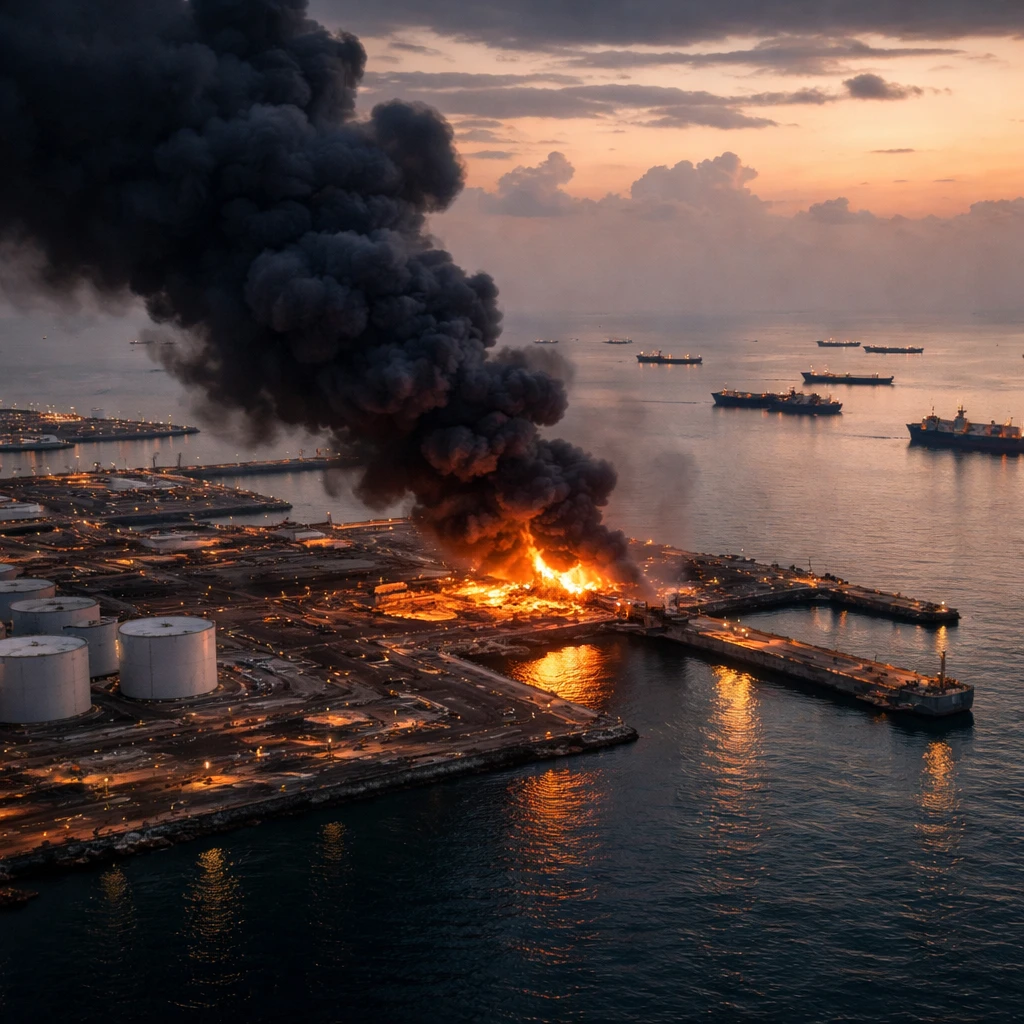
Officials said Iran launched attacks across the United Arab Emirates that included a strike sparking a fire at the Fujairah oil port. The UAE described the strikes as a serious escalation and stated that it reserved the right to respond.
Washington is working to reopen the Strait of Hormuz to relieve severe pressure on global energy supplies after Iran largely closed the passage following the start of the war with the U.S. and Israel on February 28. That effort to restore access underlines the strategic importance of maritime routes for energy flows in the region.
Fujairah plays a central role in the UAE's ability to move crude to overseas buyers while avoiding the Strait of Hormuz. The terminal sits at the receiving end of the Abu Dhabi Crude Oil Pipeline, which carries oil from inland fields to the Gulf of Oman, effectively bypassing the strait. The facility's function as an alternative export route makes any disruption there especially significant for energy shipments tied to the UAE.
Market reaction was visible in Dubai, where the primary share index fell 1.5% in early trade. Movers included toll operator Salik Company and property developer Emaar Properties, both of which were down about 2% and contributed to the broader decline.
The sell-off in Gulf equities followed heightened military activity in the region, with investors reacting to the risk that attacks on infrastructure and shipping lanes could further strain energy logistics. The immediate market moves reflected investor concern rather than newly reported changes in company fundamentals.
Summary
- Fighting intensified around the Strait of Hormuz after drone and missile strikes across the UAE, including an incident at Fujairah port.
- Dubai's main index declined 1.5%, with Salik and Emaar each sliding around 2%.
- Washington is attempting to reopen the Strait of Hormuz after Iran largely closed it following the start of the war with the U.S. and Israel on February 28.