
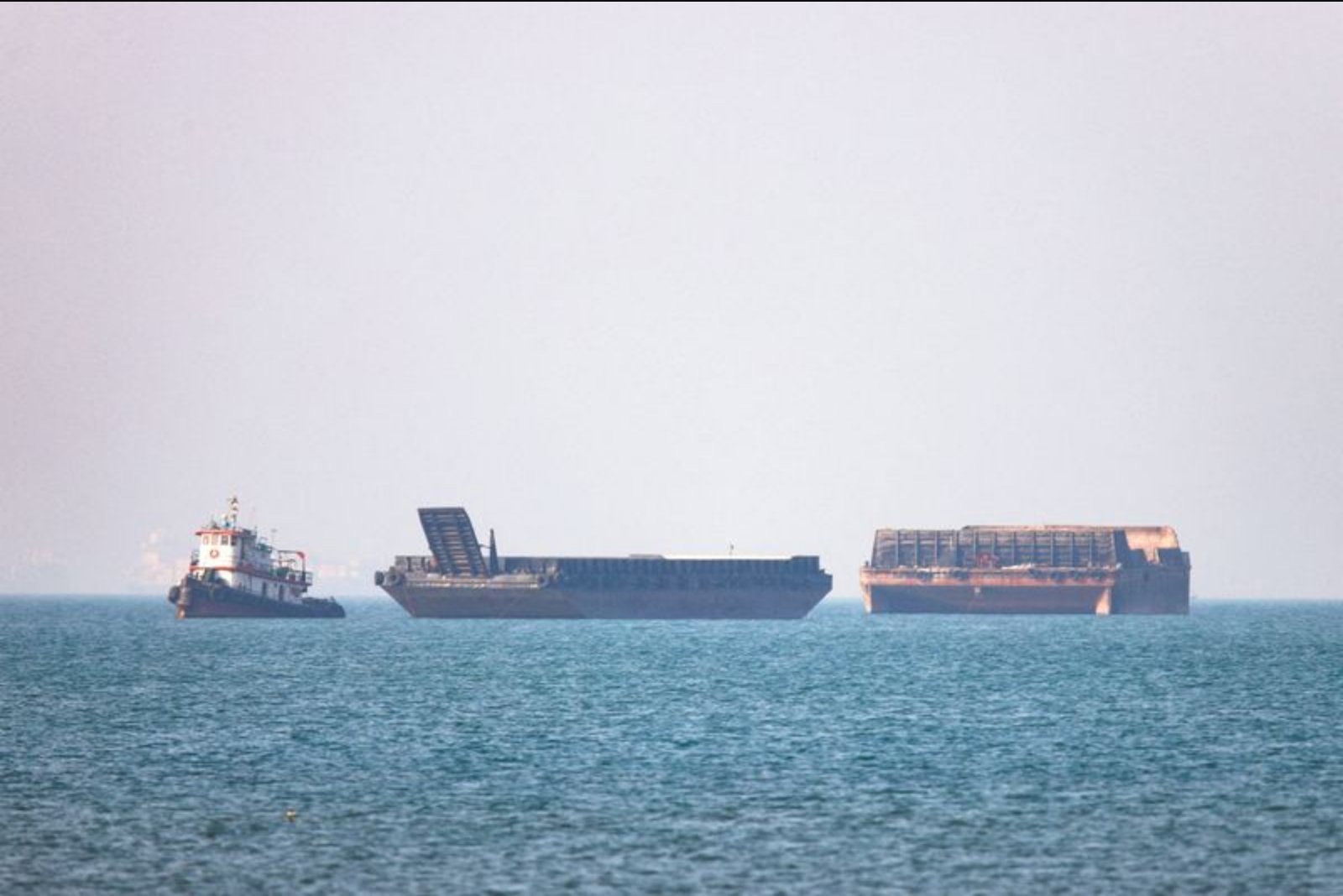
DUBAI/WASHINGTON, May 5 - The fragile ceasefire in the Middle East appeared to be unraveling on Tuesday as U.S. and Iranian forces undertook new military actions centered on the Strait of Hormuz, the narrow but strategically crucial channel through which large volumes of oil, fertiliser and other commodities move.
The U.S. military reported on Monday that its forces destroyed six small Iranian boats as well as cruise missiles and drones. The operations came after President Donald Trump ordered U.S. naval vessels to escort tankers caught in the contested waters, an initiative the administration has described as "Project Freedom."
Iranian parliamentary speaker Mohammad Baqer Qalibaf said in a social media post that breaches of a four-week-old ceasefire by the U.S. and its partners had endangered the security of shipping and energy transit. The strait has been effectively constrained since attacks by the U.S. and Israel on Iran on February 28, a disruption that has contributed to price increases in global markets.
Operational claims and competing narratives
Accounts from both sides diverged sharply. U.S. officials said two U.S.-flagged merchant vessels managed to transit the strait with the protection of Navy guided-missile destroyers, though the U.S. did not specify timing. Iran denied that any such crossings had occurred. Shipping company Maersk said the Alliance Fairfax, a U.S.-flagged vessel, left the Gulf via the Strait of Hormuz on Monday escorted by the U.S. military.
The commander of U.S. forces in the region stated that his fleet had destroyed six small Iranian boats. Iranian authorities disputed that account. Iranian media quoted a military commander asserting that U.S. forces had struck civilian boats, killing five civilians. Iran also said it had fired on a U.S. warship approaching the strait and forced it to reverse course; Iranian officials later characterized that firing as warning shots.
Independent confirmation of all events in the strait on Monday was not possible as the warring parties issued contradictory statements and the environment remained highly contested.
Maritime incidents and damage reports
Several commercial vessels reported damage or fires on Monday. South Korea said one of its merchant ships, the HMM Namu, suffered an explosion and a fire in its engine room while in the strait; no casualties were reported, and South Korean officials said it remained unclear whether the damage resulted from an attack.
Separately, the U.K. maritime security body UKMTO reported that two vessels had been struck off the coast of the United Arab Emirates, and the Emirati oil firm ADNOC reported that one of its empty oil tankers had been hit by Iranian drones.
Iranian posture and wider maritime control
Iran’s Islamic Revolutionary Guard Corps has asserted effective control over the narrow waterway, deploying the threat of mines, drones, missiles and gunboats. In turn, the U.S. has moved to impose a blockade on Iranian ports. Iranian authorities published a map they described as showing an expanded maritime area under their control, extending well beyond the strait to include extensive stretches of the UAE coastline.
During the day, reported drone and missile strikes inside the UAE included an attack that caused a fire at the port of Fujairah, a significant oil hub that sits outside the Strait of Hormuz and serves as one of the few Persian Gulf export routes that does not require transit through the strait. The UAE characterized Iranian strikes as a serious escalation and reserved the right to respond. Iran’s state television quoted military officials as saying the UAE had been struck in retaliation for what Iran called the U.S. military’s adventurism.
Diplomacy, proposals and intelligence assessments
Iranian Foreign Minister Abbas Araqchi said the events of Monday demonstrated that there was no military solution to the crisis. He indicated that peace negotiations had made some progress under Pakistani mediation and cautioned the U.S. and the UAE against becoming entangled in a protracted confrontation.
U.S. and Iranian officials have conducted one round of face-to-face peace talks, but efforts to arrange subsequent meetings have not succeeded. Iran has put forward a 14-point proposal that, according to Iranian state media, would postpone discussion of Iran’s nuclear energy and research programmes until after an agreement to end the war and resolve the shipping dispute. Iranian state media also said the U.S. had transmitted a response to that proposal via Pakistan and that Tehran was reviewing the reply. Neither side disclosed details of the exchange. President Trump said over the weekend he was still considering the Iranian proposal but said he would probably reject it.
U.S. officials said the latest American intelligence assessments indicate only limited damage to Iran’s nuclear programme since the conflict began. Separately, President Trump has asserted that the U.S.-Israeli military actions were aimed at eliminating what he described as imminent threats from Iran, citing Tehran’s nuclear and ballistic missile programmes, its support for Hamas and Hezbollah, and other destabilising activities. Iran denies any intent to build a nuclear weapon.
Economic reverberations and human cost
Markets reacted to the shifting tactical picture in and around the strait. Oil prices eased by 1% on Tuesday after jumping as much as 6% the previous session on indications the U.S. Navy was loosening Iranian control of the waterway. The broader conflict in the Middle East has resulted in thousands of deaths and has unsettled the global economy by disrupting trade routes and energy flows.
As naval engagements, missile and drone strikes, and disputed accounts of attacks continue, the Strait of Hormuz remains a focal point where military moves translate directly into market volatility and logistical risk for shipping and energy sectors.