
Summary
Ford Motor's energy division has entered a five-year supply agreement with EDF to deliver battery energy storage capacity, with the contract allowing for up to 20 gigawatt-hours of storage over the life of the deal. Under the terms, EDF may purchase as much as 4 GWh of DC Block battery energy storage systems each year from Ford Energy. The companies said deliveries are expected to begin in 2028. Following the announcement, Ford's shares were reported to be up about 3.6% in premarket trading.
Key points
- Contract length - five years, with a maximum supply of 20 GWh in total and up to 4 GWh annually.
- Timing - deliveries under the agreement are expected to commence in 2028.
- Market signal - Ford's shares rose roughly 3.6% in premarket trading after the deal was disclosed.
Deal details and operational pivot
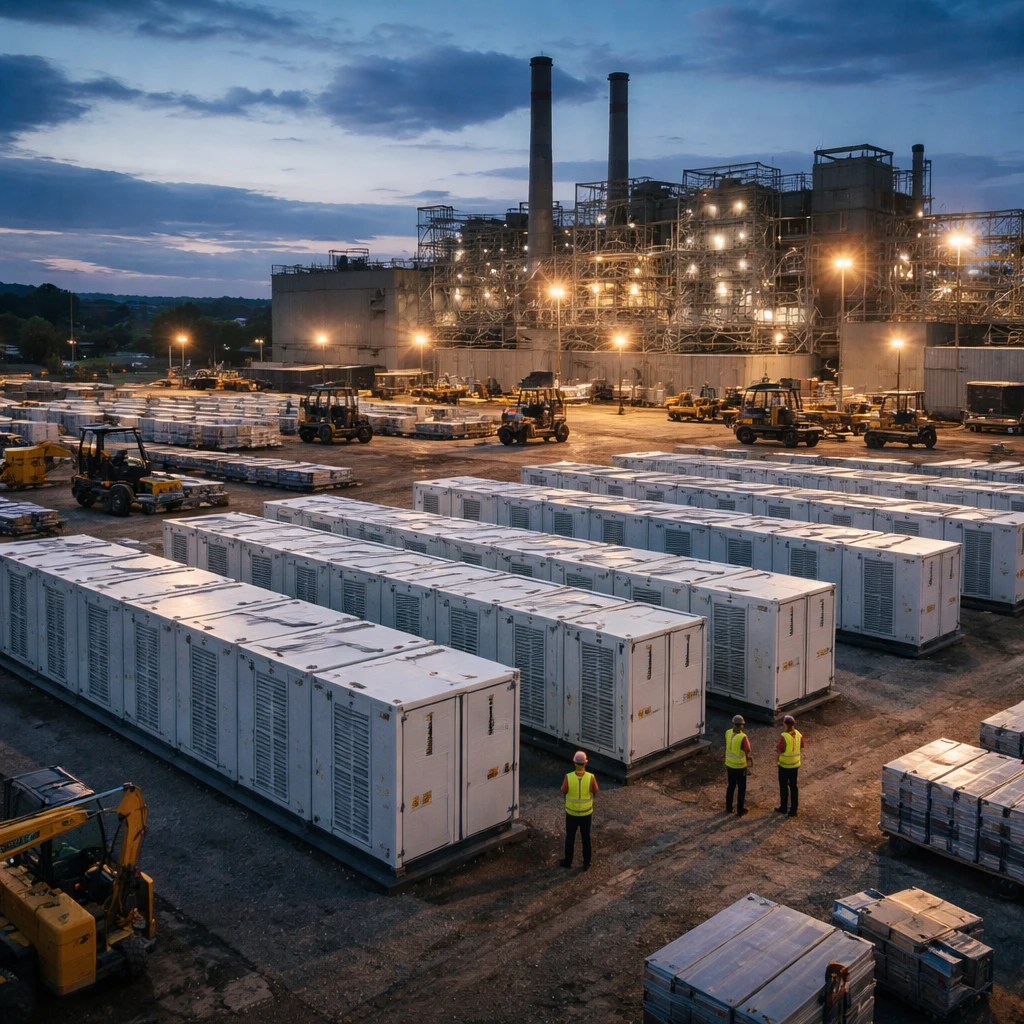
The agreement assigns Ford Energy as the supplier of battery energy storage systems to EDF, specifically identifying DC Block battery systems as the product type EDF can acquire. The five-year arrangement caps total potential supply at 20 GWh, structured so EDF can procure up to 4 GWh each year.
Context on demand and corporate strategy
EDF's interest in large-scale storage comes amid growing electricity demand from data centers, where the increased use of artificial intelligence services has strained U.S. energy infrastructure and prompted a greater reliance on backup and firming power solutions. Automakers, including Ford, are seeking to leverage manufacturing and battery expertise developed for electric vehicles to address this expanding market for grid-scale energy storage.
Ford's business shift and asset use
Ford announced plans to launch an energy storage business following a significant writedown on its electric vehicle programs last year. The company said it would repurpose plant space in Kentucky that had been earmarked for EV battery production to support the energy storage initiative. The five-year EDF contract represents an early commercial commitment for Ford Energy.
Risks and uncertainties
- Timing risk - deliveries are not scheduled to begin until 2028, which leaves a multi-year window before revenue from this contract begins to flow.
- Market demand uncertainty - while demand from data centers is cited as a driver, actual uptake and timing remain subject to market conditions.
- Execution risk - Ford is converting previously allocated EV battery production space to energy storage manufacturing, which carries implementation and operational risks.
Overall, the EDF agreement marks a concrete step in Ford's transition toward energy storage, with specific annual and total capacity ceilings and a clear delivery horizon. The market reacted positively in premarket trading, reflecting investor recognition of the contract's potential to underpin Ford Energy's early commercial activity.