
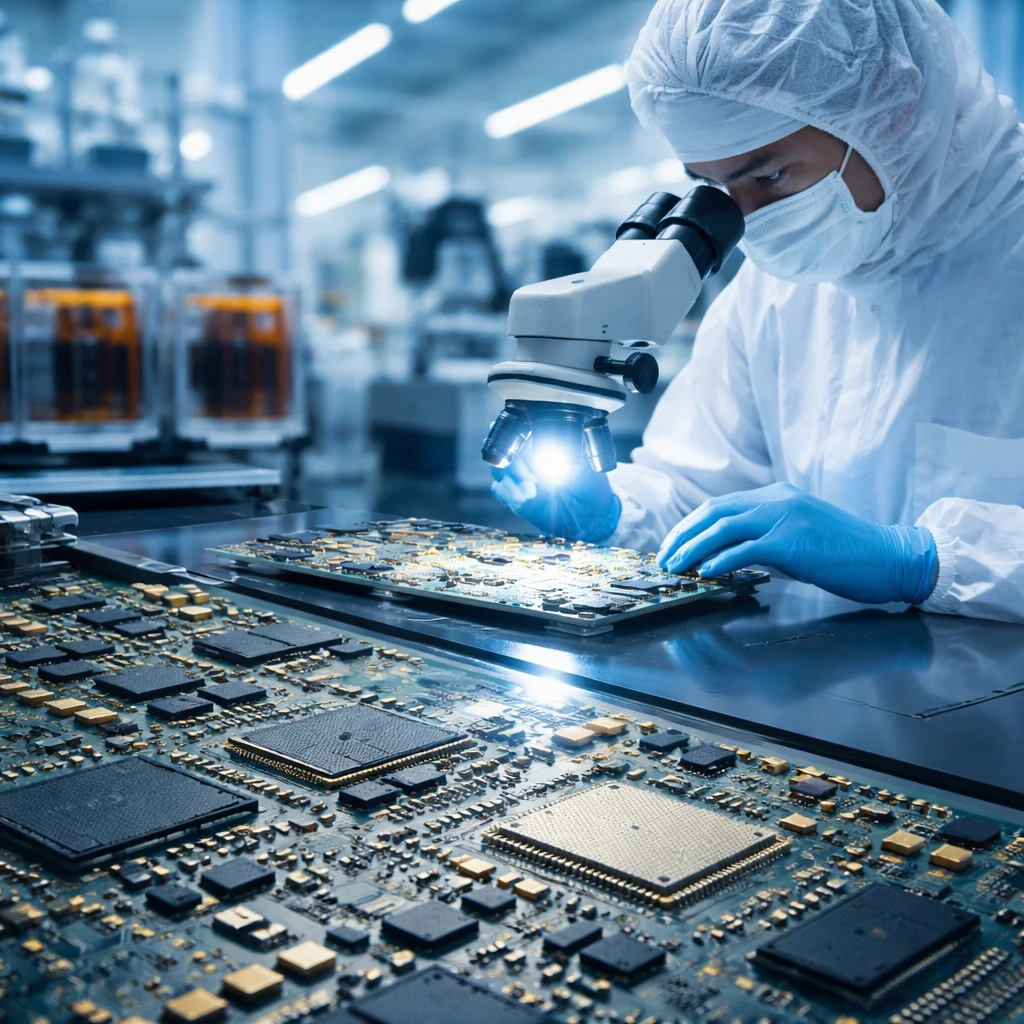
Bernstein has singled out two Taiwan companies it views as direct beneficiaries of growing artificial intelligence-related infrastructure spending, focusing on players tied to server-level PCB upgrades and advanced logic foundry work.
In its review, the research firm emphasized the role semiconductor component makers and advanced chip manufacturers play as AI demand shifts purchasing toward higher-end server infrastructure. The note centers on Unimicron and Taiwan Semiconductor Manufacturing Co., spotlighting capacity plans, market-share targets, and revenue mix changes tied to AI workloads.
Unimicron: PCB upgrade cycle and ABF capacity
Bernstein portrays Unimicron as a primary beneficiary of the transition to AI-optimized server PCBs and the move toward ABF-based substrates. The brokerage points to upward momentum in average selling prices, attributing it to higher upstream material costs - including T-glass and CCL - combined with operating leverage at the supplier level. Based on Bernstein's analysis, AI-related demand could account for roughly half of Unimicron's revenue by 2026.
The firm's capacity timeline for Unimicron is detailed: ABF capacity at the Yangmei and Guangfu Phase 1 sites is expected to reach full utilization in the first half of 2026; the KF Phase 2 expansion is slated to ramp in 2027; and Yangmei Phase 2 is planned for ramp in 2028. For this year, Bernstein projects Unimicron will secure about 35% of the ABF market for Nvidia's high-end GPUs and more than 50% share for ASIC chips, including workloads for Google TPU and AWS Trainium.
Bernstein also highlights anticipated manufacturing yield improvements at Unimicron's Taiwan HDI sites in the second quarter of 2026, which it estimates should lift AI HDI/PCB revenue by roughly 50% year-over-year in 2026.
On quarterly performance, Unimicron reported mixed first-quarter 2026 results. Revenue rose 8% sequentially and gross margin improved to 18%. The company recorded higher-than-expected operating expenses tied to ramp-up costs for new production lines in Thailand and Taiwan.
TSMC: stronger guidance and elevated capex posture
Bernstein also highlighted Taiwan Semiconductor Manufacturing Co. as a direct beneficiary of sustained AI demand. The firm noted that TSMC raised its 2026 full-year revenue growth guidance, indicating that robust AI-related spending more than offsets softer consumer electronics demand linked to rising memory prices.
TSMC narrowed its 2026 capital expenditure guidance toward the high end of the previously stated $52 billion to $56 billion range, a move Bernstein interprets as increased confidence in the durability of the company's medium-term growth outlook. Competitive dynamics at the leading edge remain in TSMC's favor, and the brokerage forecasts roughly 40% earnings growth in 2026, followed by an approximately 20% compound annual growth rate across 2027-2028 - while adding that the company's recent earnings update points to clear upside risk to those forecasts.
In related developments, TSMC has announced its A13 process technology, which is scheduled for production in 2029.
Takeaway
Bernstein's note frames Unimicron and TSMC as companies with direct exposure to AI infrastructure trends - one via components and substrate supply for servers, the other via leading-edge foundry capacity and elevated investment. Both firms' near-term performance is presented in the research as tied closely to the pace of AI-related spending and the execution of planned capacity ramps and yield improvements.