
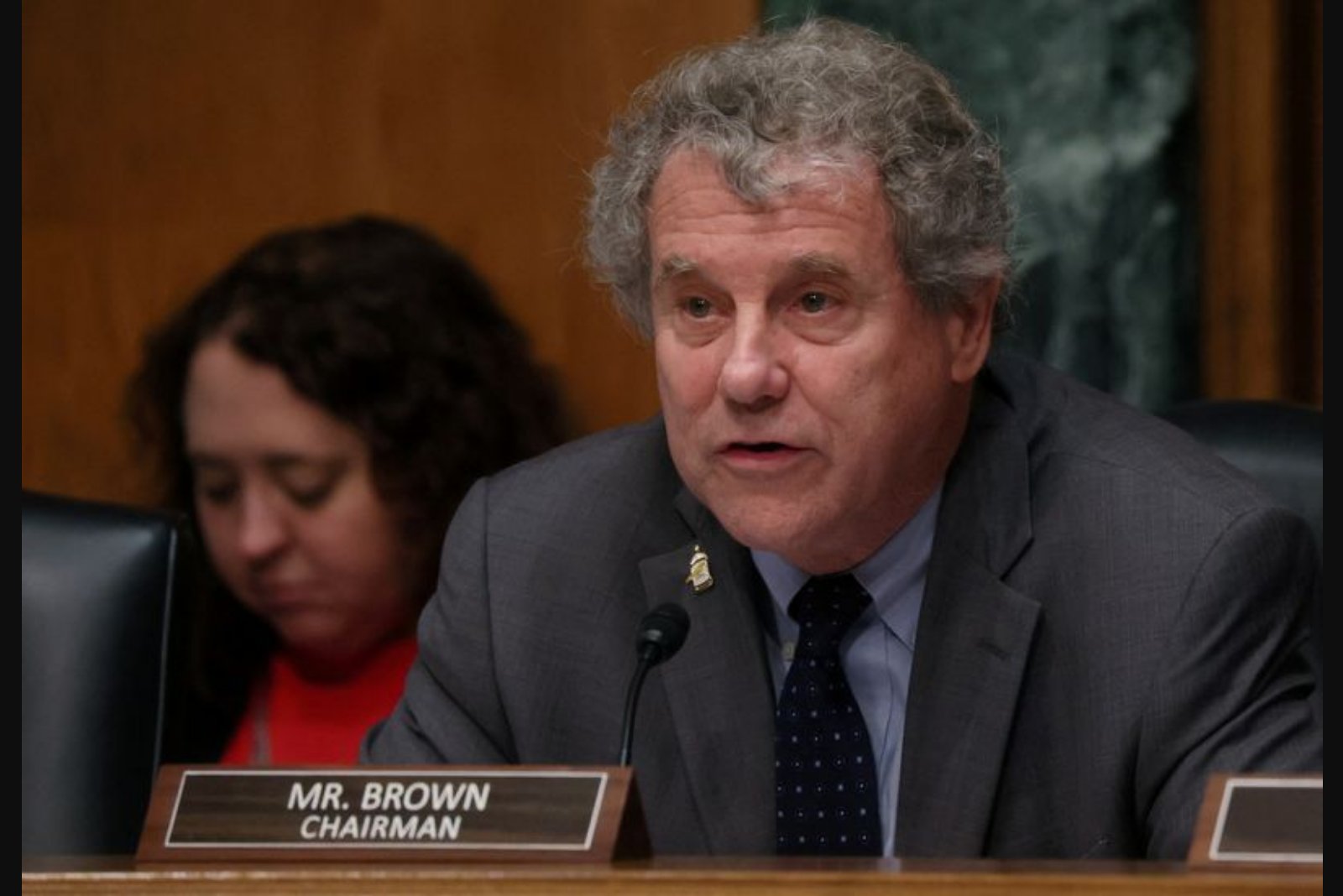
Former Senator Sherrod Brown enters Ohio’s Democratic primary as the favorite, positioning himself at the center of his party’s effort to regain control of the U.S. Senate this November. Brown’s candidacy marks a comeback attempt following his 2024 defeat and comes as Democrats reassess electoral prospects amid a political environment reshaped by shifts in voter attitudes toward economic and foreign-policy issues.
Ohio has trended toward the Republican Party over the past decade, making Brown’s return to the ballot a litmus test of whether Democratic voters can reclaim ground in a state that moved decisively for the Republican presidential ticket in 2024. Brown, 73, lost his 2024 reelection campaign to Republican Bernie Moreno, a former car dealer who benefited from defections among blue-collar voters and an endorsement from then-President Donald Trump. Brown’s likely Republican opponent in the special election to be held in November is Senator Jon Husted, 58, who was appointed to the seat in January 2025 after JD Vance became vice president. Husted is running unopposed in his party’s primary.
The special election in November will decide who serves the remaining two years of Vance’s term. Observers describe the Husted-Brown matchup as competitive, with some analysts labeling it a toss-up and recent public-opinion surveys showing a much closer contest than the state’s 2024 presidential vote suggested. That presidential race had delivered an 11-point victory in Ohio for the Republican nominee over the Democratic challenger.
Democrats have identified Ohio as one of four states where they plan to concentrate resources to try to overcome the Republicans’ current 53-47 Senate margin. Their path to regaining the majority, however, remains difficult: they need to defend multiple competitive seats they currently hold while flipping at least four Senate seats now occupied by Republicans.
Party strategists sense a window of opportunity stemming from voter unease with key issues tied to the current administration. Rising prices - notably gasoline and other household goods - along with the U.S. war with Iran and aggressive migrant deportation policies have contributed to public dissatisfaction. An April 24-27 Reuters/Ipsos poll cited in public reporting pegged President Trump’s approval rating at 34%, down from 47% at the start of his second term, and found that only 21% of adults surveyed approved of his handling of inflation.
Political handicappers have suggested Brown’s brand of economic populism could resonate in this climate, particularly where affordability is a primary voter concern. The Cook Political Report has observed that Brown’s economic message may be well suited to the moment. That said, internal divisions within Ohio remain evident: an April 7-14 Bowling Green State University poll reported that 55% of Ohio respondents identified with Trump’s MAGA movement, a bloc that aligns with Husted’s Republican coalition.
Outside Ohio, Democrats see potential pickup opportunities in a handful of other states. They believe North Carolina’s open Senate seat and the seat held by longtime Republican Senator Susan Collins in Maine could be within reach, the latter possibly vulnerable to a well-funded or high-profile Democratic progressive challenger. Democrats are also watching Alaska, where former at-large Democratic Representative Mary Peltola — who has shown cross-party appeal — could run competitively against Republican Senator Dan Sullivan.
At the same time, Democrats will need to commit significant resources to defend vulnerable incumbents. In Michigan, Democratic Senator Gary Peters is retiring after a narrow reelection in 2020, opening another potentially competitive contest. Additional close races could materialize in Iowa, where Republican Senator Joni Ernst is stepping down, and in Georgia, where Democratic Senator Jon Ossoff will face a contested reelection effort.
Political analysts will be paying close attention to turnout in Tuesday’s Ohio primary as an early indicator of voter enthusiasm ahead of the November contests. A robust Democratic turnout for Brown could signal broader energy for the party in competitive states; conversely, muted participation might suggest headwinds.
Parallel to the Senate battle, several Ohio House races this year could provide further clues about the national balance of power in the U.S. House of Representatives. Republicans drew a new redistricting map last year that was designed to increase their advantages in general elections, and those changes have altered the partisan composition of some districts.
One high-profile example is Representative Marcy Kaptur, whose four-decade House career faces fresh jeopardy. While Kaptur is the expected victor in her party’s primary, her northwest Ohio district in the Toledo area now contains a markedly larger share of Trump supporters, leaving her at a disadvantage heading into the general election. Representative Greg Landsman’s Cincinnati-based district has also become more Republican-leaning, although he is considered to have an edge against the likely winner of his district’s Republican primary.
By contrast, Representative Emilia Sykes’ redrawn Akron-area district appears more competitive in a way that could improve her November prospects. Sykes is unopposed in the Democratic primary, and her general-election matchup will depend on the outcome of a crowded Republican primary field.
For Democratic strategists, the combination of the Ohio Senate race, several consequential Senate battlegrounds around the country and the new congressional maps in states such as Ohio will collectively determine whether the party can narrow or overturn the GOP majority in the Senate and make gains in the House. For markets and sectors sensitive to policy shifts - notably energy markets affected by gasoline prices, consumer-facing sectors vulnerable to inflation dynamics, and industries linked to foreign-policy spending - the outcome of these contests will matter for investor expectations and risk assessments heading into the second half of the year.
Key points
- Sherrod Brown is favored in the Ohio Democratic primary as Democrats target seats to flip the Senate; his comeback follows a 2024 loss to Republican Bernie Moreno.
- Ohio’s special election for the remaining two years of JD Vance’s term will pit Brown against appointed Senator Jon Husted, who is unopposed in the Republican primary; the race is viewed as competitive.
- Nationally, Democrats must defend vulnerable incumbents and flip at least four Republican-held seats; voter concerns over inflation, gasoline prices and the U.S. war with Iran are reshaping campaign dynamics.
Risks and uncertainties
- Voter turnout in Ohio’s primary could be an ambiguous signal - high Democratic turnout may suggest momentum, while weak turnout would raise doubts; this has implications for electoral resource allocation and market expectations in sectors sensitive to policy changes.
- Persistent MAGA alignment in Ohio - with a poll showing 55% identifying with the movement - presents uncertainty for Democrats’ ability to secure statewide wins; this impacts political forecasts for consumer and energy sectors if policy direction remains Republican.
- Republican-drawn redistricting in Ohio increases the difficulty of House pickups and may force Democrats to devote additional resources to defensive races, affecting campaign capital across battlegrounds.