
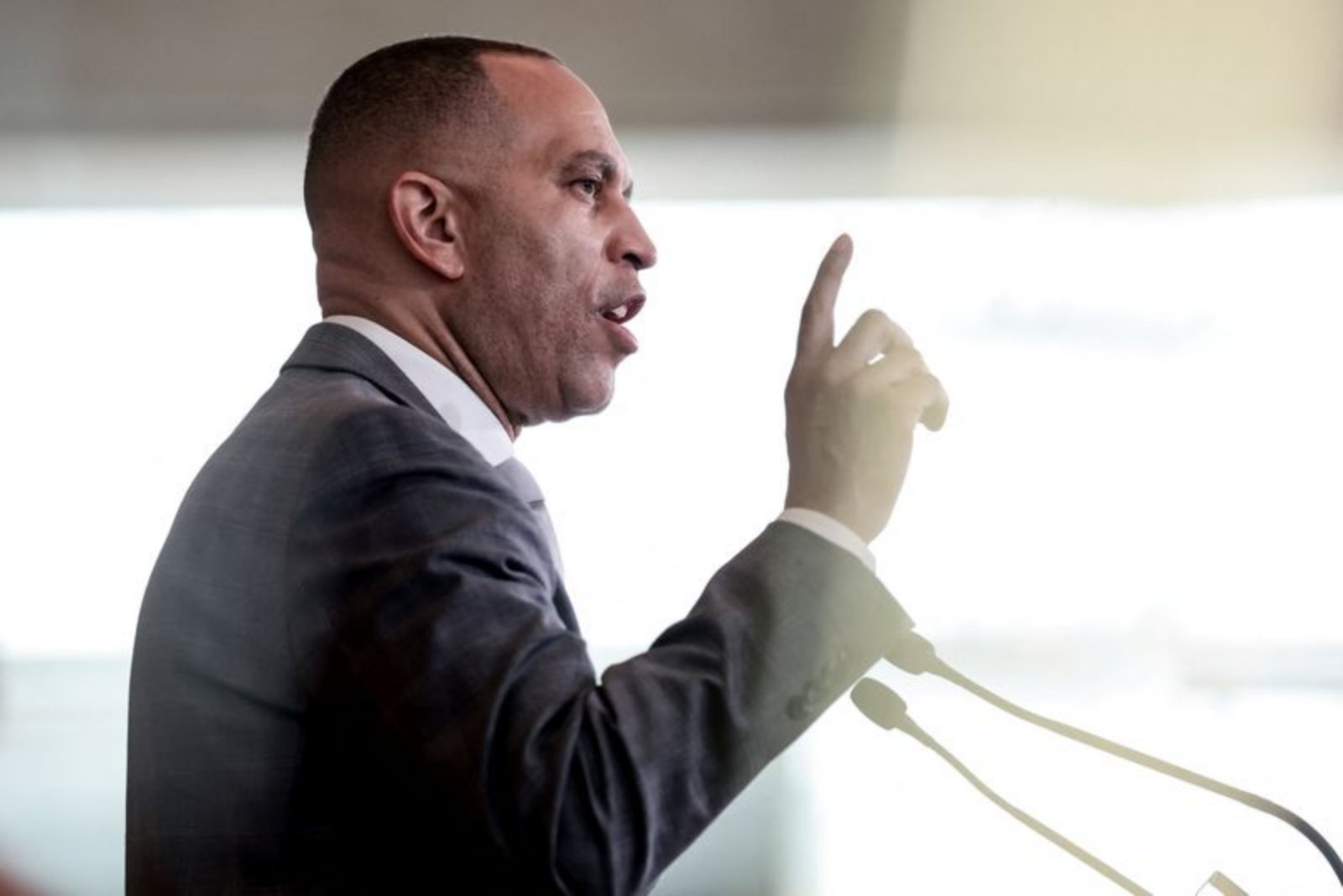
House Democratic Leader Hakeem Jeffries announced on Monday that he will press his home state of New York to pursue a redrawing of its congressional districts, seeking to increase the number of seats held by his party. The move follows a recent Supreme Court decision that many observers expect will lower the legal hurdles for partisan mapmaking nationwide - a development both Democrats and Republicans are now leveraging as they jockey for advantage ahead of the November elections, where control of Congress is at stake.
Jeffries named Rep. Joe Morelle as the party point person for the initiative, saying Morelle would meet with New York state lawmakers on Tuesday to explore the possibility of a new map. Currently, Democrats occupy 19 of New York's 26 U.S. House seats.
Any redistricting plan in New York would face additional procedural steps. The leader's office noted that a new map must be approved not only by the state legislature but also by voters. That dual approval requirement means that even if state lawmakers were to act now, a revised map would not be implemented until the 2028 election cycle at the earliest.
Jeffries framed the effort as a nationwide response to an environment he said will encourage more overtly partisan mapmaking. In a statement, he said: "This is just the beginning. Across the nation, we will sue, we will redraw and we will win. House Democrats will not allow a MAGA majority to be built on rigged maps and the dilution of Black voting strength."
The move in New York mirrors actions Republicans in several states who have signaled plans to seek more favorable maps in the wake of the Supreme Court ruling. Governors in Alabama, South Carolina, Tennessee and Louisiana have indicated they will pursue changes designed to increase Republican representation. The court's ruling, according to officials citing its effect, made it more difficult to challenge electoral maps as racially discriminatory under a landmark voting-rights law.
Ahead of the high court's decision, the article's timeline shows that a number of Republican-led states had already redrawn maps intended to maximize their partisan advantage, reportedly encouraged by President Donald Trump. In turn, several Democratic-led states, including California and Virginia, have produced new maps of their own.
Context and implications
The developments signal a broader contest over congressional seats using the redistricting process as a tool for partisan gain. The procedural constraints in New York mean any change there is likely to be delayed, but the announcement underscores how both parties are preparing legal and political strategies to reshape electoral maps after the Supreme Court ruling.