
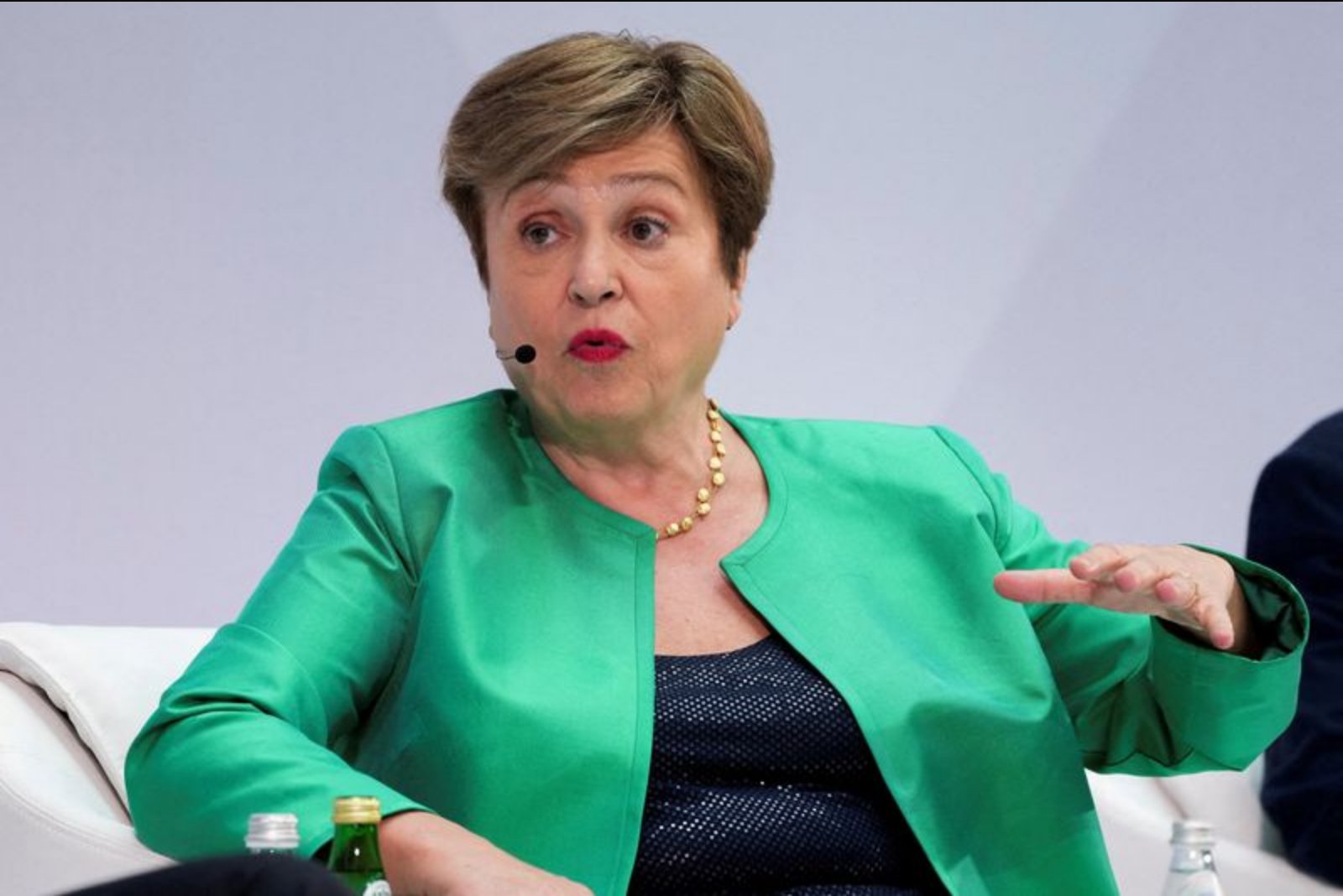
WASHINGTON, May 4 - International Monetary Fund Managing Director Kristalina Georgieva cautioned on Monday that inflationary pressures have begun to pick up and that a prolonged Middle East war could push the global economy toward a "much worse outcome." She flagged a concrete threshold, saying that if the conflict stretches into 2027 and oil prices reach around $125 per barrel, upside risks to inflation and broader economic strain would intensify.
Georgieva said the continuation of the war alters the outlook the IMF had been using. The institution's scenario that anticipated only a modest slowdown in global growth and a slight rise in prices is no longer achievable if hostilities persist. Instead, she stated that the IMF's previously described adverse scenario is already in effect.
Despite this warning, Georgieva noted that some stabilizing forces remain in place. She said long-term inflation expectations are still anchored and that financial conditions have not yet tightened. However, she stressed that these conditions are fragile and could change if the conflict continues.
Her remarks were made at a conference hosted by the Milken Institute. In that setting she reiterated the linkage between a drawn-out geopolitical conflict, higher energy prices, and the potential for a more pronounced global economic downturn. The specific oil-price benchmark she cited - roughly $125 per barrel - was framed as a level that would materially worsen the outlook if reached in a scenario that extends into 2027.
The tone of Georgieva's comments conveyed that the IMF is shifting from a baseline of modest disinflation and slower growth toward preparing for a less favorable path. While she emphasized that current long-run inflation expectations remain anchored and that markets have not yet signaled a tightening of financial conditions, she also made clear that sustained conflict and elevated oil prices could undo those stabilizing influences.
Her assessment focuses attention on the interplay between geopolitics and macroeconomic risk, and underscores how developments in the Middle East could affect inflation dynamics and global growth prospects if hostilities persist into next year with oil near the cited level.
Key points
- IMF chief warns that rising inflation is already evident and a prolonged Middle East war could lead to a "much worse outcome."
- The IMF's mild slowdown scenario is now viewed as infeasible; the fund's adverse scenario is said to be in effect.
- Sectors most directly impacted would include energy, inflation-sensitive consumer sectors, and broader financial markets if conditions tighten.
Risks and uncertainties
- Continuation of the Middle East conflict into 2027 - could sustain upward pressure on global inflation and growth headwinds, notably affecting energy markets.
- Oil prices rising to around $125 per barrel - identified as a threshold that would materially worsen the global economic outlook, impacting energy-dependent sectors and inflation-sensitive asset classes.
- Potential shift in financial conditions - while currently not tightening and long-term inflation expectations remain anchored, these could change if the adverse scenario persists.