
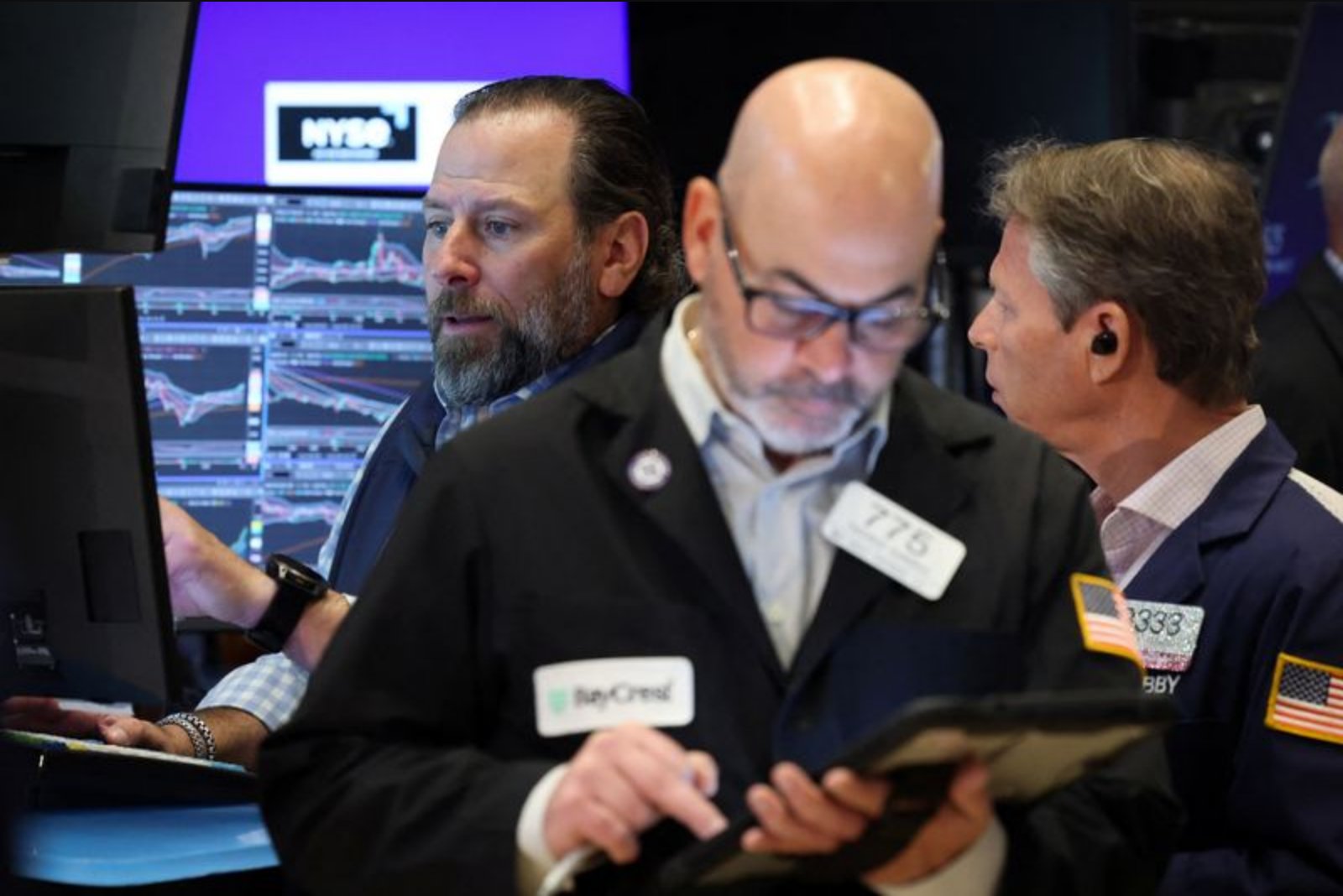
Oil moved decisively higher on Monday, pushing prices back above $100 a barrel after Iran asserted control over the Strait of Hormuz even as U.S. officials sought ways to keep shipping lanes open. The jump in energy markets coincided with a parallel rise in U.S. Treasury yields and broad pressure on equities.
The supply-risk shock has revived questions about near-term inflation dynamics. Inflation has already been running above the Federal Reserve's 2% objective for an extended period, and the latest energy-price move will, at minimum, add upward pressure to price measures in the months to come. One columnist in today's coverage argues that households, firms and investors should prepare for inflation closer to 4%.
For readers who want additional context about today's market drivers, these items are recommended:
- Most Strait of Hormuz shipping at a standstill despite latest US pledge
- Iran hits ships and UAE oil port in show of force after Trump orders Navy to open strait
- ANALYSIS-Investors are running out of time to brace for true oil shock
- Cerebras targets $26.6 billion valuation in US IPO as AI chip demand surges
- PREVIEW-US Treasury seen holding coupon sizes steady, leaning on bills as tariff refunds loom
Market snapshot - key moves
- Stocks: Asia excluding Japan outperformed, rising 2.8% for its best day in a month, led by a 5% surge in KOSPI to new highs. Europe had its worst day in a month, down 1%. U.S. markets were lower, with the Dow falling about 1%.
- Sectors/Shares: Within the S&P 500, all 11 sectors were lower except energy, which gained 0.9%. Materials fell 1.6% and industrials declined 1.2%. Notable moves included GameStop -8.5%, eBay +5%, UPS -10%, FedEx -9%, Micron Technology +6% and Oracle +5%.
- FX: The Japanese yen weakened to about 157 to the dollar as U.S.-Iran tensions supported the U.S. currency; the Indian rupee hit a new low. Bitcoin briefly regained $80,000 for the first time since late January.
- Bonds: U.S. Treasury yields rose roughly 6 basis points across the curve, with two- and 10-year notes at their highest levels since late March and the 30-year yield topping 5%, a peak not seen since July.
- Commodities/Metals: Brent rose about 5% and WTI climbed roughly 3%. Gold fell about 2%.
Context and thematic drivers
Two major themes stood out. First, geopolitical friction in the Strait of Hormuz has tangible implications for oil flows and therefore for headline inflation readings. Second, there are large upward revisions to expected AI-related capital expenditure, which intersect with market expectations for corporate earnings and the broader macro backdrop.
Analysts at Morgan Stanley and Goldman Sachs have both lifted their forecasts for AI infrastructure spending. Morgan Stanley's team now projects that five leading U.S. hyperscalers will collectively spend more than $800 billion on AI capital expenditure this year, rising to $1.1 trillion next year. Goldman Sachs' analysts anticipate cumulative AI infrastructure expenditure of $7.6 trillion by 2031. These large figures are embedded in market pricing and have implications for equity valuations, commodity demand and ultimately inflation and interest-rate expectations.
Corporate earnings expectations are being revised sharply upward alongside AI spending forecasts. LSEG Data & Analytics' Tajinder Dhillon reports that first-quarter earnings are on track to increase 27.8% year-on-year, with full-year 2026 growth forecast at 22.6%. The Q1 growth estimate rose markedly over the prior month - from 14.4% on April 1 - and would mark the strongest growth since late 2021, should it materialize. The key question for investors is whether the surge in AI investment will translate into sustainable productivity gains and profit margins.
M&A and market oddities
In merger-and-acquisition activity, GameStop put forward an audacious $56 billion cash-and-stock bid for eBay, a company approximately four times the size of GameStop. The proposal has raised immediate questions about GameStop's ability to fund such a transaction and whether eBay might attract alternative suitors if the offer falters.
Near-term market-moving items to watch
- Developments in the Middle East
- Energy market movements
- Australia interest rate decision
- Indonesia GDP (Q1)
- Hong Kong GDP (Q1, advance)
- Speeches by Bank of England deputy governor Sam Woods
- European Central Bank speakers including President Christine Lagarde and board member Philip Lane
- Canada trade data for March
- U.S. JOLTS job openings for March
- U.S. trade data for March
- Final U.S. PMI for April
- U.S. services ISM for April
- U.S. Federal Reserve officials scheduled to speak: Governor Michael Barr and Vice Chair for Supervision Michelle Bowman
- U.S. corporate earnings including AMD, Arista Networks, Pfizer and KKR
Bottom line
The confluence of an energy-price shock stemming from Strait of Hormuz tensions and upward pressure on yields has weighed on risky assets. While AI-related capex forecasts and earnings upgrades are providing a bullish structural narrative for technology and the broader market, the immediate economic impact of a renewed oil shock points toward higher inflation risk in the near term. That mix keeps volatility elevated across equities, fixed income and commodities.