
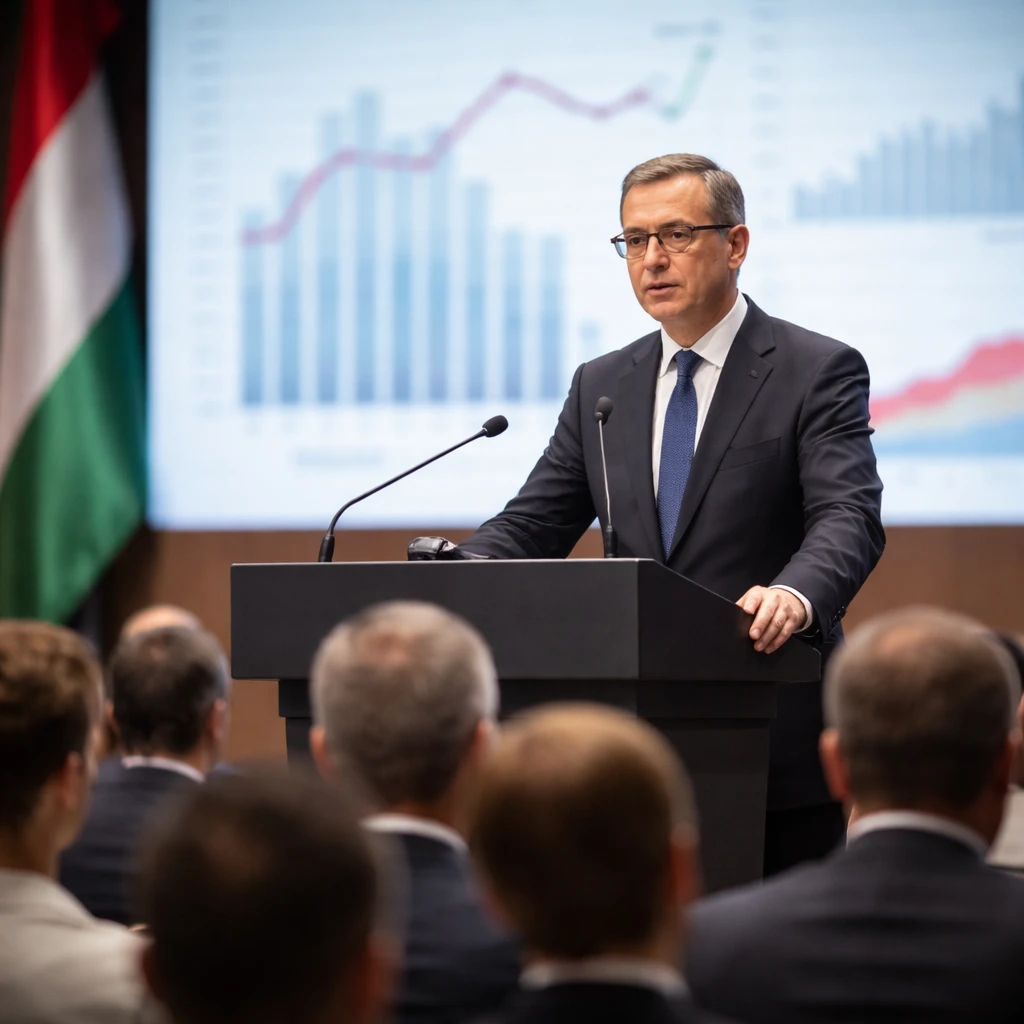
Hungary's primary budget deficit may widen in the current year from the 0.9% of economic output logged in 2025, central bank Governor Mihaly Varga said on Tuesday, underlining the importance of keeping fiscal balances under control.
Addressing delegates at a business conference organized by portfolio.hu, Varga said the Magyar Nemzeti Bank intends to maintain a positive real interest rate to help manage inflation risks. The central bank left its base interest rate unchanged at 6.25% last month, a decision Varga reiterated as part of the bank's strategy to contain price pressures.
Varga added that Hungary's economic fundamentals are stronger than they were at the start of 2022. While he acknowledged external risks that could push inflation higher - specifically noting the conflict involving Iran as a factor that elevates inflationary pressures - he also pointed to two domestic moderating influences: a stronger forint and the government-imposed fuel price cap, both of which help restrain headline price growth.
Looking ahead, Varga said that the economic policy decisions to be taken by the incoming government will be another critical determinant of the inflation trajectory. He emphasized that household consumption is anticipated to remain the principal engine of economic growth, supported by government measures, and that these consumption patterns will interact with fiscal and monetary settings to shape the outlook.
Context and implications
Varga's comments link fiscal and monetary policy considerations: a potential widening of the primary deficit raises questions about fiscal discipline, while the central bank is signalling it will keep real interest rates positive to guard against renewed inflation pressures. He balanced that view by noting offsetting factors that currently help to contain price increases.
What remains uncertain
The governor identified external conflict-related inflation risks and the policy path of the incoming government as key variables for future inflation and fiscal outcomes. He also stressed that household spending is expected to sustain growth, supported by government measures.