
Economy May 5, 2026 07:26 AM

Romanian Government Ousted After Confidence Motion, Raising Questions Over Deficit Reforms

Prime Minister Ilie Bolojan's minority cabinet toppled as coalition partner files motion with far-right opposition, leaving reform timetable uncertain

By Jordan Park
Romanian Government Ousted After Confidence Motion, Raising Questions Over Deficit Reforms

Romania's minority administration lost a no-confidence vote in parliament, toppling Prime Minister Ilie Bolojan's government and introducing political uncertainty that could stall efforts to reduce the European Union's largest budget deficit. The motion was filed by the Social Democrats, who exited the coalition last month over unpopular fiscal cuts, and was supported by the main far-right opposition party. President Nicusor Dan will begin consultations with parties to seek a new majority while Bolojan's cabinet remains in an interim role with limited authority.

Key Points

  • Romania's minority government led by Prime Minister Ilie Bolojan was removed after a parliamentary no-confidence vote.
  • The Social Democrats, who quit the coalition last month over unpopular fiscal cuts, filed the motion alongside the principal far-right opposition party.
  • President Nicusor Dan will consult political parties to seek a new governing majority while Bolojan's cabinet remains in a caretaker role with restricted authority - public finance and markets face potential short-term uncertainty.

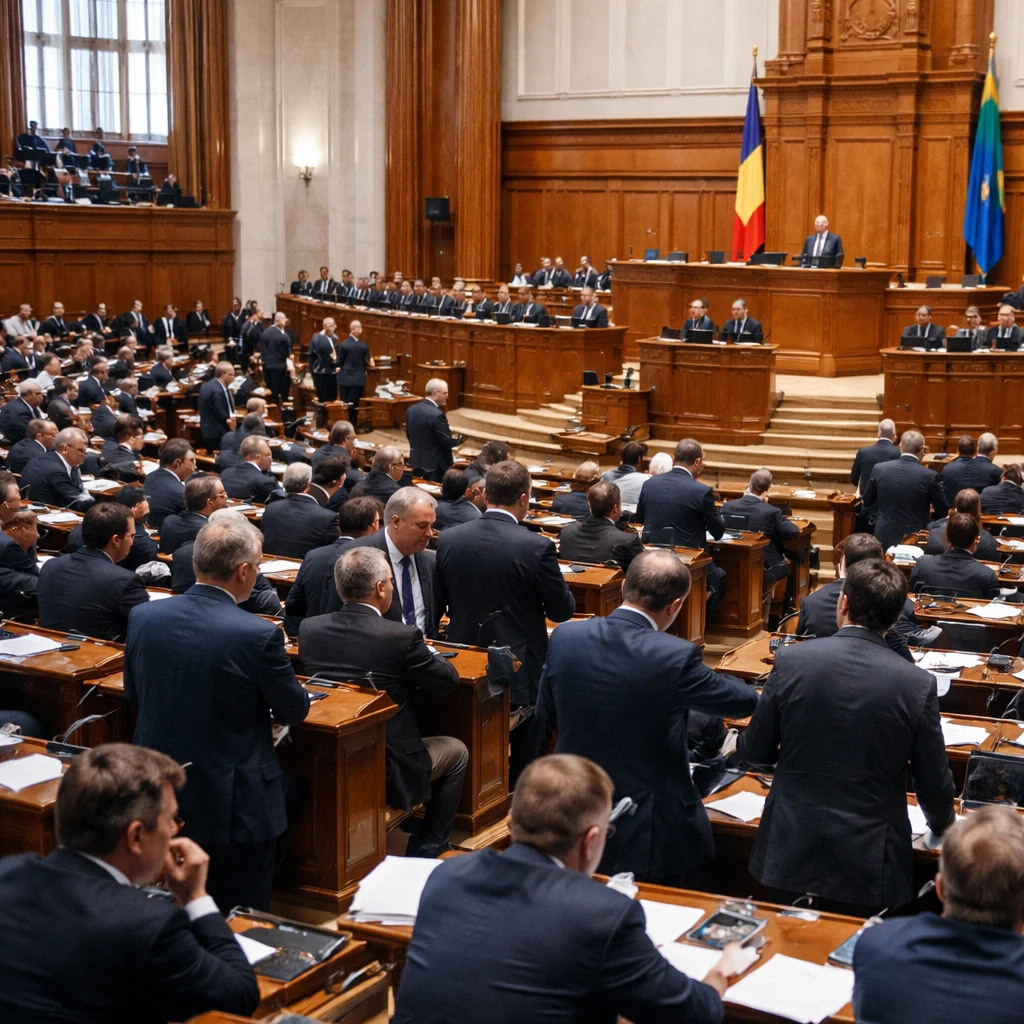
Romania's minority government was removed from office on Tuesday after parliament backed a no-confidence motion, producing a fresh period of political uncertainty that could hamper the implementation of fiscal measures aimed at bringing down the European Union's biggest budget deficit.

Lawmakers in Bucharest voted in favor of the motion against Prime Minister Ilie Bolojan, ending a government that had been in place for 10 months. The motion was initiated by the Social Democrats - who had departed the governing coalition last month in opposition to unpopular spending cuts - and was filed jointly with the country's principal far-right opposition party.

Bolojan had assembled a four-way coalition intended to block the rise of the far-right, which was narrowly defeated in elections held over the past two years. That coalition now falls apart as the parliament removed his administration.

Following the no-confidence vote, President Nicusor Dan is set to hold consultations with political parties to examine possible routes to reconstitute a governing majority in parliament. Until a new government is formed, Bolojan's cabinet will continue to operate in an interim capacity but with constrained powers, limiting its ability to enact major policy changes.

The outcome introduces uncertainty about the pace and scope of reforms that had been planned to address Romania's substantial budget shortfall. Observers and market participants may face an uncertain window as political actors negotiate next steps and as the president seeks a viable governing alignment.


Context summary

  • The government lost a no-confidence vote and fell after 10 months in office.
  • The motion was filed by the Social Democrats - who left the coalition over fiscal cuts - together with the main far-right opposition party.
  • President Nicusor Dan will consult parties to explore options for forming a new parliamentary majority; the cabinet will stay on in a caretaker role with limited powers.

Risks

  • Delay or disruption of fiscal reforms aimed at reducing Romania's large budget deficit - this affects public finance and sovereign market confidence.
  • Political fragmentation could prolong caretaker governance with limited powers, constraining major policy decisions - this may influence investor sentiment and fiscal policy implementation.

More from Economy

RadixArk Secures $100M Seed to Trim AI Inference Costs May 5, 2026 Mozambique’s Financial Strain Deepens as Debt and Development Challenges Converge May 5, 2026 30-year UK gilt yields reach highest level in nearly 30 years as markets price more BOE hikes May 5, 2026 Swiss inflation accelerates to 16-month peak as energy prices climb May 5, 2026 Finance Minister Says Debt Relief Relaunch Will Not Disrupt Rate-Cut Cycle May 5, 2026