
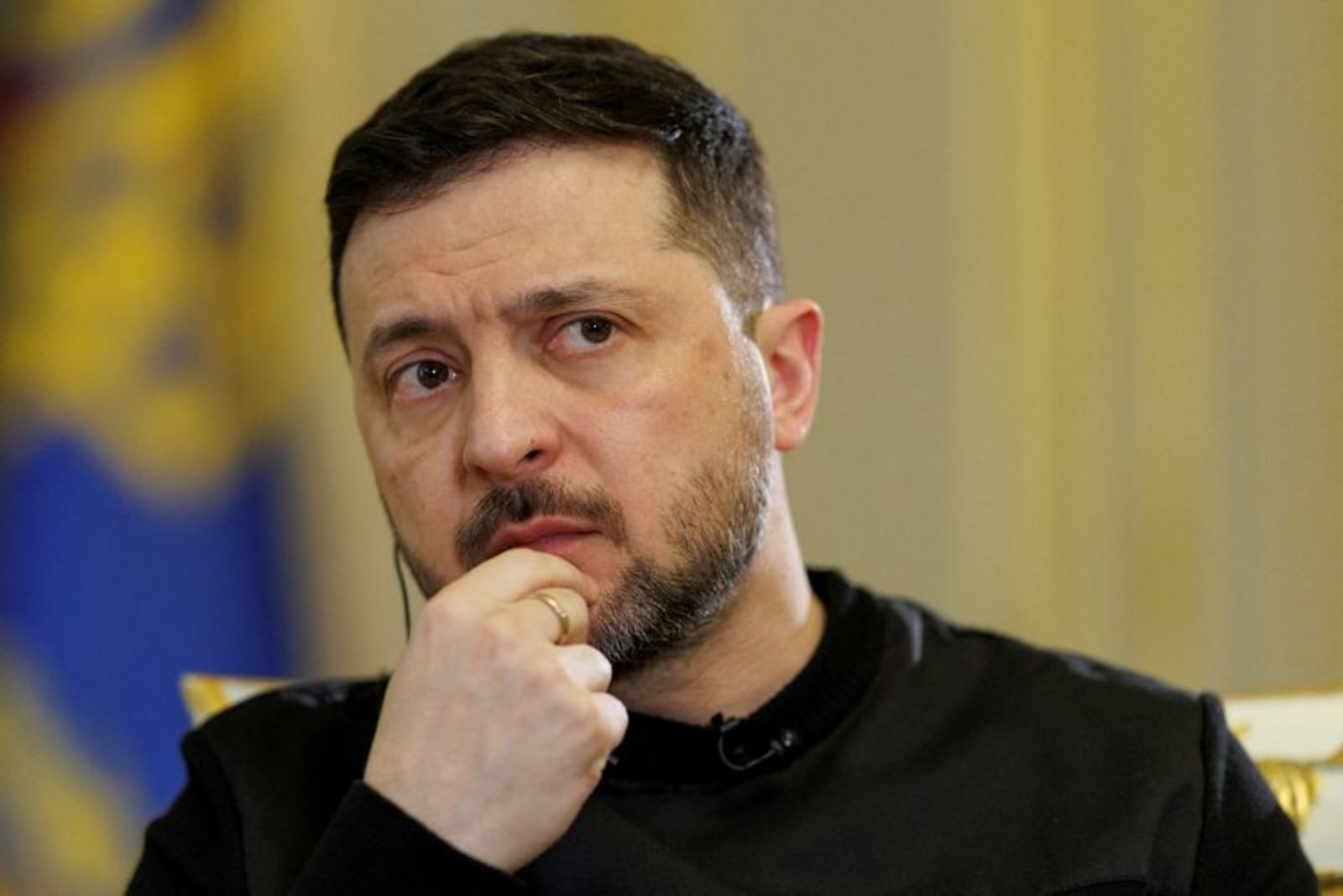
Ukrainian forces are stepping up so-called medium-range or "middle" strikes against Russian positions and infrastructure, President Volodymyr Zelenskiy said on Tuesday, signalling an expanding capability for Kyiv's smaller military as the conflict enters its fifth year.
As Russian units press renewed offensives along the eastern front, Ukraine has increasingly directed attacks dozens of kilometres behind the frontline - aiming at logistics hubs, troop concentrations and air-defence assets that lie beyond the reach of first-person-view drones.
Zelenskiy said strikes at ranges of more than 20 km have doubled since March and quadrupled compared with February. "And there will be even more," he wrote on X. "This is a priority area."
Kyiv's Defence Ministry provided more detail on the scale and focus of the campaign, saying last week that Ukrainian forces carried out more than 160 medium-range strikes through April at ranges of 120-150 km. The ministry listed the targets struck as including more than 65 logistics and ammunition depots, 33 drone control points and workshops, and 17 troop command posts in both occupied Ukrainian territory and Russian border regions.
"We are hitting resources, disrupting supplies (and) reducing the intensity of shelling and the mobility of troops," the ministry said in a May 1 statement, adding that "the April strikes are a systemic campaign to exhaust Russia."
The increase in middle strikes comes as Russian forces intensify pressure on heavily fortified cities in the east in an effort to take the remainder of the Donetsk region. Kyiv's reported actions are framed as a means of degrading Moscow's battlefield sustainment and reducing the effectiveness of attacks on Ukrainian positions.
Beyond degrading logistics and command structures close to the front, Ukrainian forces have also broadened attacks deeper into Russian territory, targeting energy and military-industrial infrastructure. In recent weeks, Ukrainian units mounted multiple strikes on a seaport and a refinery in southwestern Russia's Tuapse, producing large plumes of black smoke and oil flowing into the Black Sea.
On Tuesday, Zelenskiy said Kyiv used domestically developed Flamingo cruise missiles to strike Russian military-industrial sites, naming defence manufacturing facilities in the city of Cheboksary, some 1,500 km away.
Robert Brovdi, commander of Ukraine's drone forces, said his units had hit 25 air-defence systems and 13 radar and electronic-warfare systems in April. He said those operations help set conditions for larger long-range strikes.
"The consistent and regular destruction of air-defence systems at the operational level opens corridors for ramping up deep strikes on military-industrial and energy-sector facilities," he said on Sunday.
Ukraine's focus on medium-range capabilities reflects a broader operational shift to combine homegrown weaponry with targeted campaigns against logistics and critical infrastructure - a strategy Kyiv describes as aimed at exhausting Russian resources and constraining the tempo and mobility of attacking forces.
Summary: Kyiv reports a rapid increase in medium-range strikes, with more than 160 attacks in April at 120-150 km ranges targeting logistics depots, drone control points, command posts and energy and industrial sites. Ukrainian statements say the campaign seeks to disrupt Russian supplies and open avenues for deeper strikes.
Key points:
- Medium-range strikes have increased sharply - Zelenskiy said strikes beyond 20 km have doubled since March and quadrupled since February, and the Defence Ministry reported over 160 strikes in April at 120-150 km.
- Targets include logistics and ammunition depots, drone control points and workshops, troop command posts, as well as energy and military-industrial facilities - sectors that affect supply chains and energy markets.
- Destruction of air-defence and radar systems is being used to facilitate deeper long-range operations against military-industrial and energy-sector targets.
Risks and uncertainties:
- Escalation risk from intensified strikes on infrastructure and deep targets could affect energy and transport sectors, as evidenced by reported attacks on a seaport and refinery and oil entering the Black Sea.
- Uncertainty over the resilience and replacement of targeted logistics and ammunition depots may influence the tempo of frontline operations and defence supply chains.
- Reliance on the suppression of air-defence systems to enable deeper strikes introduces operational risk if Russian air-defence capabilities recover or are reinforced.