
Overview
Project backers are nearing the minimum commercial support needed to take forward a proposed pipeline that would transport Canadian crude oil into the United States, according to four people with direct knowledge of the matter. The route would reconnect an existing, unused segment in Alberta with a Bridger Pipeline extension that would run through Montana and on to Guernsey, Wyoming.
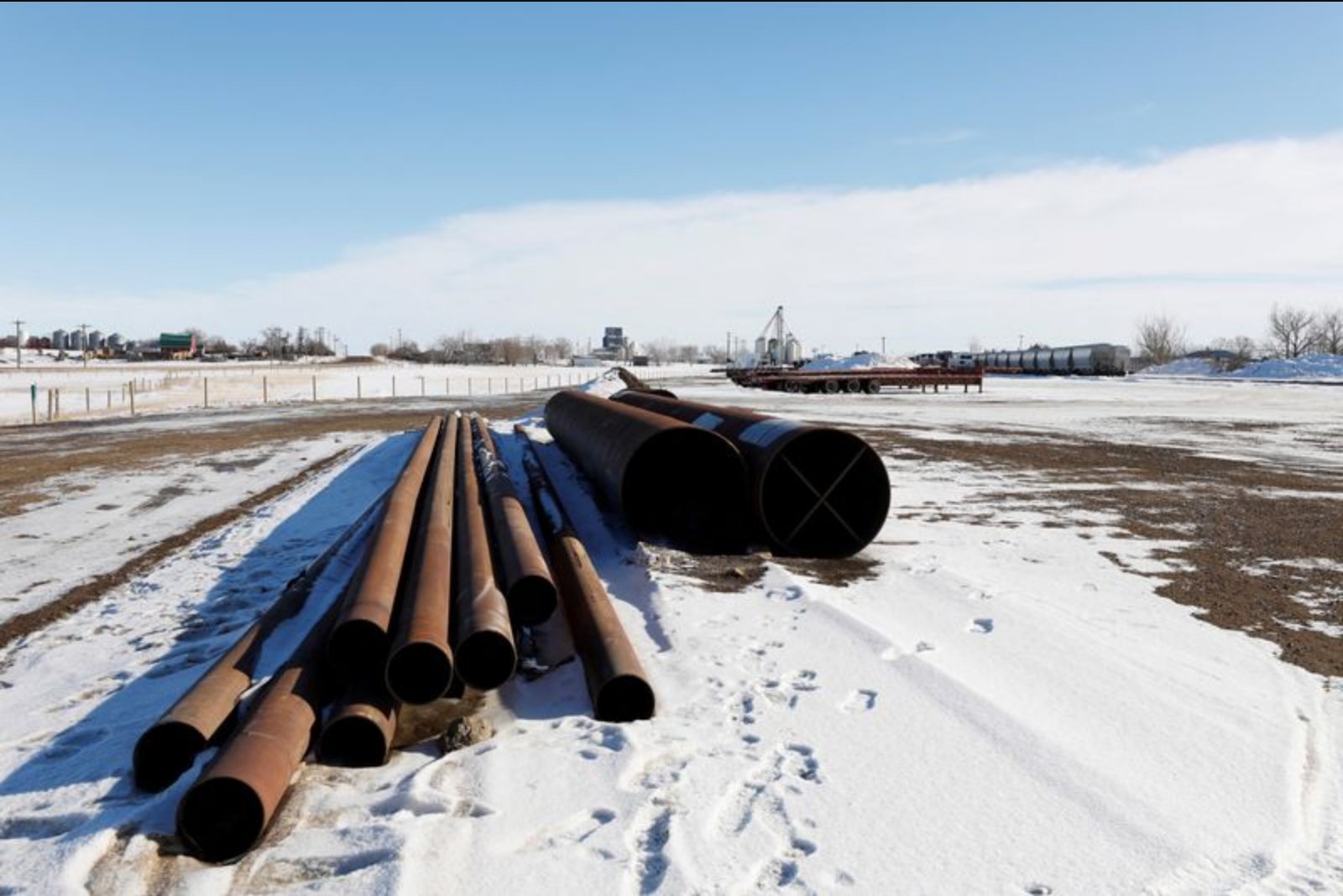
The Canadian portion, owned by South Bow Corp, would reuse about 150 km (93 miles) of pipe that has already been constructed but remains idle. From there the plan calls for a Bridger-built pipeline in the United States to extend roughly 645 miles to Guernsey, Wyoming.
Commercial commitments and capacity
The four sources said oil companies have agreed to transport at least 400,000 barrels per day (bpd) on the line, which equals about 72% of the pipeline's planned initial capacity of 550,000 bpd. Bridger's regulatory filings indicate the project could eventually handle up to 1.13 million bpd.
South Bow and Bridger are reported to be targeting roughly 450,000 bpd in long-term contracts, according to two of the sources, which would meet a commonly sought threshold of 80% of initial capacity that pipeline operators typically want before beginning construction.
Who has committed
Among the shippers identified by one of the sources as committed are Cenovus Energy and Canadian Natural Resources Ltd (CNRL). Additional names cited include Tamarack Valley, Whitecap Resources, and Strathcona Resources. The people who provided this information spoke on condition of anonymity because shipper commitments are confidential.
Companies directly involved have been limited in what they will confirm publicly. South Bow declined to comment on the level of committed capacity, saying the project remains at an early stage and is subject to ongoing commercial negotiations, stakeholder and rights-holder discussions, regulatory processes, and further evaluation. Bridger did not offer comment. In a March regulatory filing Bridger stated the proposal was being developed in response to identified market interest and that commercial discussions were continuing.
Whitecap's chief executive, Grant Fagerheim, said the industry's engagement on the pipeline "has been constructive and there looks to be sufficient momentum to achieve the minimum thresholds required for the project," and he noted that backing from the U.S. administration had been helpful. Whitecap declined to provide additional comment on specific commitments. Cenovus, CNRL, Tamarack and Strathcona also declined to comment on commitments.
Permitting and political context
The project received an important permit milestone when the U.S. President signed an order last Thursday granting a cross-border permit for the route. That approval follows the revocation in 2021 of the permit that had been required for the Keystone XL pipeline, the last major cross-border line proposed between Canada and the United States. While the new proposal follows a different U.S. path than the canceled Keystone XL, South Bow's portion would make use of already-built Canadian pipe and then connect to Bridger's proposed U.S. segment.
Market context and capacity needs
Canada is a major oil producer; the country's energy regulator reported oil output at about 5.5 million bpd at the end of January, with a projection that production could reach as high as 6.1 million bpd by 2030. Developers and industry participants see additional takeaway capacity as a pressing need to move that output to market.
Rival pipeline operators are pursuing expansions as well. Enbridge has approved projects to expand its Mainline and Flanagan South systems to provide an extra 150,000 bpd of Canadian heavy oil to the U.S. Midwest and Gulf Coast, with that incremental capacity expected to come online in 2027. Enbridge is also assessing commercial interest in a second phase of its Mainline expansion that could add a further 250,000 bpd with a potential in-service target in 2028. Separately, the Trans Mountain pipeline is planning enhancements that could add roughly 360,000 bpd of capacity to move oil from Alberta to Canada's west coast for export.
Downstream connectivity and economic considerations
Analysts note that while the Bridger route to Guernsey, Wyoming, would improve physical egress from Western Canada, Guernsey itself is not an end market for crude. Additional pipeline links would be required to reach key refining hubs such as Cushing, Oklahoma; Patoka, Illinois; and the U.S. Gulf Coast.
AJ O'Donnell, an analyst at Tudor Pickering, Holt & Co., described the Bridger proposal as one of the most economic options available to increase oil flows out of Western Canada before the end of the decade. In a note he wrote:
"While uncertainty remains around the final economics, we believe this represents the most logical approach to adding incremental oil egress capacity through the end of the decade. Our view is that additional egress is needed regardless of the geopolitical backdrop."
Next steps and remaining uncertainties
Developers continue to seek the commercial support necessary to reach the typical underwriting thresholds before advancing construction, and regulators, stakeholders and rights-holders remain part of ongoing discussions. The exact economics of the project, the need for downstream connections beyond Guernsey, and the confidentiality of shipper commitments leave some elements unresolved as the proposal progresses toward potential construction.
The project, if built to its initial specification, would raise the volume of Canadian crude capable of reaching U.S. markets by more than 12% from current levels, according to the developers' plan and capacity figures cited by the sources.
Conclusion
Project sponsors say they are working through commercial negotiations and regulatory processes while key Canadian producers have expressed interest in securing long-term transportation. If the commitments now reported are finalized into contracts, the pipeline would be a significant addition to North American oil transport infrastructure, though it would still require further links and economic clarity to deliver full market access to refiners and export terminals.