
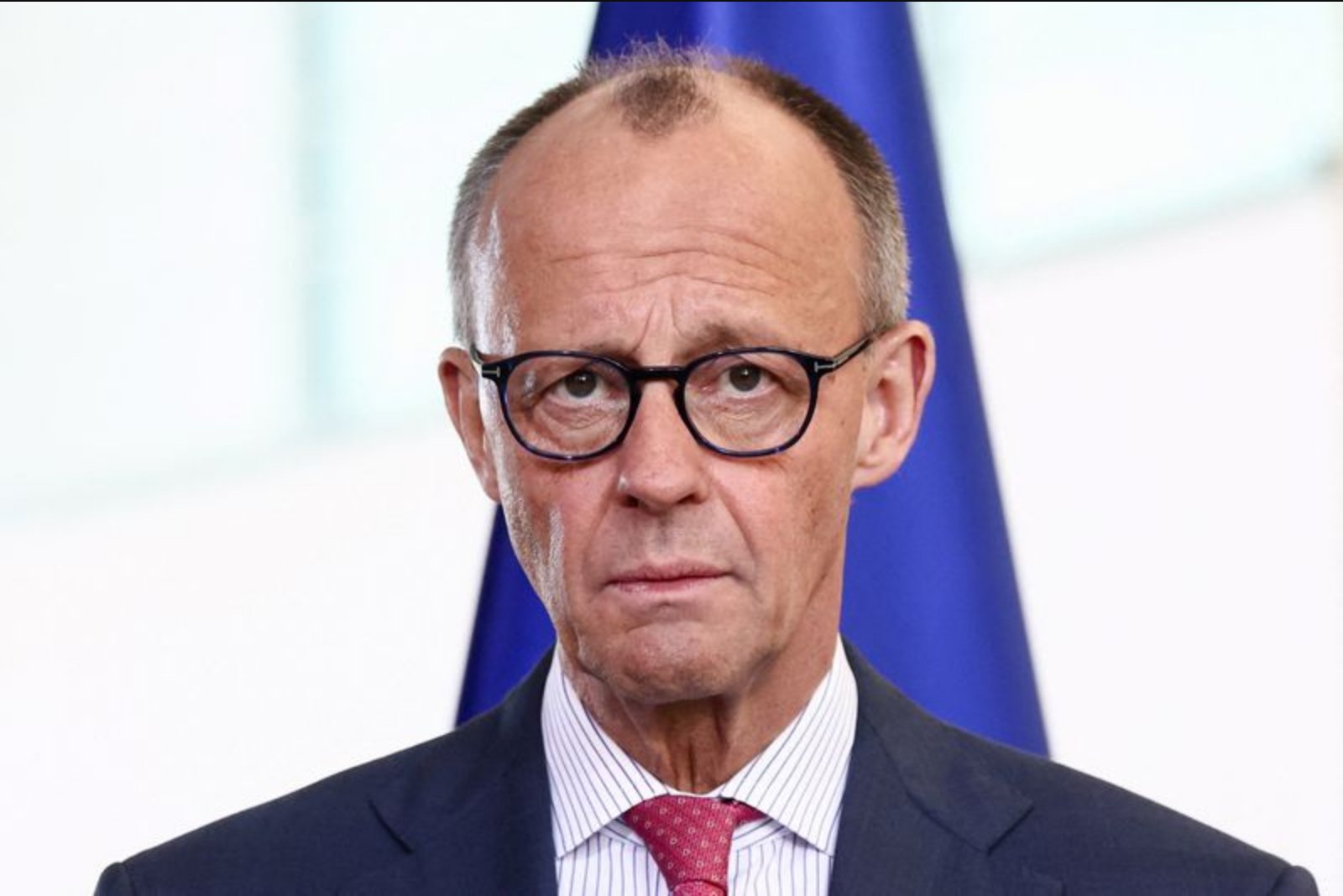
Friedrich Merz enters the first anniversary of his chancellorship this week confronting what officials describe as the most serious rift with Washington in decades. The rupture followed a series of decisions announced by President Donald Trump late last week - a plan to levy a 25% tariff on European automobile imports and the withdrawal of thousands of U.S. troops from Germany - after Mr. Trump reacted angrily to Merz’s public criticism of U.S. strategy in the Iran war.
The announcements have underscored the widening strain in transatlantic relations that has become more pronounced during President Trump’s second term and have added to a growing set of domestic and economic difficulties for the German leader.
Political and economic fallout at home
Germany’s governing coalition is facing mounting pressure. A recovery that had only just begun after two consecutive years of recession now risks being derailed by an energy shock tied to the Iran conflict. Meanwhile, an agenda of tax, welfare and health reforms that the government had promised is being overshadowed by internal coalition disputes and public unease.
Merz’s communication style - which he has acknowledged can be impulsive - has at times alienated voters. Opinion polls now show the far-right Alternative for Germany (AfD) ahead of Merz’s conservative party as the country’s most popular, reflecting increasing doubts not focused squarely on Merz personally but on the coherence of the coalition.
"The doubts are growing. Not about me, but about the coalition," Merz said in an interview with German public television.
Industrial concerns are sharp. German carmakers, the backbone of the country’s manufacturing sector, face the prospect of a sudden increase in tariffs to one of their key export markets - moving from a 15% rate to 25% should the announced U.S. measures be implemented.
Security ties and troop reductions
The announced U.S. troop withdrawals add another layer of uncertainty. German officials and lawmakers have questioned the scale and the implications of removing forces from the roughly 40,000 U.S. personnel currently stationed in Germany. Defence Minister Boris Pistorius attempted to play down the immediate significance of the announcement, noting that the decision was not a surprise. Details remain unclear about which units will be relocated and what this will mean for large U.S. facilities on German soil, such as the Ramstein air base.
At least 5,000 troops were cited as part of the planned reduction. Lawmakers and defence officials have warned that such moves could weaken deterrence and undermine trust in the U.S. security commitment to Europe.
"That undermines our deterrent. And it undermines trust in the U.S. And that is the real bad news," said Roderich Kiesewetter, a member of the parliamentary foreign affairs committee from the conservatives' ranks, referring to the scrapping of a prior plan to deploy a U.S. battalion with long-range Tomahawk missiles.
Diplomacy, strategy and Merz’s balancing act
For much of his first year, Merz offset domestic criticism with a relatively strong diplomatic profile. Observers noted that he had strengthened relationships with key European partners and carved out influence in discussions related to the war in Ukraine through multilateral formats. Still, analysts and politicians alike say his principal shortcoming has been on the domestic front, where expectations for decisive leadership have not been fully met.
Merz remains an advocate of the U.S.-European alliance even as he has publicly warned that Europe cannot indefinitely rely on American forces to guarantee its security. He has also been critical of U.S. and Israeli actions in the conflict with Iran, and he has refused to send German troops to help clear the Strait of Hormuz until hostilities cease and a clear international mission is agreed upon.
Following a remark to students in which he suggested the U.S. had no exit strategy in Iran and was being "humiliated," Trump responded angrily on social media, despite once praising Merz as a friend. German officials rejected the notion that Merz’s comment prompted the U.S. decisions on troops and missiles. But the episode highlighted just how sensitive relations have become and how closely public statements are being watched.
Domestic reactions and local impacts
Within Germany there are broader anxieties about the implications of a changing U.S. posture. Finance Minister Lars Klingbeil, who is also Merz’s deputy and leader of the Social Democrat coalition partners, warned that the shifts in global power dynamics were visible - from a more assertive China to an apparently weakened Europe - and that much depends on Germany’s own capacity to respond.
"We can see what’s going on with Donald Trump and the U.S., and that this is having an impact. We can see that China is getting stronger and stronger," Klingbeil told Reuters. "We can see that Europe isn’t strong enough. In this regard, a great deal depends on Germany."
On the local level, communities long intertwined with the U.S. military presence say the ties are meaningful. In Landstuhl, home to one of the largest U.S. military hospitals, resident Maria Raftopoulo noted that relationships between locals and U.S. personnel have developed over many years. Even with fewer Americans stationed there now, she said, U.S. personnel continue to provide jobs, housing demand and economic contribution to the region.
Outlook
Merz’s first year has therefore been marked by a clash of external shocks and internal fragility: a cautious economic recovery threatened by energy disruption related to the Iran conflict, industrial exposure to possible new U.S. tariffs, rising public doubts about coalition unity, and a delicate diplomatic task in managing a U.S. administration that has shown impatience with European leaders. How the government navigates these overlapping pressures will shape both Germany’s domestic trajectory and its role within the broader transatlantic relationship in the months ahead.