
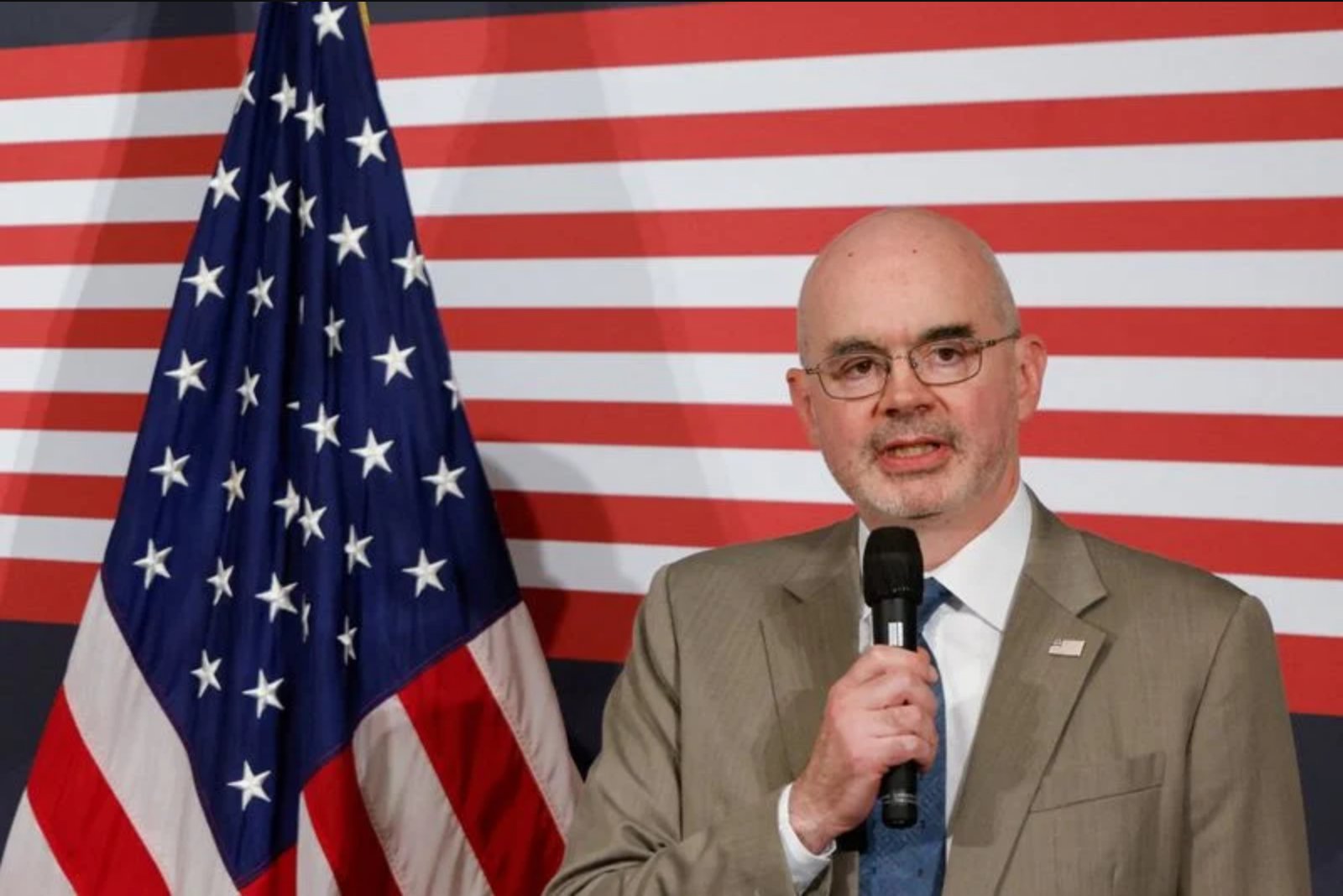
TAICHUNG, Taiwan, July 2 - The United States' top representative to Taiwan urged the island to develop a concentrated network of unmanned systems to deter conflict and bolster security, saying drones could materially change the balance for defenders.
Raymond Greene, director of the American Institute in Taiwan and the de facto U.S. ambassador, made the remarks on Thursday at a forum on drones in the central city of Taichung. Greene characterised drones as a "game-changing opportunity" to strengthen Taiwan's security and to reinforce peace across the wider region.
"Fortunately for Taiwan, drones have significantly boosted defenders, even when facing overwhelming odds," Greene said, citing the experience of the war in Ukraine. He added: "Nothing will deter conflict more effectively than turning Taiwan into a hornet's nest of air, surface, and subsurface drones."
U.S. support for Taiwan's military modernisation - including arms sales - has been a central element of bilateral relations despite the absence of formal diplomatic ties. Taiwan's government has pressed to accelerate investment in asymmetric capabilities, among them various unmanned systems, as it faces what officials describe as an intensified threat from China, which claims the island as its territory.
Parliamentary disagreements have complicated execution of those plans. In May, the opposition-dominated legislature approved only two-thirds of a $40 billion supplemental defence request from President Lai Ching-te, allocating funds exclusively for U.S. arms. In response, Taipei's government has outlined a fresh proposal focused on unmanned systems: a T$210 billion package intended to cover surveillance platforms, coastal attack systems and small unmanned surface drones through the end of 2031.
At the same time, the Kuomintang (KMT), Taiwan's largest opposition party, has put forward its own drone legislation. The KMT proposal would cap spending at T$240 billion across six years and limit annual outlays to T$40 billion. A key distinction from the government's plan is that the KMT would charge the programme to the main annual budget rather than to a special supplementary budget.
President Lai this week emphasised the urgency of rapid investment in asymmetric combat systems. "Facing changes in the geopolitical situation and the evolution of modern warfare, building asymmetric combat capabilities is a national defence project that is a race against time," he told a meeting of his Democratic Progressive Party.
On the question of Taiwan's political status, Lai reiterated his rejection of Beijing's sovereignty claims, saying only the island's people can decide their future.
Currency reference: $1 = 31.8850 Taiwan dollars.
The debate on drone procurement and financing underscores a convergence of strategic, fiscal and industrial considerations for Taiwan as it seeks to expand asymmetric capabilities while navigating internal political divisions over how to fund and prioritise those acquisitions.