
World August 15, 2026 09:38 PM

New South Wales to Launch Nationwide Gun Buyback on November 2, Albanese Confirms

Compensation of up to A$1,000 per firearm announced as part of measures after Sydney Jewish festival massacre

By Derek Hwang
Share
Twitter Reddit Facebook LinkedIn

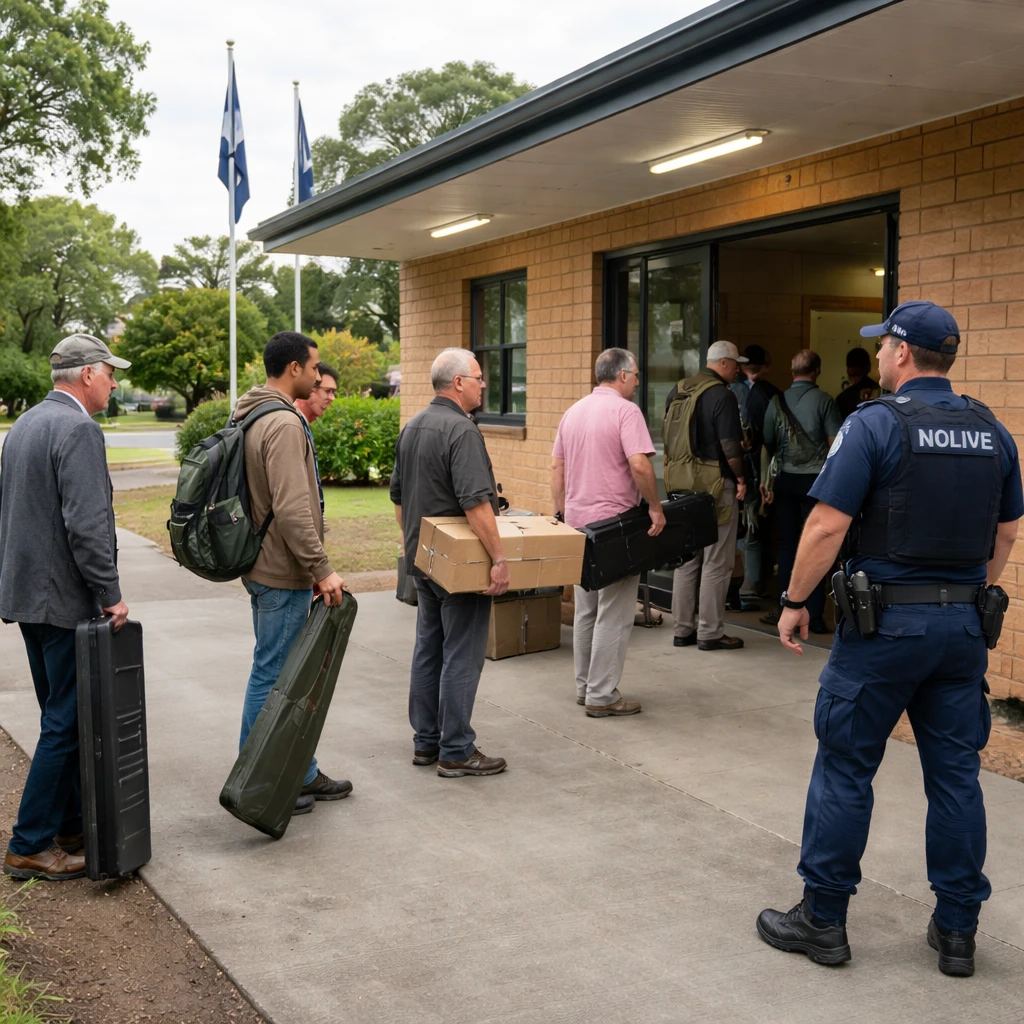
The New South Wales state government will begin a firearm buyback program on November 2, Prime Minister Anthony Albanese said, as part of national measures introduced after a December attack in Sydney that left 15 people dead. The program offers up to A$1,000 ($700) for returned rifles and handguns and follows laws passed in January tightening licence checks and increasing efforts to tackle hate-related behaviour.

New South Wales to Launch Nationwide Gun Buyback on November 2, Albanese Confirms
Summarize with
ChatGPT Perplexity Claude Grok Gemini

Key Points

  • New South Wales will begin a firearm buyback on November 2, with compensation up to A$1,000 per rifle or handgun; this is part of national measures enacted in January.
  • The policy follows a December 14 shooting at a Bondi Beach Hanukkah celebration that killed 15 people and involved weapons legally obtained by the alleged attackers.
  • The scale of firearms in Australia - a record 4.1 million nationwide and over 1.1 million in New South Wales - underscores the size of the initiative and potential impacts on public safety and related sectors such as law enforcement and firearms markets.

Prime Minister Anthony Albanese announced on Sunday that New South Wales will commence a gun buyback program on November 2, marking a central element of the national response to a deadly shooting that claimed 15 lives at a Jewish festival in Sydney.

Albanese’s centre-left government enacted the legislative framework for the buyback in January, introducing stronger vetting for gun licences and measures aimed at combating hate following the December 14 attack at a Bondi Beach Hanukkah celebration in Australia’s largest city. Authorities say the alleged assailants used powerful firearms that had been legally obtained.

Officials said people who hand in rifles and handguns under the scheme will be eligible for up to A$1,000 in compensation per firearm - a figure presented alongside a dollar equivalent of about $700. A separate government figure cited that Australia held a record 4.1 million firearms last year, with more than 1.1 million of those located in New South Wales.

Federal and state leaders characterized the buyback as the country’s largest since the post-Port Arthur campaign in 1996, which followed a massacre in Tasmania in which 35 people were killed. In televised remarks, Albanese said, "Australians are quite rightly proud of our gun laws, but the fact is there are more guns in Australia today than there were at the time of dealing with the Port Arthur gun buyback."

As part of the state-level reforms introduced after the Bondi Beach attack, New South Wales has imposed a limit that restricts individuals to possession of four guns. Authorities have attributed the Bondi Beach killings to a father and son who police believe were inspired by the militant group Islamic State.

One surviving suspect, 24-year-old Naveed Akram, remains before the courts and has yet to enter pleas to a range of charges, which include 15 counts of murder. The announcement of the buyback and the related legal and licence reforms form part of a coordinated response by federal and New South Wales officials.

Exchange rate context included in reporting shows $1 equals 1.4122 Australian dollars.


Summary of developments:

  • New South Wales to start gun buyback on November 2 with up to A$1,000 compensation per returned rifle or handgun.
  • Measures follow January laws tightening licence checks and actions to crack down on hate after a December 14 attack at a Bondi Beach Hanukkah event that killed 15 people.
  • Australia held a record 4.1 million firearms last year, more than 1.1 million of which are in New South Wales.

Risks

  • Logistical and implementation challenges given the large number of firearms in circulation - Australia had 4.1 million firearms last year and more than 1.1 million in New South Wales, which may complicate recovery efforts - this could affect administrative and enforcement capacities in law enforcement and public safety sectors.
  • Legal uncertainty linked to the ongoing criminal process: the surviving suspect, Naveed Akram, 24, has not yet entered pleas to a range of charges including 15 counts of murder, leaving aspects of the case unresolved and subject to court outcomes that may influence public policy responses.
  • Uncertainty about the effectiveness of the measures in reducing hate-related violence: while January laws introduced tougher licence checks and actions to tackle hate, the article does not provide information on projected outcomes or metrics to assess success, leaving impact on community safety and related social services indeterminate.

More from World

Contrasting Responses: How Rescue Operations Diverged After Quakes in Venezuela and Colombia Aug 15, 2026 Ecuador’s Coastal Fishermen Trapped Between Cartel Extortion and U.S. Strike Campaigns Aug 15, 2026 Son of Former Mexican President Says U.S. Authorities Revoked His Visa Aug 14, 2026 Woman Arrested and Charged in Vandalism of Washington World War Two Memorial Aug 14, 2026 World War Two Memorial in Washington Defaced with Soap Bubbles and Paint Aug 13, 2026