
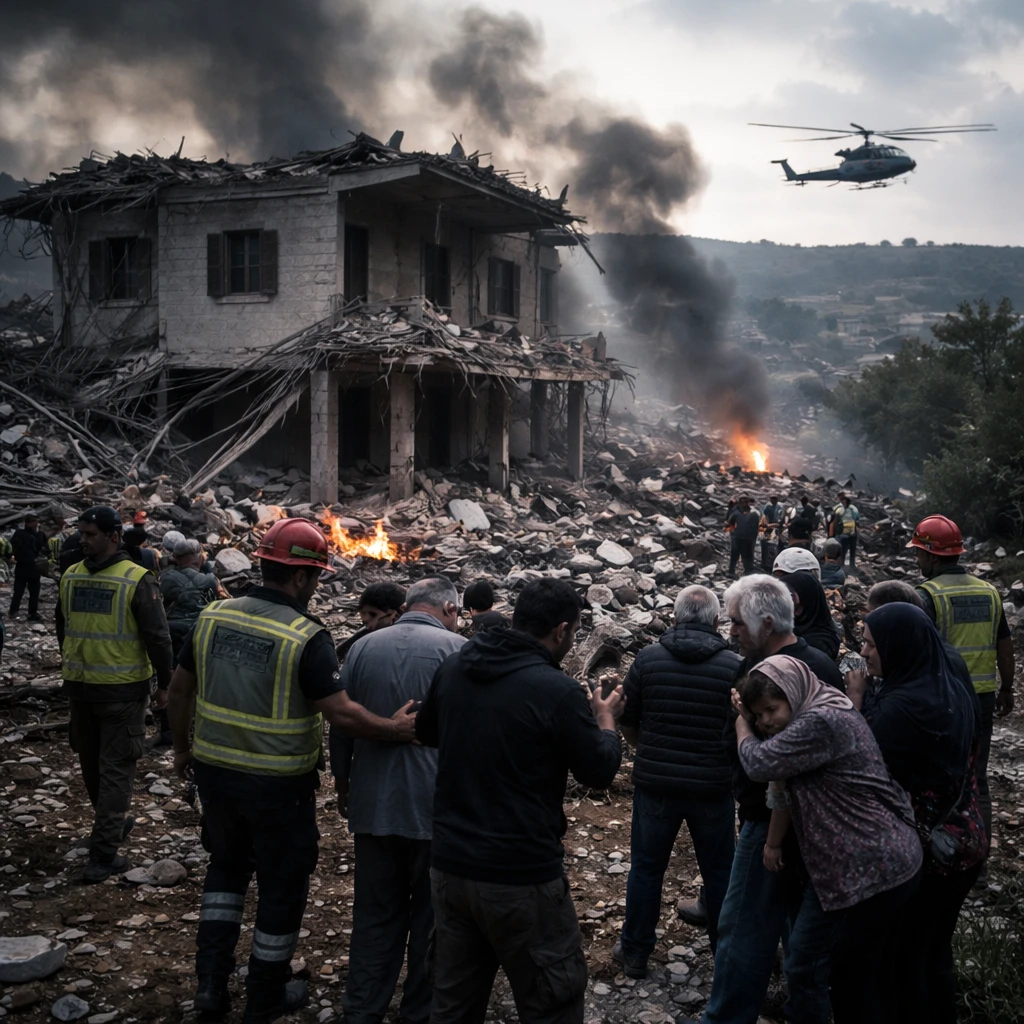
Israeli air operations in southern Lebanon on Saturday resulted in the deaths of at least 11 people, Lebanon's health ministry said, marking the most lethal flare-up since a ceasefire that began in June.
Lebanon's official news agency reported that seven people - among them three children - were killed when an Israeli warplane struck a residence on the outskirts of the village of Ansar. In a separate strike on Deir al-Zahrani, four additional fatalities were reported.
Lebanese authorities also said the attacks left 19 people wounded.
The Israeli military characterized the strikes as directed at Hezbollah infrastructure, saying the operations followed a Hezbollah attack that wounded three Israeli soldiers. The military said a Hezbollah commander was killed in the Ansar strike and accused the group of using civilians as human shields.
Lebanese Prime Minister Nawaf Salam strongly condemned the strikes, saying they threatened efforts to stabilize the country and undermined ongoing negotiations.
Officials and observers have noted that the violence poses a direct threat to a U.S.-brokered arrangement agreed in June. That arrangement linked a phased Israeli withdrawal from southern Lebanon with steps toward Hezbollah's disarmament; the recent strikes raise the prospect that the terms of that arrangement could be jeopardized.
This incident stands out as the deadliest escalation since the June truce went into effect, and it underscores the fragility of the arrangements intended to reduce hostilities along the Israel-Lebanon frontier. Reported casualty figures, the Israeli military's stated rationale for the strikes, and Lebanon's political response are the core facts available from official statements.
Context and immediate facts
- At least 11 people were killed in Israeli airstrikes on southern Lebanon on Saturday, according to Lebanon's health ministry.
- Seven people, including three children, died when a house on the outskirts of Ansar was struck; four others were killed in a separate strike on Deir al-Zahrani, as reported by Lebanon's state news agency.
- Lebanese authorities said 19 people were wounded.
- Israel said the strikes targeted Hezbollah infrastructure following a Hezbollah attack that wounded three Israeli soldiers; the Israeli military said it killed a Hezbollah commander in the Ansar strike and accused Hezbollah of using civilians as human shields.
- Lebanese Prime Minister Nawaf Salam said the strikes jeopardized stabilization efforts and undermined ongoing negotiations tied to a U.S.-brokered arrangement reached in June.
These are the verified statements and figures released by the relevant authorities. Where available, official attributions are noted; no additional claims or interpretations are introduced beyond those statements.