
Economy August 15, 2026 02:06 AM

ADNOC Vessel Attacked in Strait of Hormuz as Trump Backs Extended Carrier Patrol

Third ADNOC ship hit in under a week raises shipping and energy security concerns while US president defends long carrier deployment

By Priya Menon
Share
Twitter Reddit Facebook LinkedIn

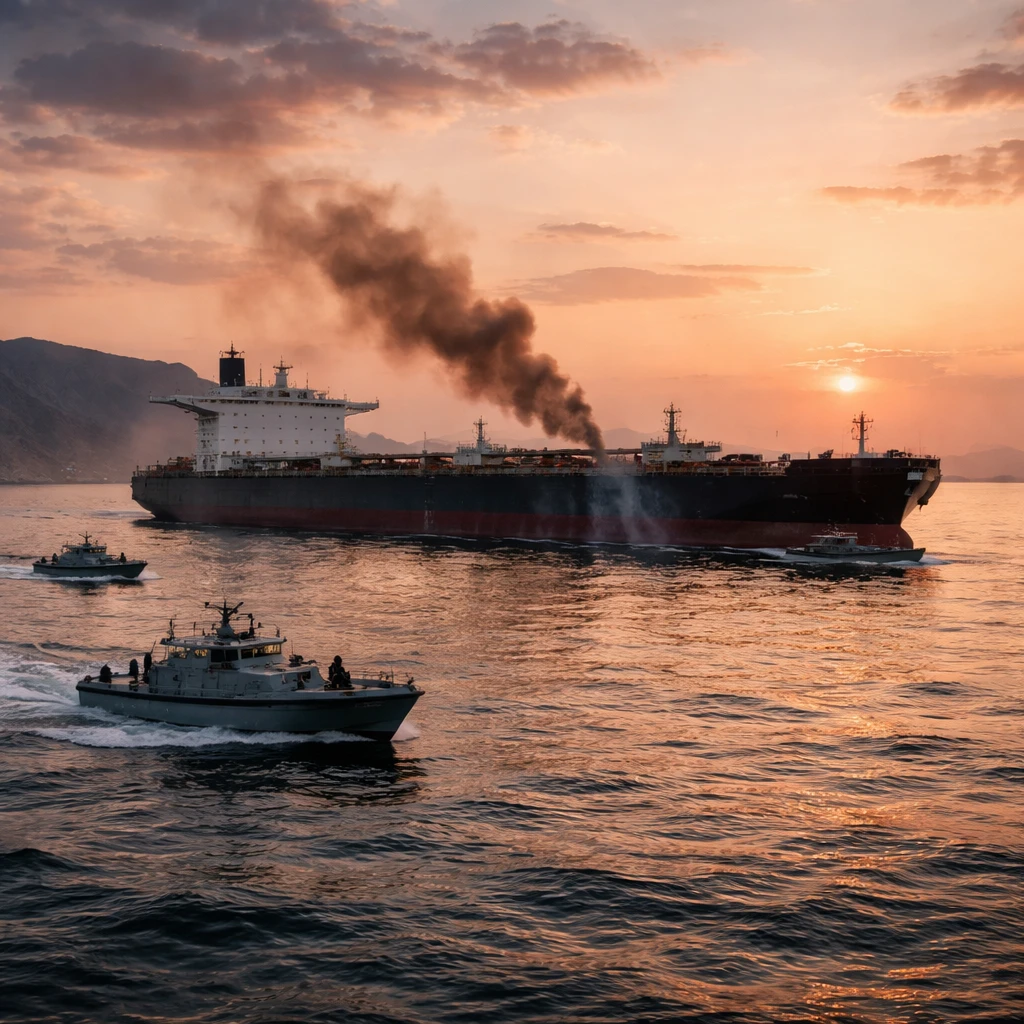
A ship operated by the Abu Dhabi National Oil Company was struck while passing through the Strait of Hormuz, the company said, the third such incident involving an ADNOC vessel in fewer than seven days. No injuries were reported and authorities said the situation was controlled. The episode amplifies security worries for a chokepoint that handled about one-fifth of global oil and LNG flows before the current conflict. Separately, President Donald Trump dismissed worries about the length of the USS Abraham Lincoln's deployment, saying the carrier's time at sea was "not nearly long enough."

ADNOC Vessel Attacked in Strait of Hormuz as Trump Backs Extended Carrier Patrol
Summarize with
ChatGPT Perplexity Claude Grok Gemini

Key Points

  • An ADNOC-operated vessel was attacked while transiting the Strait of Hormuz on Friday; ADNOC said there were no injuries and the situation was contained.
  • This was the third incident involving an ADNOC ship in under a week; the UAE had accused Iran of two earlier attacks but had not publicly assigned responsibility for Friday's incident at the time of the report.
  • The Strait of Hormuz handled about one-fifth of global oil and LNG shipments before the current conflict; disruptions since the US-Israeli war with Iran began on February 28 have pushed freight rates higher and increased risks for energy exports. - Impacted sectors: Energy, Shipping, Defense

A vessel run by the Abu Dhabi National Oil Company (ADNOC) came under attack while transiting the Strait of Hormuz on Friday, ADNOC said, marking the third incident involving one of its ships in less than a week. The company reported on Saturday, via the United Arab Emirates' state news agency WAM, that there were no injuries and that the situation had been brought under control.

The UAE had publicly attributed two earlier attacks to Iran, the statement said. Emirati officials had not assigned responsibility for Friday's specific incident publicly at the time of the report.

The incident underscores mounting security concerns around the Strait of Hormuz, the narrow passage separating Iran and Oman. Before the current conflict, the waterway handled roughly one-fifth of global shipments of crude oil and liquefied natural gas, according to the information in the report. Since the US-Israeli war with Iran began on February 28, shipping through the strait has experienced repeated disruptions, raising freight costs and heightening risks to energy exports.

ADNOC, one of the world's largest energy producers, exports crude oil, natural gas and refined products to international markets. The recent series of attacks on its vessels has intensified scrutiny of maritime security along key export routes and of the vulnerability of energy logistics in the region.


In a separate development, US President Donald Trump pushed back against concerns about how long the aircraft carrier USS Abraham Lincoln has been deployed in support of operations related to Iran. When asked whether a deployment exceeding 260 days had become excessive, the president replied, "Not nearly long enough."

Trump said the Lincoln was moving, or would move shortly, and that it would be replaced by a similar vessel. The carrier departed San Diego in November and was later redirected to the Middle East. It has a crew complement of about 5,000 sailors and Marines and has gone more than 200 days without a port visit.

Senator Richard Blumenthal, a Democrat, said the period at sea represented a modern record for consecutive days without a port call. Several Democratic lawmakers have sought answers after families of sailors raised concerns about mental health, living conditions and supplies aboard the ship. Defense Secretary Pete Hegseth rejected reports suggesting conditions were deteriorating, saying on Thursday that those accounts had been misrepresented.

Together, the maritime attacks and the extended carrier deployment highlight overlapping security and personnel issues affecting military operations and commercial shipping in a region that is critical to global energy flows.

Risks

  • Repeat attacks or continued disruptions in the Strait of Hormuz could further raise freight rates and threaten energy export flows - Affects: Energy, Shipping
  • Escalation of maritime incidents could complicate military deployments and logistics in the region, placing additional strain on naval personnel and resources - Affects: Defense, Personnel readiness
  • Uncertainty over attribution for the latest attack leaves diplomatic and security responses unclear, sustaining volatility for markets dependent on Middle East energy routes - Affects: Energy markets, Trade

More from Economy

American Consumer Confidence Eases in Early August as Inflation Concerns Mount Aug 14, 2026 Canadian Yields Slide as U.S. Producer Inflation Cools and Trade Talks Progress Aug 13, 2026 Argentina's Inflation Edges Up in July as Services Lead Price Gains Aug 13, 2026 ECB Poised for One More Rate Hike Next Month, Then a Long Pause, Poll Shows Aug 13, 2026 Brazilian Data Authority Orders Suspension of Discord Livestreaming Over Child Safety Failings Aug 12, 2026