
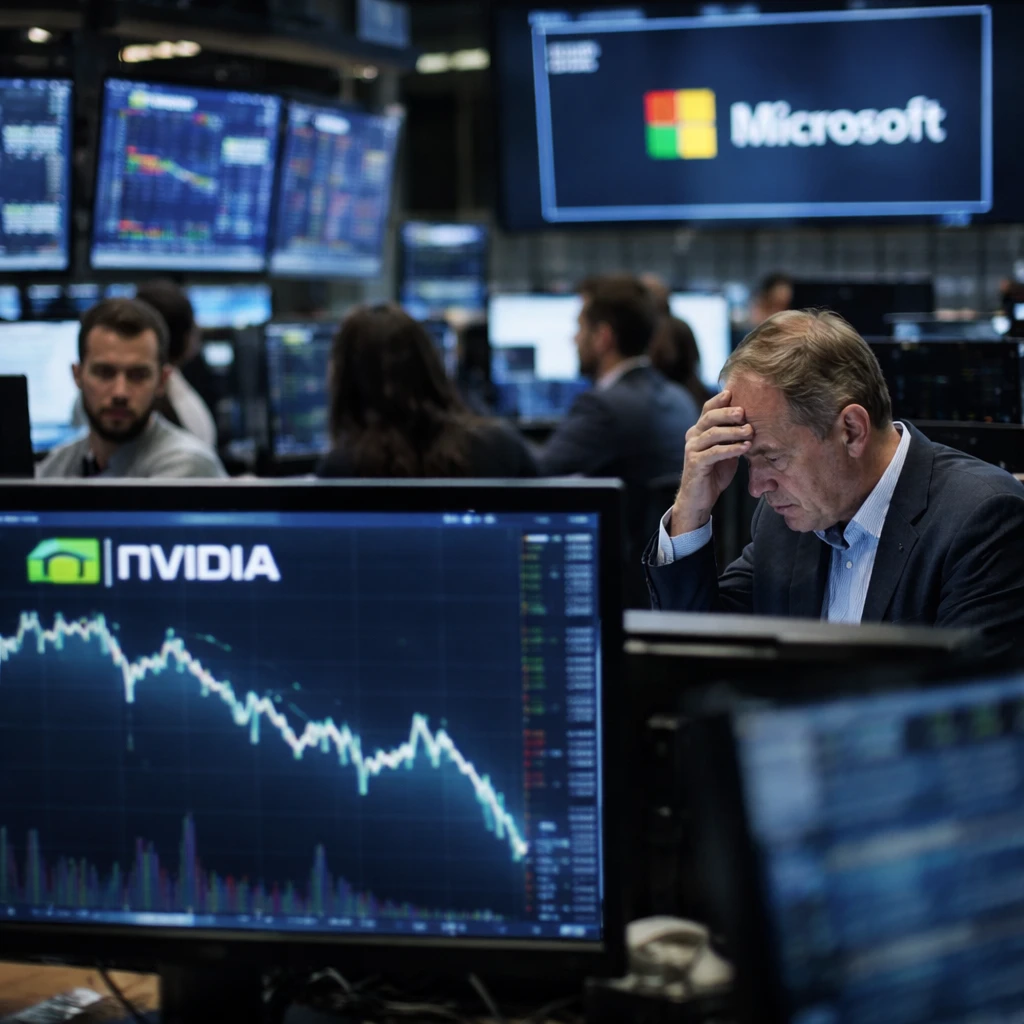
Nov 13 - Futures tracking the Nasdaq 100 moved marginally lower early on Friday following a volatile week that intensified investor concern about AI-related equities amid upheaval at chip heavyweight Nvidia. In premarket transactions Nvidia stock rose 1.8% after having declined roughly 11% over the week through Thursday. Despite the premarket uptick, the shares remain positioned for what would be their longest run of weekly losses since October 2012.
The market disruption stems from reports that led to the abrupt departure of Nvidia’s chief executive, Jensen Huang, after allegations of extramarital affairs were published, including one alleged involvement with a suspected Chinese intelligence operative. Investors cautioned that the leadership change could prompt heightened scrutiny of the company’s financing arrangements with other players in the AI ecosystem.
"I’m a bear for AI-related stocks. You’ve got to exit these waves before they crash. And in AI, we’ve got a big wave going on," said Sean Peche, founder and portfolio manager at Ranmore Fund Management, reflecting an increasingly cautious stance among some managers toward AI exposures.
Beyond corporate headlines, markets are focused on macro data. Traders are awaiting October’s producer price inflation reading, which market participants say could be pivotal in shaping expectations for the Federal Reserve’s policy decision next month. Futures markets are pricing in a rate increase; some central bank officials have recently reopened the discussion of a 50 basis point move as an alternative to the more widely expected 25 basis point rise. As measured by the CME FedWatch tool, the probability of a 50 basis point hike stands near 12%.
At 5:03 a.m. ET, futures showed a mixed early picture: Dow E-minis were up 98 points, or 0.19%, S&P 500 E-minis rose 9.75 points, or 0.13%, while Nasdaq 100 E-minis were down 31 points, or 0.11%.
Market internals and individual names delivered uneven signals. A snapshot of market tickers during the session included NDX -0.3%, US500 -0.35%, DJI -0.36%, MSFT +0.36%, NVDA -4.34%, AMD +5.86%, LCO -0.61%, CL -0.98%, AVGO +5.54%, MSTR -6.49%, MARA -6.01%, BTC/USD -5.68%, COIN -4.11%, CBRS -3.29%. These intraday figures coexisted with narrative accounts during trading that several chip shares were softer, with AMD and Broadcom reported as down more than 2.5% each.
The weak tone toward AI and chip names is countering hopes for a recovery in equities after last week’s sell-off that followed political developments. Sentiment has been volatile enough that even positive company news has not fully steadied markets.
Microsoft suffered one of its largest service disruptions on Friday, with Outlook, Teams and Copilot experiencing outages that extended beyond 12 hours and disrupted communications for business and government users worldwide. The interruption weighed on the stock, which fell 2.6% in premarket trade and was noted as the sole member of the so-called Magnificent Seven to trade lower in that session.
By contrast, Cerebras surged more than 16% after the chip and cloud computing vendor raised its revenue guidance for 2026 and disclosed that Microsoft will be a customer. Strong earnings results have intermittently supported market resilience this week - of the roughly 450 S&P 500 companies that had reported through Thursday, 83.6% beat expectations, according to Tajinder Dhillon, head of earnings and equity research at LSEG Data and Analytics.
Despite pockets of strength, investors remain wary of several risks. Geopolitical developments continue to figure in market calculations, while energy markets have been firm: oil prices moved higher for a third straight session the day after President Donald Trump said the United States does not need a deal with Iran. Crypto-related names also slumped, with Coinbase, Strategy and MARA Holdings falling between about 2% and 2.6% as bitcoin slid to roughly a three-month low.
For now, market participants must weigh leadership turmoil at a central AI supplier, an extended service outage at a major cloud and software provider, and incoming inflation data that could change the interest-rate outlook - all variables likely to keep volatility elevated in the near term.