
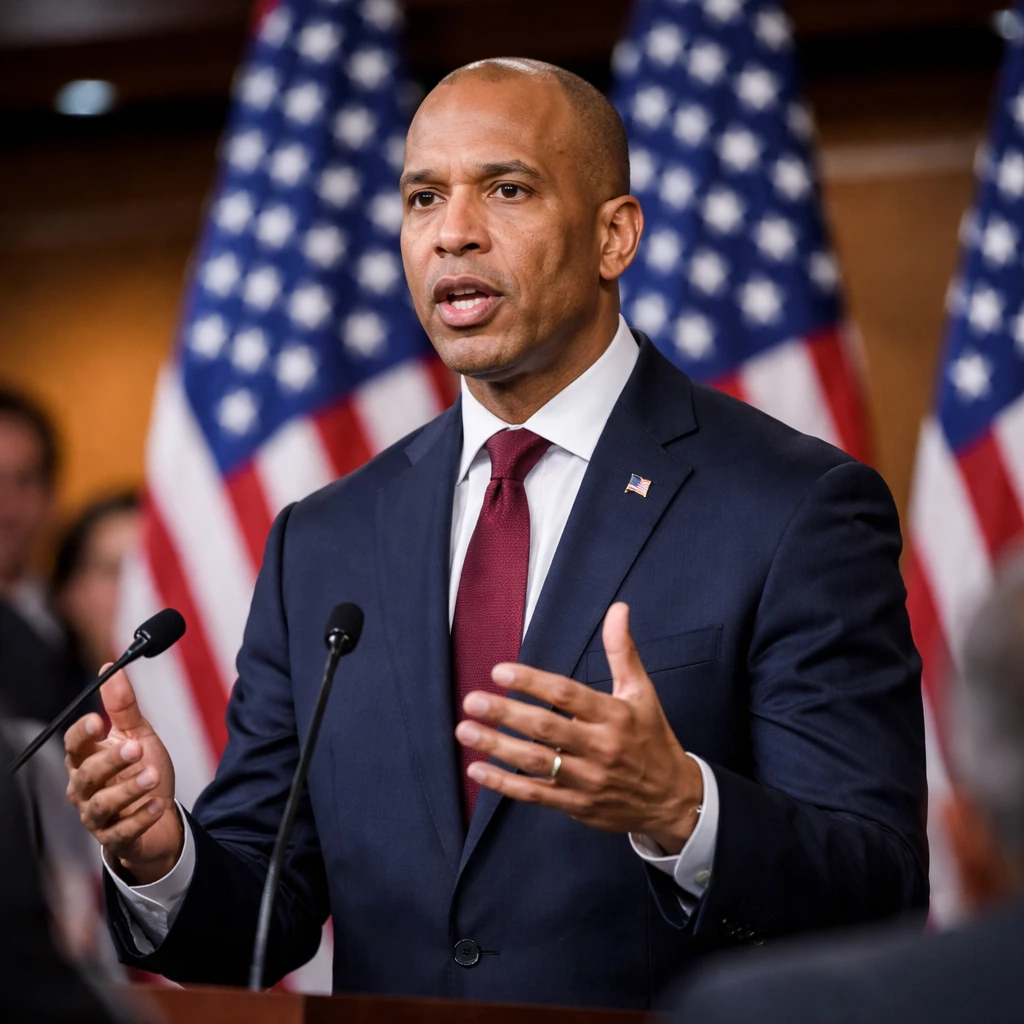
WASHINGTON, Nov 12 - House Democratic leader Hakeem Jeffries said on Thursday that the current approach to the Middle East is untenable and pressed for substantial policy shifts that would seek lasting outcomes for both Israelis and Palestinians.
Speaking at a weekly press conference, Jeffries reiterated his backing for a two-state solution, describing his vision as one in which Israel remains a secure Jewish and democratic state while an independent Palestinian state exists alongside it, providing dignity and self-determination for Palestinians.
"The status quo is unacceptable, and we need dramatic change. And that looks like, as far as I’m concerned, making sure you have a safe and secure Israel, living side by side as a Jewish and democratic state with an independent Palestinian state that provides dignity and self-determination for the Palestinians," Jeffries said.
Jeffries, a Democrat from New York who is widely expected to become the next House speaker, made his remarks in the wake of Democratic gains in last week’s midterm elections. Those victories could alter the scope of U.S. legislative support for Israel as House Democrats prepare to assume control of both chambers of Congress on Jan 3.
Next year, Democratic leaders will lead in drafting bills and determining which measures reach the floor for a vote. However, Republican President Donald Trump remains in office and retains the authority to veto legislation passed by Congress. Overriding a presidential veto would require two-thirds majorities in both the House and the Senate.
Many of the Democrats elected in the recent midterms ran on platforms that opposed continued military aid to Israel and were critical of U.S. support for a potential conflict with Iran. Those positions are expected to receive heightened attention and debate in the incoming congressional session.
Jeffries also called specifically for changes in the West Bank and Gaza, and for reconsideration of the Memorandum of Understanding with Israel that currently provides $3.8 billion in U.S. military assistance annually. That agreement is set to expire in September 2028.
He framed his remarks around the need to balance Israel’s security with Palestinians’ aspirations for nationhood and dignity, and his comments underscore the shifting dynamics within U.S. politics as Democratic leaders prepare to shape the legislative agenda.
Context and implications
With control of both congressional chambers set to shift, Democratic priorities on foreign policy - including scrutiny of military aid and the shape of U.S. engagement in Gaza and the West Bank - will move to the forefront of Washington’s agenda. Any legislative changes would still confront the constitutional check of a presidential veto.