
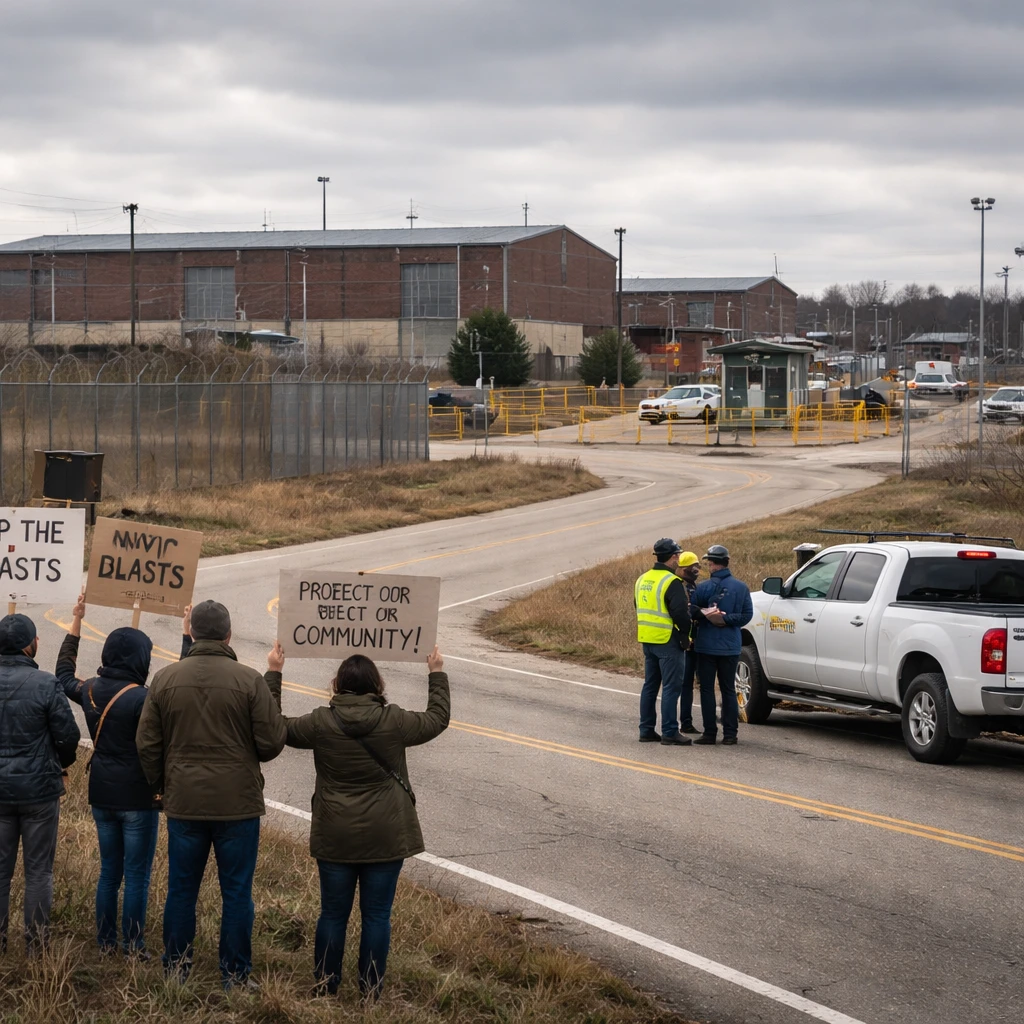
The Army on Thursday announced a short postponement of controlled explosions intended to neutralize a stockpile of degraded lead azide at the Iowa Army Ammunition Plant in Middletown. Acting Army Secretary Adam Telle said the operation, originally set for Friday, would be delayed until Monday, which he characterized as the latest possible window before a projected temperature drop that he warned could "risk further destabilization of the material."
Officials had concluded that two controlled detonations represented the safest means to dispose of the compound, which is used in detonators and was discovered in a degraded state. The office of Iowa U.S. Senator Chuck Grassley said the Army feared a spontaneous explosion of the degraded lead azide would be "catastrophic," and that the controlled blasts were intended to prevent such an outcome.
Alongside local opposition, two environmental organizations filed expedited legal action seeking to block the planned disposal. In an emergency motion submitted on Thursday, the Iowa Environmental Council and the Sierra Club asked the 8th U.S. Circuit Court of Appeals to halt an Environmental Protection Agency permit that authorizes the destruction of 68 drums of the compound. The groups contend that the chosen disposal method would disperse toxic lead dust over a broad area of Iowa and potentially into neighboring Illinois.
The environmental groups further argued that the EPA did not require sufficient safeguards or properly evaluate alternative disposal options, and that the public was denied a meaningful opportunity to comment on the permit. The EPA did not immediately respond to requests for comment on the filing and the broader dispute.
The EPA permit itself includes a number of conditions intended to reduce risk, among them public notifications, blast-containment measures, and requirements for corrective action should contamination occur as a result of the blasts.
Local residents and opponents expressed frustration with what they described as inadequate prior warning and insufficient responsiveness from Army and government officials. Some had been advised to leave their homes during the planned operation, and others said they only recently learned of the hazard.
Responding to the local concerns, Acting Secretary Telle said the Army would continue active engagement with state and local officials throughout the region to provide "accurate, up-to-date information." He also said the Army first uncovered the degraded lead azide in March and began informing local officials about the danger at that time, though awareness among some community members appears to have come later.
A small group of demonstrators staged a protest on the highway near the facility on Wednesday, and several local elected officials called for the operation to be postponed. Jill Holler, who organized Wednesday's protest, said she was disappointed the delay was only for three days.
The situation remains fluid: the Army has postponed the operation to the earliest feasible later date, environmental groups have mobilized legal efforts to stop the planned detonations, and local residents continue to press for clearer communication and stronger safeguards.