
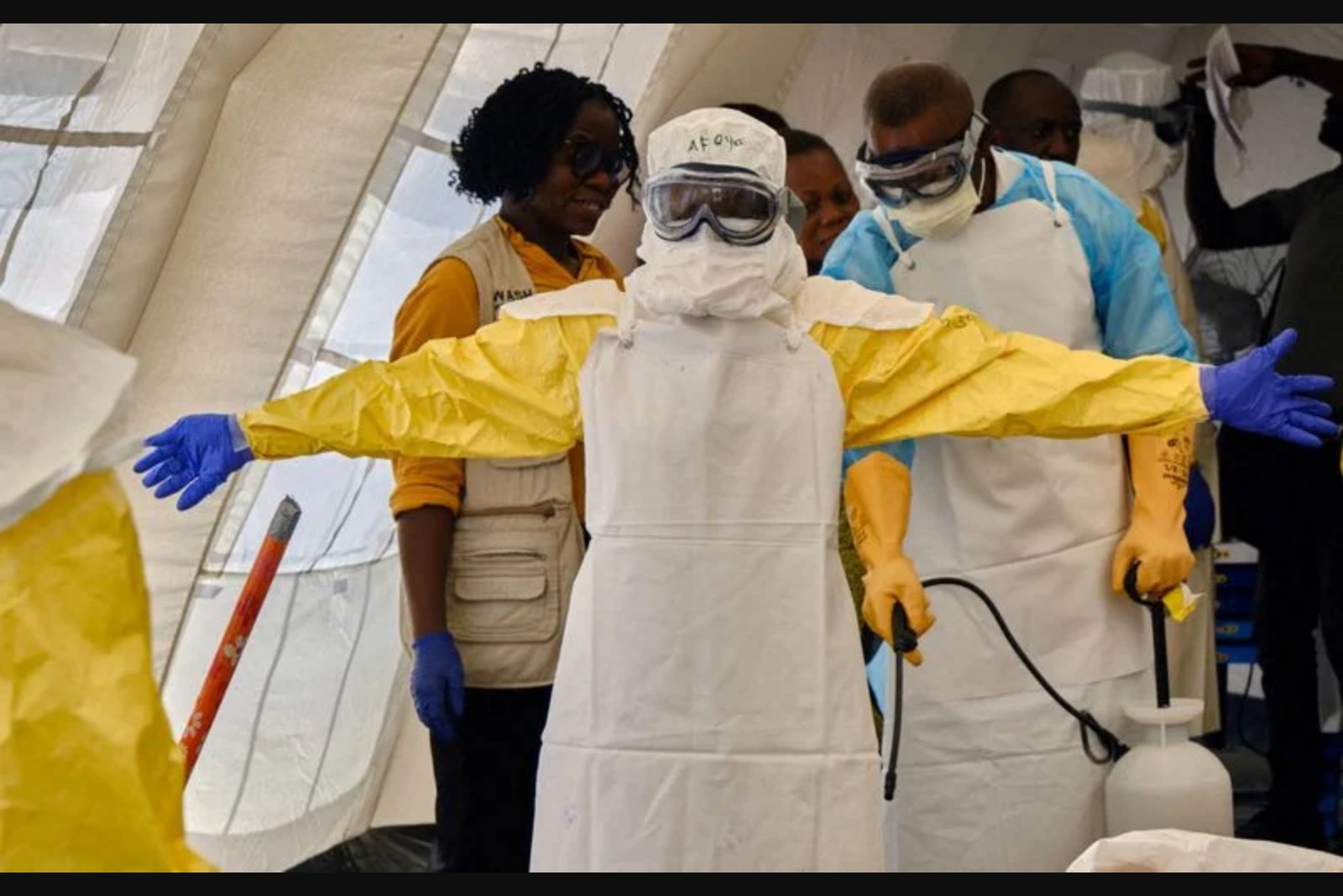
One month after the first confirmed Ebola cases were reported in eastern Democratic Republic of Congo, responders and public health officials say they still do not know the outbreak’s true scale. Official tallies show 782 confirmed cases and 181 deaths across three provinces in the east, making this already the third deadliest Ebola outbreak on record. But aid organisations and some Congolese officials say those totals probably undercount the crisis.
Medical charity Medecins Sans Frontieres (MSF), which manages treatment centres in the affected region, said government figures "likely understate the true toll." Kate White, MSF’s emergency medical coordinator, said: "No one knows the true scale or exactly where the disease is spreading in DRC."
Testing and surveillance bottlenecks
MSF described testing as "one of the most significant weaknesses in the response." In areas affected by active armed conflict, communities often lack access to test kits, and many treatment centres must wait long periods for laboratory results. Those delays limit the ability to identify and isolate cases promptly.
A senior Congolese public health official, speaking on condition of anonymity because he was not authorised to brief the media, told Reuters that the problems extend beyond testing. He said data comes from three separate sources - laboratories, hospitals and treatment centres, and epidemiological surveillance teams - and that these streams are extremely difficult to harmonise. That mismatch can produce distortions in either direction.
For instance, cases may be double-counted when a patient crosses health zones and is tested more than once. At the same time, people continue to die in their communities without ever entering official statistics. The anonymous official added that he believed the virus began circulating in February.
Discrepancies at the local level
Disparities between local reports and national situation updates illustrate the information gap. Reuters reported that two people died at a displacement camp in Ituri’s Nizi health zone on May 31 and June 1, citing a U.N. refugee agency report. The head doctor for Nizi, Jean-Claude Lonzama, told Reuters his zone had recorded 19 positive cases and 17 deaths since the outbreak was declared.
By contrast, the latest national situation report published by health authorities logged only 11 cases and one death for the same area. Dieudonne Mwamba, director general of Congo’s National Public Health Institute, which issues daily situation reports, told Reuters that figures are regularly updated as new information arrives.
Community resistance and security incidents
Beyond gaps in clinical data, responders face hostility in some communities that complicates containment and care. Security forces fired warning shots and used tear gas at a funeral in Mongbwalu to break up a crowd attempting to seize the body of a suspected Ebola victim, according to officials and footage verified by Reuters.
The World Health Organization (WHO) warned that such security incidents are occurring across the region, pointing to a separate attack on a burial team in South Kivu two weeks ago that forced health workers to abandon a body before completing safety protocols. The WHO also reported that patients are absconding from treatment or isolation centres, with at least four such incidents recorded in the first week of June.
MSF said mistrust of health teams is widespread across Ituri. In response to these tensions, Congo’s Mwamba said that safe burial teams will now attempt to include a family member in burial preparations in order to build trust.
Treatment capacity under strain
The WHO said hospital capacity to treat and isolate Ebola patients is insufficient. There are only 14 treatment facilities and centres across nine health zones in Ituri, North Kivu and South Kivu provinces, yet the outbreak has already reached 31 of at least 90 health zones - defined areas that include a network of clinics and a referral hospital - across those provinces.
In some areas the lack of local capacity has immediate consequences. In Nizi, the absence of any treatment or isolation facility means patients often return to their communities and die there, Jean-Claude Lonzama said.
MSF warned the window for containing the outbreak is narrowing and urged urgent action to shore up the response. Frederic Lai Manantsoa, MSF’s emergency coordinator in DRC, said: "Diagnostics, surveillance, access to care, and community engagement must be urgently strengthened." He called on authorities and stakeholders to facilitate movement of health workers and supplies to enable a response commensurate with the scale of the crisis.
Context within global Ebola experience
The article noted that the 2014-2016 West Africa outbreak was the worst on record, killing more than 11,000 people. In the current eastern Congo outbreak, responders and officials are focused on addressing diagnostics shortfalls, harmonising data streams, expanding access to care and reducing community resistance to allow safe burials and consistent treatment.
Until those challenges are addressed, health authorities and aid groups warn, official counts are likely to remain an incomplete representation of the outbreak’s true footprint and human cost.