
World July 30, 2026 08:04 AM

Survivors of Venezuela’s Twin Quakes Seek Safety and Shelter Far from the Coast

Displaced families move inland to cities like Maracaibo, trading aftershock risk for economic uncertainty while awaiting government housing

By Avery Klein
Share
Twitter Reddit Facebook LinkedIn

Weeks after the June 24 twin earthquakes that struck Venezuela’s central coast, survivors are relocating inland to escape persistent aftershocks and trauma. Adriana Aponte, a 26-year-old mother of three, moved from La Guaira to the oil-producing city of Maracaibo with help from relatives. The disaster killed at least 5,500 people, displaced tens of thousands into tent camps, and is driving internal migration toward poorer western states such as Zulia.

Survivors of Venezuela’s Twin Quakes Seek Safety and Shelter Far from the Coast
Summarize with
ChatGPT Perplexity Claude Grok Gemini

Key Points

  • The June 24 twin earthquakes, with magnitudes of 7.2 and 7.5, killed at least 5,500 people and forced about 23,800 into tent camps, triggering significant internal displacement.
  • Survivors are relocating from the devastated coastal region to poorer western states such as Zulia; Maracaibo, an oil-producing city, is receiving displaced families who seek relief from aftershocks.
  • Displaced families rely on limited financial help from relatives and temporary shelter while they wait for government housing; sectors affected include housing and construction, regional local economies, and oil-producing regions that host incoming populations.

MARACAIBO, Venezuela, July 29 - Weeks after the twin earthquakes that devastated the central coast of Venezuela, families are leaving the hardest-hit areas in search of places where aftershocks are less frequent and the immediate fear of collapse is reduced.

Adriana Aponte, 26, moved from La Guaira to the oil-producing city of Maracaibo with her three children following the June 24 double-quake, which registered magnitudes of 7.2 and 7.5. The quakes killed at least 5,500 people and left roughly 23,800 people living in makeshift tent camps. The catastrophe has also prompted internal displacement, sending survivors from the ruined coastal region into economically strained western states such as Zulia.

"The fear will always be there, haunting you," Aponte said, describing the emotional toll that followed her family from the coast. "Sometimes you’d like to forget." She and her children left La Guaira because they wanted to be in a city free from the fear of constant aftershocks. The quakes reduced hundreds of buildings and homes to rubble in that area.

Aponte said her own house did not completely collapse, but a bedroom wall fell, splitting the room in half. When they decided to leave, a relative provided 50,000 bolivars (about $67) to cover the cost of their trip to Maracaibo, where they have family to stay with temporarily.

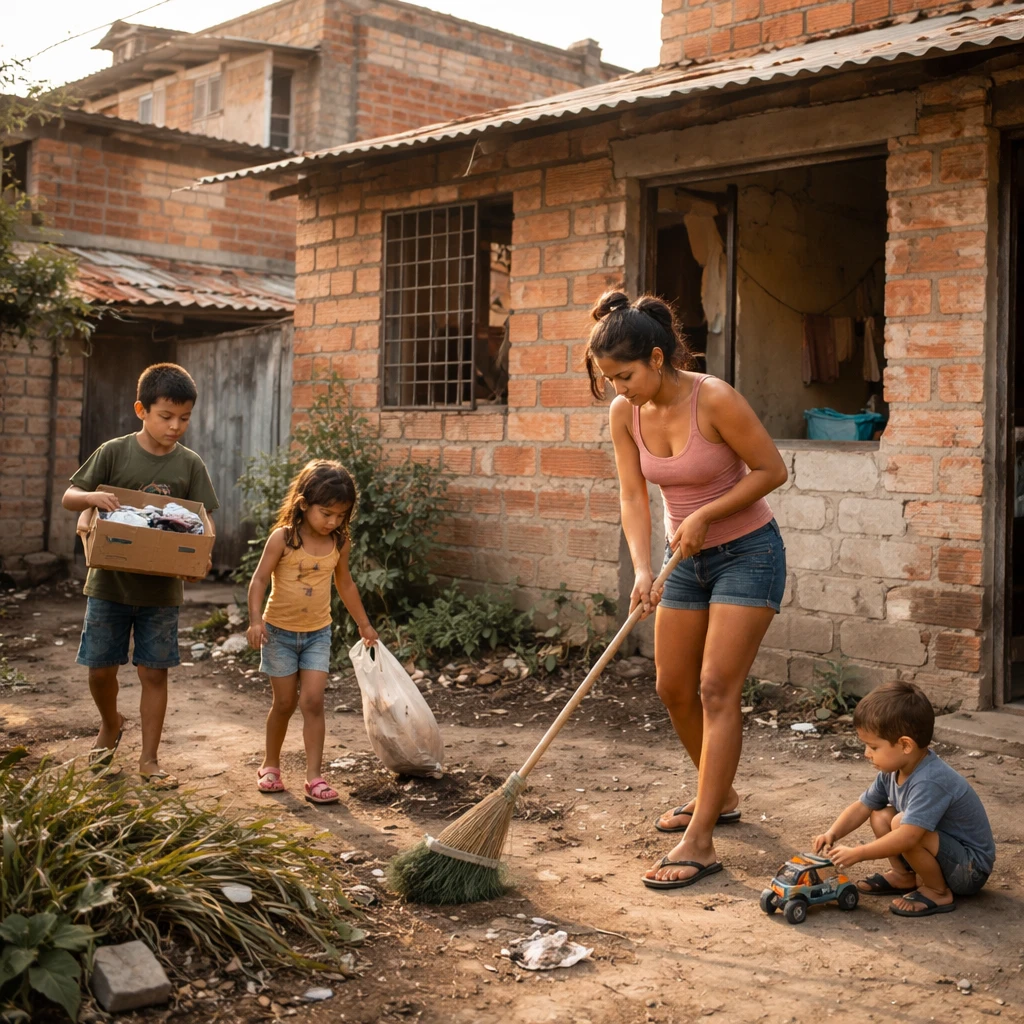
Now living in a modest two-story brick home with a simple zinc roof, Aponte and her family are cleaning away weeds and rubbish around the property. In the small living room, she said she and her children - ages 1, 4 and 10 - feel safer in Maracaibo, and she expressed hope that the situation is temporary while they wait for government-provided permanent housing.

Even as safety improves for her immediate household, Aponte said she carries regrets about leaving relatives behind. "Part of me feels bad because my dad and my sisters are still back in La Guaira," she said.


The movement of survivors like Aponte underscores the broader challenges facing displaced households: finding temporary shelter in places with fewer aftershocks, relying on family networks and limited financial assistance for relocation, and awaiting official housing solutions in the aftermath of a disaster that caused widespread destruction and loss of life.

Risks

  • Continued displacement and delayed provision of permanent housing create uncertainty for affected households and strain local services in receiving cities - this impacts the housing and construction sector.
  • Economic pressures on poorer recipient regions may rise as displaced populations arrive with limited funds, potentially affecting local markets and public services in cities such as Maracaibo.
  • Psychological trauma from the earthquakes and persistent fear of aftershocks may hinder recovery and stability for families, with implications for social services and community resilience.

More from World

Ukraine's National Bank hikes policy rate to 15.5% as inflation pressures mount Jul 30, 2026 U.S. State Department Map Error at Global AIDS Conference Mislabels Every African Country Jul 30, 2026 Thousands Enter Ceuta on Foot After Scaling Border Fence, EFE Says Jul 30, 2026 Lula Says Brazil Refused Visas for Two U.S. Officials Over Election Interference Concerns Jul 30, 2026 Chinese State Media Publicizes Broader Deployment of YJ-20 Hypersonic Anti-Ship Missile Jul 30, 2026