
At a high-profile address in Canberra, Pauline Hanson argued that Australia cannot remain a multicultural society and that current migration settings have precipitated a national crisis. Speaking at the National Press Club, the One Nation leader placed responsibility for what she termed "this immigration catastrophe" squarely on the centre-left Labor government, saying a recent influx of migrants has pushed up housing costs and made homes unaffordable for families.
Hanson told the press club audience that "undeniably, immigration or migration policy has our country in the state of crisis" and identified multiculturalism as the central flaw. "We cannot be a multicultural society. We are a multiracial society. But we must be monocultural," she said, adding that she has serious concerns about what she characterised as "radical Islam."
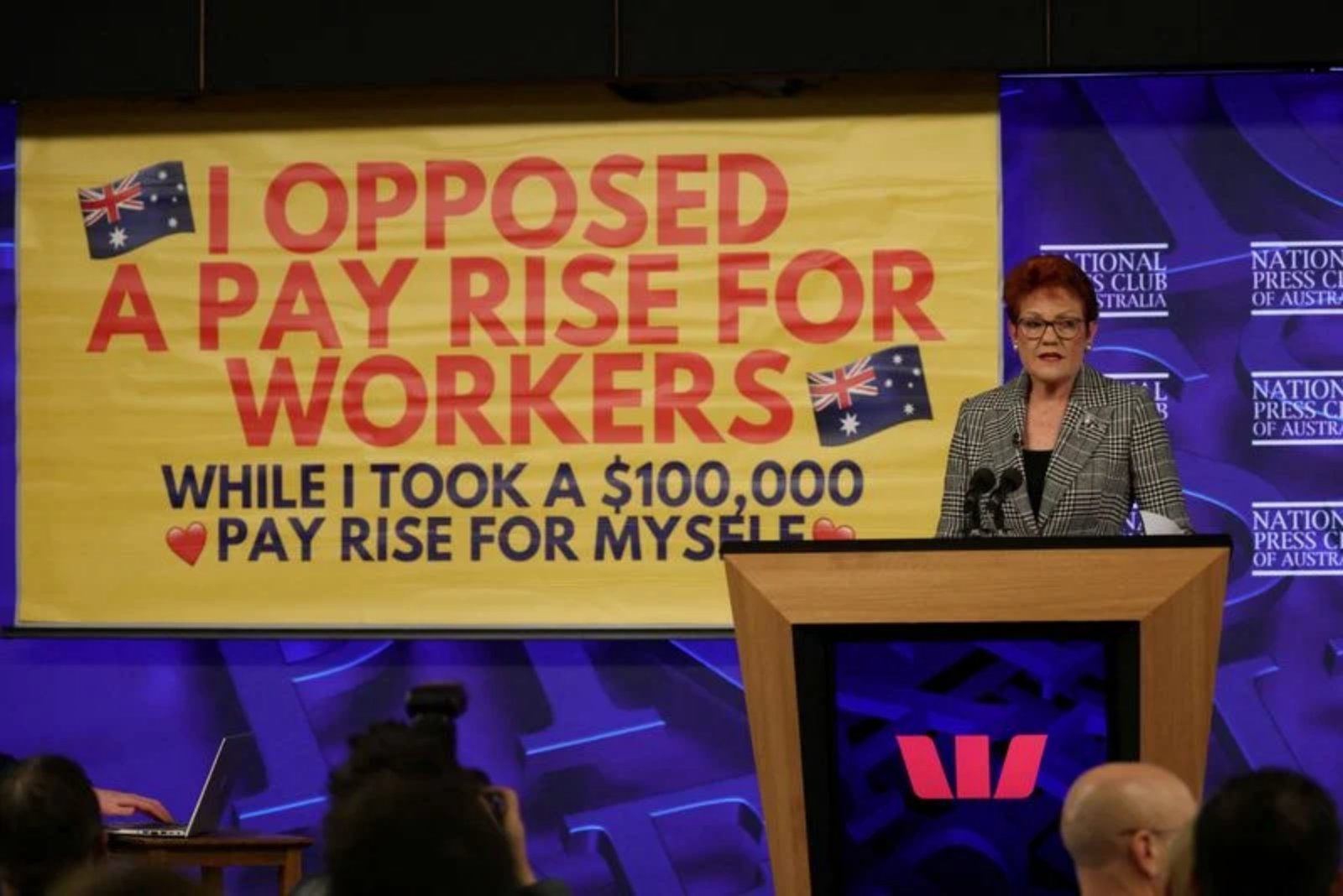
The veteran lawmaker declined to open her speech with a customary acknowledgment of Australia’s Indigenous communities, describing that practice as "divisive." During the event a banner calling attention to Hanson’s opposition to pay increases for workers was briefly displayed behind her before organisers removed it, and protesters gathered outside the venue.
One Nation’s platform includes a series of hardline immigration proposals. The party advocates mandatory visa cancellation for criminal offenders, withdrawal from the U.N. Refugee Convention, tighter visa rules, and a longer waiting period for Australian citizenship. The party has also signalled a desire to emulate aggressive deportation policies seen in the United States.
Demographic data cited at the event noted that almost one-third of Australia’s population of about 28 million was born overseas, according to the Bureau of Statistics, a share the article states is double that recorded in the United States or France. Hanson’s remarks and policy positions have drawn comparisons in the Australian media to international right-wing figures and movements.
Recent opinion polling has shown an appetite for Hanson and One Nation among some voters. A survey conducted for the Sydney Morning Herald indicated that Hanson had overtaken Prime Minister Anthony Albanese as Australians’ first preference for the top role. Founded in 1997, One Nation was long viewed as a fringe party, but the leader’s high-profile statements and firm stance on immigration correspond with increased support in a number of polls.
Despite polling gains, the mechanics of Australia’s preferential voting system continue to shape the electoral outlook. The system redistributes votes until a candidate reaches a majority, and analysts noted that some data suggest Labor would likely retain power if an election were held currently. One Nation’s parliamentary representation remains limited: the party holds a single seat in the lower house, captured in a May by-election in the New South Wales rural seat of Farrer, and it has four of the 76 Senate seats.
Context and implications
Hanson’s speech reasserts One Nation’s core messaging on immigration and national identity at a moment when the party’s public standing appears to be rising in opinion polls. Her criticisms of multiculturalism and the Labor government’s migration policy are framed around affordability concerns for families and national cohesion, and they have prompted visible reactions at the event itself, from banners to protests.
While One Nation’s platform sets out significant changes to immigration law and practice, the party’s limited representation in parliament and Australia’s preferential voting arrangements remain relevant constraints on the immediate implementation of those policies.