
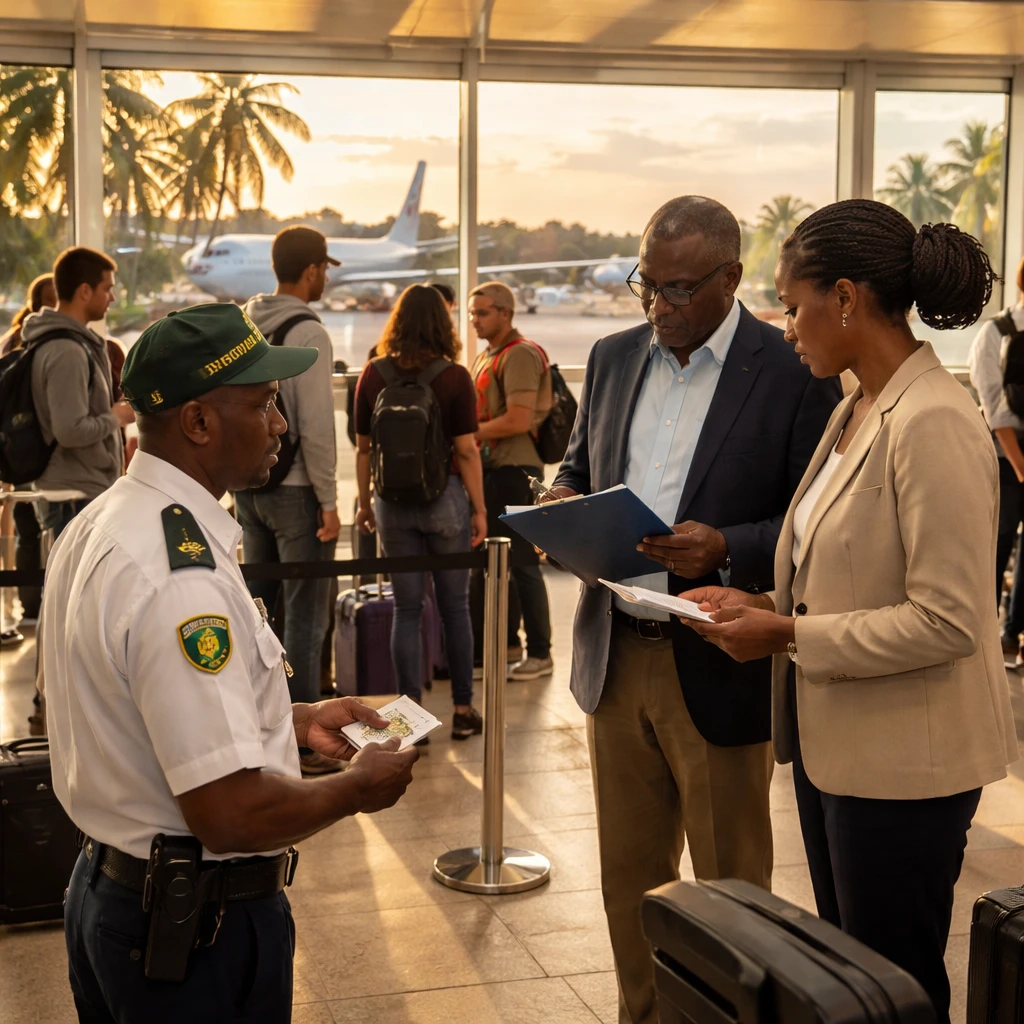
Jamaica is engaged in discussions with U.S. authorities about a proposed memorandum of understanding to accept third-country nationals deported by the United States, the island's Deputy Prime Minister and Security Minister, Horace Chang, said in a statement on Tuesday. Chang emphasized that the arrangement has not been finalized.
The negotiation follows a broader U.S. effort to secure agreements with other countries to host deportees of third nationalities, often with financial support from Washington. The U.S. program has included deals with a number of nations in the region, and one reported instance involved El Salvador, which held more than 200 Venezuelans in an anti-terrorism prison for a period of four months.
Chang was clear about the legal character of the proposal: "This is an MOU (memorandum of understanding) and not a binding agreement," he said, and he added that "respect for human rights remains a central principle." He also noted that "lessons were taken" from comparable arrangements implemented by several Caribbean states, naming Belize, Dominica, Antigua and Barbuda and St. Kitts and Nevis.
Under the terms described by Chang, Jamaica would serve as a transit country for U.S. deportees. The draft framework provides for transfers of up to 25 people every fortnight, with Jamaica hosting no more than 10 migrants at any given time while authorities arrange onward travel either to a third country or back to the migrants' home nations.
The U.S. State Department did not immediately respond to a request for comment on the talks. Local reporting had previously suggested a much larger ceiling, with one outlet indicating Jamaica could accept as many as 10,000 deportees under the arrangement. Chang disputed that figure, saying Jamaica had not agreed to such a quota.
Chang said the United States indicated it would shoulder all associated costs and related logistical arrangements for the transfers. He also stressed a screening condition: individuals with criminal backgrounds would not be accepted under the proposed arrangement.
Summary
Jamaica is negotiating an MOU with the United States to accept third-country migrants deported by the U.S. The proposal is non-binding, intended to position Jamaica as a short-term transit point for small groups, and includes commitments to human rights protections and cost coverage by the U.S. The government rejects reports of a 10,000-person quota and says it will not accept migrants with criminal records.
Key points
- Jamaica is in talks with the U.S. on a non-binding MOU to act as a transit country for third-country migrants deported by the United States; the deal is not finalised - impacts government policy and public sector logistics.
- The draft terms would allow transfers of up to 25 people every fortnight and temporary hosting of no more than 10 migrants at a time, while onward travel is arranged - affecting immigration and transportation services.
- The United States has indicated it will cover associated costs, and Jamaica will not accept people with criminal backgrounds; human rights considerations are stated as central to the arrangement - relevant to legal and fiscal sectors.
Risks and uncertainties
- The agreement is currently an MOU and not legally binding, leaving the final terms and implementation uncertain - a governance and diplomatic risk.
- Human rights concerns remain a potential issue given previous regional arrangements and detention reports; scrutiny from rights bodies or public reaction could affect implementation - a legal and reputational risk.
- Conflicting reports about potential quotas, including one account that mentioned up to 10,000 deportees which Jamaica denies agreeing to, create uncertainty over scale and resource needs - a fiscal and logistical risk.