
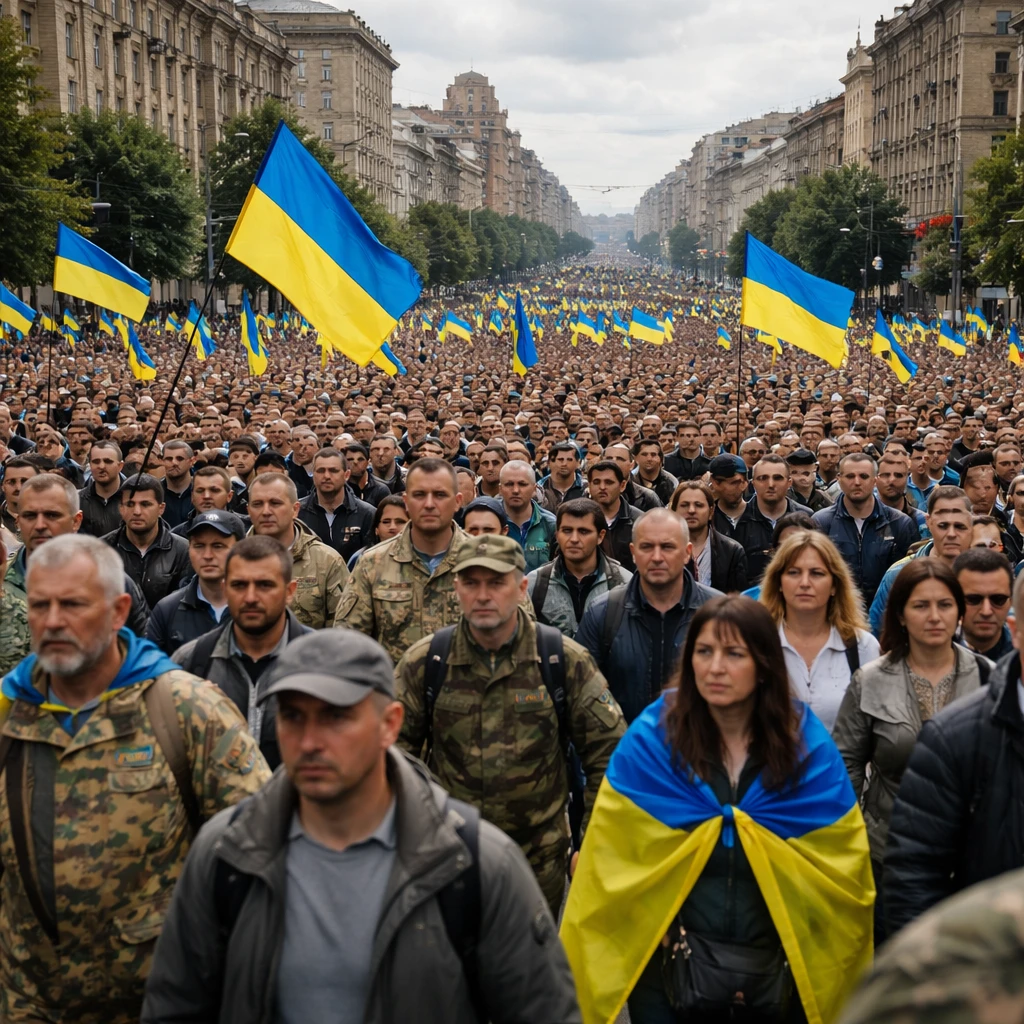
Several thousand Ukrainians gathered on Friday in central Kyiv to press President Volodymyr Zelenskiy to reinstate Mykhailo Fedorov, the defence minister dismissed in a surprise government reshuffle in mid-July. The demonstrations moved through the historic centre and converged on Khreshchatyk, the main avenue in the capital, as protesters sought to draw direct attention to their demands.
Fedorov, who had been appointed head of the wartime defence ministry in January, has been widely credited with promoting military innovation during Ukraine's conflict with Russia. He declined an alternative government post offered after his removal and has not accepted another role, a stance that has bolstered calls from supporters for his return.
Many of those on the streets voiced frustration at what they see as a lack of clarity from the presidency about the reasons for removing Fedorov. "I don’t like it when decisions are made, and then no one can explain why they were made," said Oleksandr, a 40-year-old who works in the IT sector.
Official explanations have focused on a major conflict between Fedorov and then commander-in-chief Oleksandr Syrskyi. President Zelenskiy initially said the dismissal reflected that dispute; Syrskyi was dismissed by Zelenskiy a week later amid public pressure tied to the crisis. However, speculation has circulated that Fedorov's removal may have been linked to his efforts to confront alleged corruption within the defence sector. In a recent interview, Fedorov appeared to give some weight to those suggestions, though he did not provide specifics.
Protest organiser Dmytro Koziatynskyi, a military veteran, urged the president to allow Fedorov a year to carry forward reforms in the defence sector and then evaluate his performance based on results. "The way out (for Zelenskiy) probably cannot be limited to another personnel decision, and Fedorov’s reappointment now appears unlikely," said Matteo Mecacci, Director of the European Policy Institute in Kyiv, adding that trust might be partially restored by the appointment of the new top commander, Mykhailo Drapatyi.
Those on the march said they view the matter as reaching beyond an internal dispute among officials. Many signalled concern that changes at the top of the defence ministry could impede technological modernisation efforts for Ukraine's post-Soviet military system - a transformation Fedorov championed and embodied. Some protesters questioned whether the war against Russia could be won without such modernisation.
The timing of Fedorov’s ouster coincided with a phase in which Ukraine had intensified deep-strike operations against Russian military and energy targets and reported some battlefield gains. For demonstrators, the connection between leadership in the defence ministry and the effectiveness of the war effort was clear.
Civilian voices on the street framed their actions in democratic terms. "The people are the power," chanted the crowd as they gathered near the presidential office. Mecacci observed that civilian control over governance is an essential democratic principle and suggested that the demonstrations reflect Ukrainians’ view that questions about personnel and governance directly affect wartime effectiveness and public confidence in institutions.
Iryna, a 38-year-old businesswoman, said she intended to continue protesting until the government responded to their demand. "We are not in a rush. We are here to stay. We have no choice," she said.