
Lebanon’s Hezbollah is widely expected to benefit politically and financially from an interim memorandum of understanding between Iran and the United States, sources close to Tehran-Hezbollah relations told Reuters. Those sources said Tehran has promised additional funding to the Shi’ite group once frozen Iranian assets become accessible under the terms of the agreement.
The MoU, which Pakistan has said will be signed on Friday, is being presented by mediators as a mechanism to halt hostilities across multiple fronts. Specific provisions have not been made public. Iran insisted that the ceasefire it is helping secure must include Lebanon - a demand that shaped the course of the conflict that began after Hezbollah fired at Israel on March 2 in an expression of solidarity with Tehran. That exchange precipitated an Israeli offensive that has killed thousands and drawn Israeli troops into the south, in a war unfolding alongside wider U.S.-Iran tensions.
Sources briefed by Tehran and Lebanese officials familiar with the ties between Tehran and Hezbollah told Reuters they had been assured Tehran would boost support for the group once Iranian assets were unfrozen. Two regional diplomats who had been briefed by Tehran, a senior Lebanese source and another Lebanese informant conveyed similar expectations. None of these sources disclosed specific sums.
Hezbollah, which Washington designates as a terrorist organisation and which has been armed and financed by Tehran since its founding by the Revolutionary Guards in 1982, acknowledged that Iran had publicly declared its backing and said that assistance continues. The group’s media office told Reuters that Tehran "would continue to support Lebanon regardless of the details of the retrieval of its funds" when asked whether Hezbollah would receive part of any released Iranian funds.
Washington, however, has set a clear public line. A U.S. official said the United States has told Iran that funds will not be unfrozen if they are destined for "any terror organization." The official added that the MoU carries incentives for Iran to restrain proxy groups, on the logic that failing to do so would jeopardise Iran’s access to any benefits of the agreement.
There was no immediate comment from Iran’s foreign ministry or from the Israeli prime minister’s office in response to requests for reaction.
Observers and officials say a replenishment of Iranian funding would come at a sensitive moment for Hezbollah, which endured heavy battlefield losses in the 2024 confrontation with Israel. That conflict and the campaign of targeted Israeli strikes prior to it have taken a significant toll on the group’s manpower and capabilities.
U.S. authorities have previously documented Iran’s financial transfers to Hezbollah despite U.S. sanctions. The U.S. Treasury Department noted that Iran moved $1 billion to the group in the first 10 months of 2025.
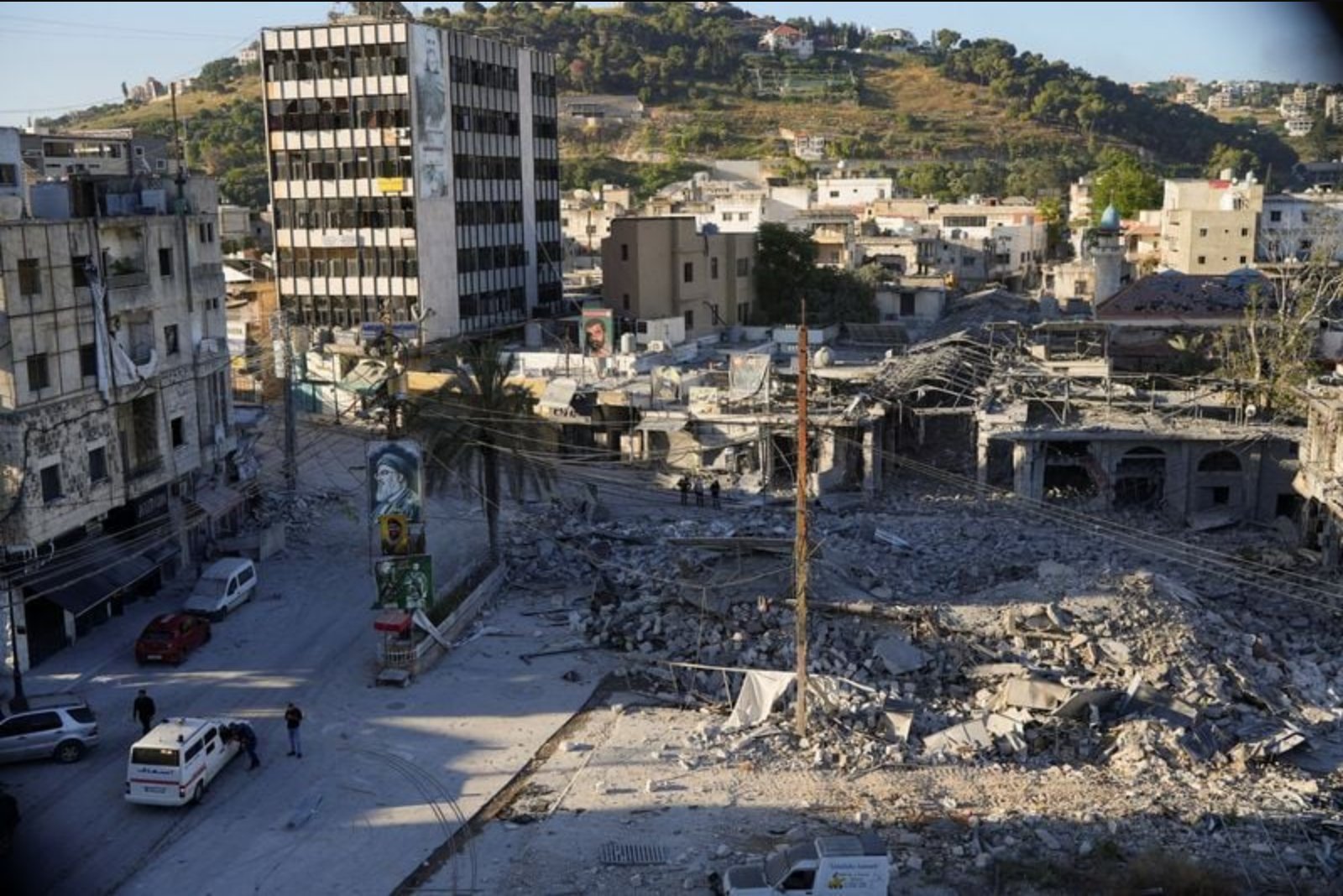
Cost of the fighting in Lebanon has been high. Israeli operations have uprooted roughly a fifth of Lebanon’s population and have flattened villages in the south, with Israel saying it targets areas from which Hezbollah operates. Those dynamics, combined with pressure on Hezbollah’s finances, have forced the group to scale back some internal payments, according to its own statements in May. Earlier this month, recipients reported that Hezbollah offered $200 in assistance to displaced families - the first cash aid the group had distributed during the war.
Analysts say a major infusion of Iranian funds could change the political calculus inside Lebanon. Mohanad Hage Ali of the Carnegie Middle East Center said a significant cash injection would be "a game changer" for Hezbollah, enabling the group to shore up support among constituents and mend frayed political alliances. He suggested that disarmament discussions would likely be deprioritised by rivals and authorities, in part because Hezbollah could justify maintaining arms by pointing to an ongoing Israeli presence and operations in Lebanon.
That framework - Hezbollah portraying itself as a strategic asset for Iran and as a bulwark against Israeli actions - appears central to Tehran’s posture. Iran has pressed for the withdrawal of Israeli forces from Lebanon, with its foreign minister warning that any continued Israeli troop presence in Lebanon would be considered a breach of the MoU.
Hezbollah, for its part, has indicated it sees a linkage between a final Iran-U.S. nuclear accord and Israel’s withdrawal from Lebanon, believing Tehran will not sign a final deal unless Israel removes forces from Lebanese territory. Iran’s push for a ceasefire that includes demands for Israeli withdrawal has undercut Lebanese efforts to assert sovereignty and to broker an end to the fighting.
Lebanon’s political leadership has confronted internal tensions over these developments. President Joseph Aoun publicly criticised Iran earlier this month, accusing it of leveraging Lebanon as a bargaining chip in negotiations with the United States. Yet, in a later exchange on Monday, he spoke with Iran’s foreign minister and welcomed the MoU.
Observers of the region’s security dynamic also highlight the limitations of military solutions for Israel’s withdrawal. Andreas Krieg of the School of Security Studies at King’s College, London, said that Israeli withdrawal could "realistically only be achieved through diplomacy," and raised questions about what concessions Hezbollah might be prepared to make. He noted that while Israel seeks the dismantlement of Hezbollah, the group itself rules out disarming. Krieg suggested a more plausible route might be a negotiated demilitarisation of the south in return for Israeli withdrawal - a formula that echoes terms attached to earlier ceasefires requiring Hezbollah to keep fighters away from the corridor between Israel and the Litani River.
Hezbollah’s media office declined to discuss the group’s armaments while Israeli troops remain in Lebanon.
Part of Hezbollah’s strategic calculation in joining the recent fighting was to ensure Lebanon featured prominently in U.S.-Iran negotiations, the group’s officials said, and to secure a stronger ceasefire than the accord that ended the previous confrontation in November 2024. After that earlier ceasefire, Israel continued targeted attacks on Hezbollah figures while the group largely held its fire - a sequence that Hezbollah uses to argue for a firmer, more enforceable cessation of hostilities.
The group has publicly asserted that Israel cannot revert to the security situation that existed prior to March 2 without facing a response. It has demanded that Lebanon’s government retract a decision that bans its military activities, a demand that places additional strain on Beirut’s attempts to regulate the group’s role within the state.
Nick Blanford, a senior fellow at the Atlantic Council, said renewed Israeli occupation has reinforced Hezbollah’s "resistance" narrative and that it will be difficult for Lebanon’s government to move against Hezbollah, particularly if fighting resumes. This dynamic raises questions about internal Lebanese politics and the capacity of state institutions to manage the tensions between external pressure and domestic factional strength.
For now, the terms of the MoU remain unpublished, and multiple uncertainties persist: whether Iran will be permitted to access assets, how any released funds would be monitored, and the extent to which the United States would withhold transfers that could benefit groups it designates as terrorist organisations. U.S. officials have stated the principle that funds must not reach designated terrorist organisations, but details about enforcement or verification mechanisms have not been disclosed.
The situation in south Lebanon continues to be volatile. Iran warned Israel on Tuesday to expect a military response if Israeli operations in the south do not cease. Israel has said it will keep troops in the south, and while violence has diminished compared with the height of the fighting, incidents have continued.
As the MoU moves toward formalisation, analysts and officials will be watching closely for concrete signals about the flow of funds, the degree to which Iran exerts control over its proxies, and the political consequences inside Lebanon. A new infusion of Iranian support would likely help Hezbollah address wartime damage to its networks and constituency, but it would also deepen tensions within Lebanon and complicate regional diplomacy aimed at disentangling the many interlocked conflicts that have driven the recent escalation.
Key points
- Iran has reportedly pledged renewed funding to Hezbollah once frozen assets are accessible under an interim MoU with the United States; sources did not provide figures - impacts political balance in Lebanon and financing for armed groups.
- The memorandum is expected to halt hostilities across fronts and specifically includes Lebanon at Iran’s insistence; this affects security conditions in south Lebanon and Israeli troop posture.
- U.S. officials have declared that funds will not be unfrozen if they are destined for designated terrorist organisations; this constrains the scope of transfers and touches on financial monitoring and sanctions enforcement.
Risks and uncertainties
- Ambiguity over the terms and enforcement of the MoU - including whether unfrozen funds could reach proxy groups - creates uncertainty for regional stability and for sectors sensitive to geopolitical risk, such as energy and regional trade.
- Renewed funding to Hezbollah could strengthen its political position in Lebanon and reduce incentives for disarmament, posing a risk to Lebanon’s fragile governance and to markets dependent on political stability in the country.
- Continued Israeli troop presence and ongoing, if reduced, violence in south Lebanon leave security conditions unpredictable, which could further disrupt local economies and cross-border commerce.