
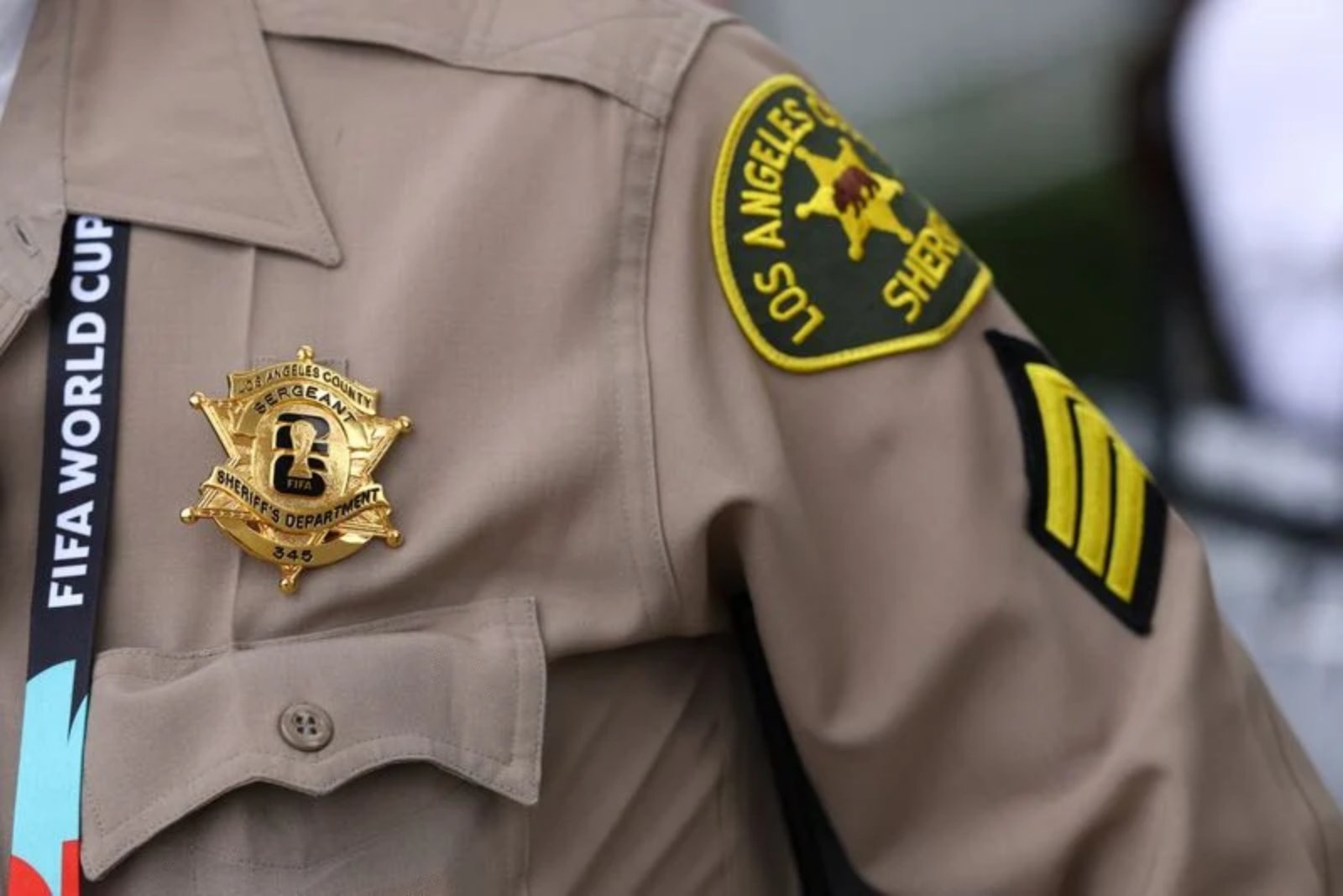
Uniformed police and firefighters who have been tasked with public safety responsibilities during the World Cup in Inglewood are displaying a distinctive token of the tournament on their uniforms - gold-coloured badges carrying FIFA26 motifs.
One of the most visible badge-wearers is Inglewood police officer Javier Mosley, who spoke outside the L.A. stadium about the event’s atmosphere. "I want to bring (the World Cup) back! Let’s go! Goal! Of course, the fever is here," Mosley said, describing how the influx of supporters has made him an enthusiastic spectator-in-spirit. For officers who were already followers of the sport, he added, "it’s been a dream come true."
The badge design that Mosley wears is intended to evoke the playing field and the crowd that surrounds it, and he said it "catches the feeling of the SoFi Stadium." Agencies participating in tournament security have options among several badge designs.
FIFA licensed badge-maker Smith and Warren to manufacture these special World Cup badges for the public safety agencies in the U.S. and Canada that are taking part in tournament security. According to the maker, the badges are available only to law enforcement. "In soccer, there is nothing more iconic than the World Cup. In public safety, there is nothing more iconic than the badge," the manufacturer said. "We want this collection to be unique and stand apart and embrace the FIFA World Cup 26 rallying cry."
Inside the stadium during the Canada-South Africa match, officers working crowd safety described a sense of pride in their duties. One officer told Reuters he was pleased to see international visitors in an area where he grew up - a neighborhood that endured significant hardship in the 1990s when poverty and violence increased. He said the district’s revival has turned it into a welcoming place for visitors.
Security at the venue is layered and extensive. Agencies from the City of Inglewood and the Los Angeles County Sheriff’s Department operate alongside county firefighters and federal partners. The presence of FBI and Homeland Security officers as part of the security environment means that visitors are frequently in proximity to law enforcement personnel. Bomb-detection dogs, some contracted through private security firms, are also deployed at stadium entrances.
Before the tournament began, there were concerns among some activists and community members about whether Immigration and Customs Enforcement officers would attend matches and whether stadium workers could face immigration enforcement actions. "Kick ICE Out" was a slogan voiced by some protesters. Yet, nearly three weeks into the tournament, observers have noted little visible sign of a heavy ICE presence, and the general atmosphere around police duties at the stadium has been described as relaxed.
Mosley said he values the opportunity to work at the stadium and to help create a safe environment for fans in his city. "It’s one of those bucket list things that, you know, I never thought that in my life as an early police officer that I would be able to host and be on the field," he said.
Context and operational notes
The special badges have become both a symbol of the global event and a marker of the local agencies assigned to support it. They are being worn by members of multiple public safety organizations that have roles in ensuring security for the tournament. The design elements and licensing arrangements are limited to participating agencies and restricted to law enforcement purchase.
Multiple layers of security reflect standard practice for large international sporting events, with municipal, county and federal components visible to fans and visitors. While community concerns about immigration enforcement were reported ahead of the World Cup, current reporting indicates a limited visible ICE role and a calmer security environment than some critics had feared.