
Overview
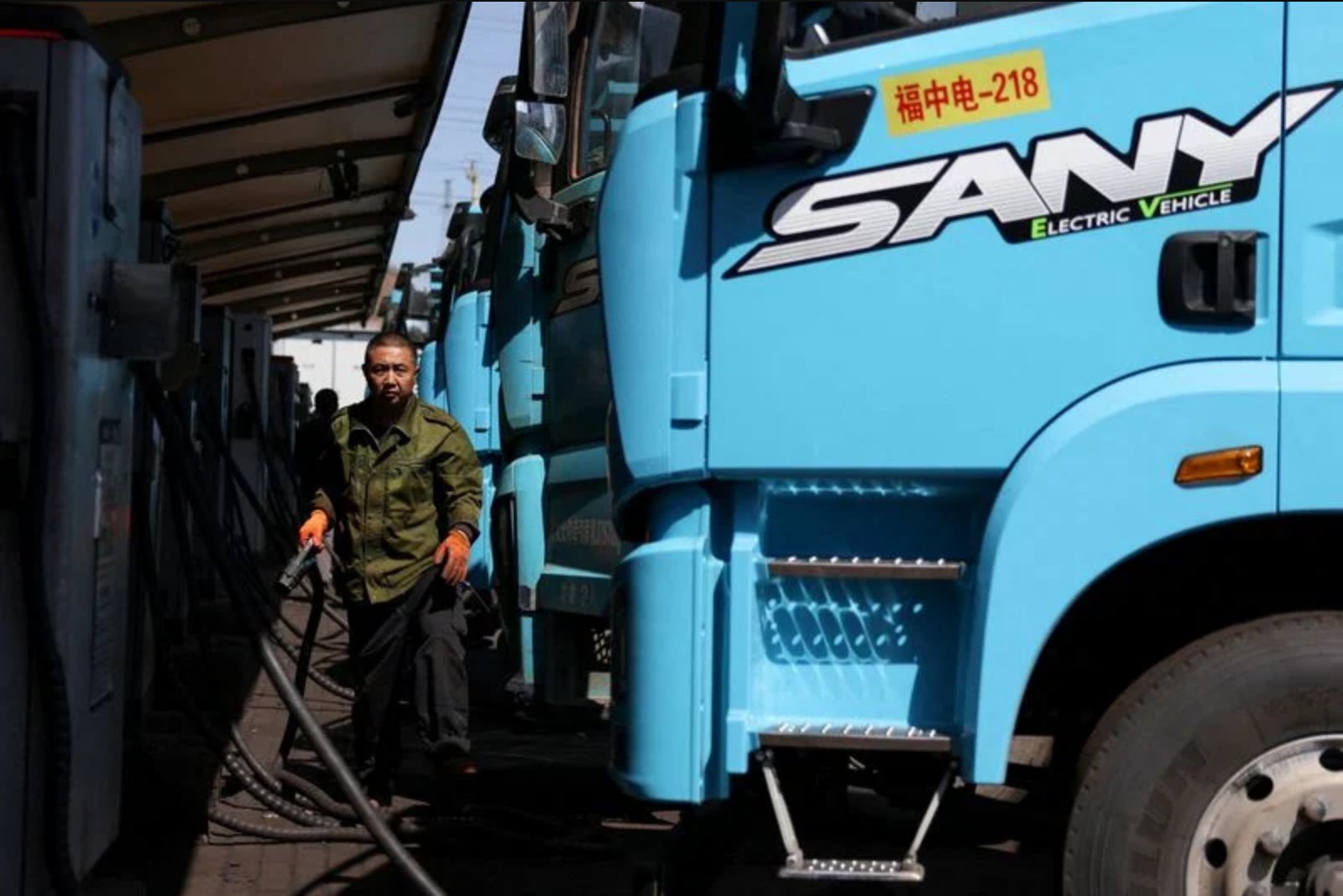
Since the outbreak of hostilities on February 28, when the United States and Israel launched the war, China has seen a pronounced increase in both domestic sales and exports of electric trucks. Rising diesel prices across Asia - attributed to disruptions linked to the conflict - have strengthened the commercial case for electrified heavy vehicles, prompting buyers in the region to accelerate fleet transitions.
Export surge and regional flows
In the four months after February 28, China exported 16,823 heavy electric trucks - more than double the volume shipped during the same period a year earlier. Roughly half of those exports were destined for South and Southeast Asia. Shipments to South Asia rose by more than five times year-on-year, while deliveries to Southeast Asia nearly tripled.
While exports of electric trucks remain modest when compared with China's shipments of passenger cars and motorcycles, the increase is notable given regional truck fleets still number in the millions. Industry participants say sustained growth along trajectories similar to China’s domestic adoption could meaningfully reduce diesel consumption and related carbon emissions in importing countries.
Drivers behind the shift
South and Southeast Asian markets are particularly exposed to oil supplies from the Middle East. Iran's closure of the Strait of Hormuz has been associated with some of the largest diesel price jumps in the region, creating a near-term economic incentive for operators to move to electric trucks. Data cited in industry commentary shows diesel prices have climbed 48% in Sri Lanka and 57% in the Philippines since the start of the war, while government figures indicate diesel is about 15% more expensive in China.
"The war has opened the door to these new markets," said Zhaoting Yue, vice president of international marketing at Sany. Sany is described as the world's largest maker of electric heavy trucks and has reoriented parts of its international strategy from Europe toward Southeast Asia, while developing lower-cost models aimed at price-sensitive buyers.
In June, Sany shipped what it called its largest single order - 880 heavy trucks - though the company declined to disclose the destination due to a private contract. Yue notes that rising oil prices have shortened the payback period for electric heavy truck purchases: where investors might previously have needed 28 months to recoup costs, that horizon has fallen to roughly 18 months.
Domestic adoption in China and fuel savings
China's domestic uptake of electric trucks has been rapid. E-trucks grew from near-zero in 2021 to account for about 30% of truck sales last year. Through the first half of this year, 140,000 electric trucks were sold in China. Observers report diesel consumption in China began to decline last year.
Analysis from the Centre for Research on Energy and Clean Air (CREA) estimates that by avoiding diesel combustion, China’s electric truck fleet will save an amount of oil equivalent to 141 million barrels this year - more than 3% of China’s total oil consumption and equal to China’s entire imports from Kuwait. The same research group calculates that China’s e-truck exports in the first half of the year displaced fuel at an annualised rate equivalent to 1.6 million barrels.
Barriers and solutions
Despite improving economics linked to high diesel prices, obstacles remain: upfront purchase prices for electric heavy trucks and gaps in charging infrastructure are cited as the primary constraints on faster adoption. Example pricing from Australia shows an e-truck costing about A$500,000 - roughly US$350,000 - which is approximately double the cost of a diesel equivalent. Proponents argue the higher initial outlay can be recouped through fuel savings, which, even prior to the recent surge in diesel prices, cut operating costs by as much as 70% compared with diesel, according to Daniel Bleakley, co-founder of Australian electric trucking firm New Energy Transport.
To address infrastructure shortfalls, manufacturers like Sany are offering integrated systems that generate and store electricity and provide charging capability for their trucks. The broader adoption of Chinese electric passenger vehicles in many export markets is also expected to help expand charging networks - a development CREA co-founder Lauri Myllyvirta says will accelerate uptake. "High fuel prices are going to focus minds and get businesses to move fast," he said.
Global rollout and comparative pace
In markets such as the United States and Europe, electric delivery vans have become increasingly commonplace. However, the transition to larger electric trucks has proceeded more slowly. The report notes that Tesla, which had earlier ambitions for its electric Semi, has stepped back from its goal of reaching "volume production" of that vehicle by this year.
Industry participants cited in this reporting expect the war-driven spike in oil prices to sustain rapid growth in electric heavy truck demand for at least the next year, particularly across Asia, Africa and Latin America. Nevertheless, the scale-up required - in manufacturing, total cost alignment, and charging infrastructure - remains substantial before e-trucks can displace a large portion of diesel demand in regional truck fleets.
Currency note
(US$1 = 1.4172 Australian dollars)