
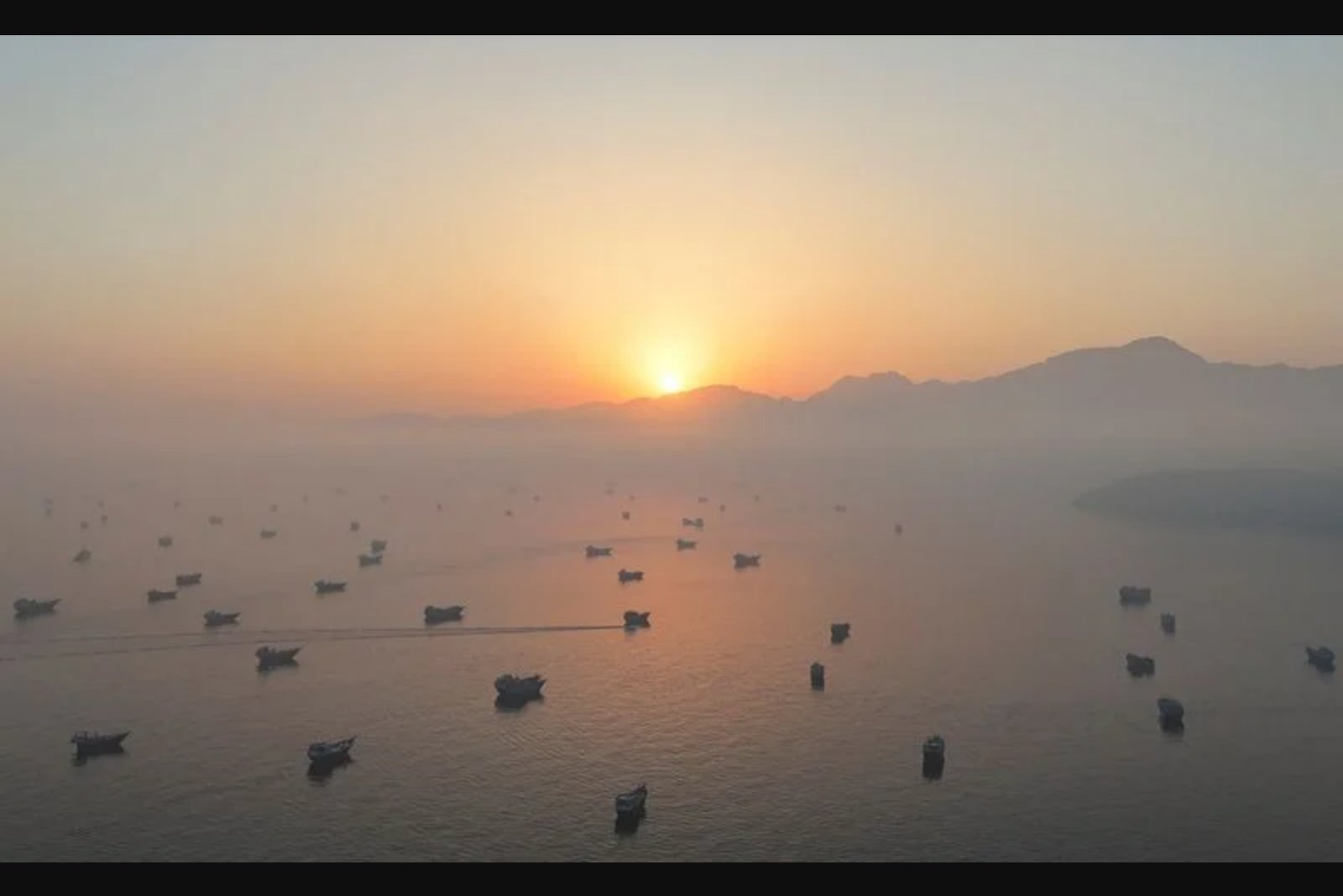
EVIAN-LES-BAINS, France, June 15 - France and Britain are promoting a multinational naval mission intended to protect commercial shipping passing through the Strait of Hormuz if a U.S.-Iran ceasefire is finalised. The proposal, prepared by roughly a dozen militaries over several weeks, would focus on defensive operations such as mine-clearing, convoy escorts and air surveillance, but its viability depends heavily on Iran's stance.
European officials acknowledge Tehran has signalled strong resistance to any foreign military presence in the waterway and may prefer to table its own alternatives. "Iran is hostile to any foreign military presence but open to dialogue," one European official said, while warning that Iran would likely advance proposals of its own. Iranian officials themselves have been unequivocal. A senior Iranian official said, "Any presence of foreign countries, whether to safeguard shipping or clear mines, is unacceptable ... This is a trick to bring naval forces to the strait, and it will not be accepted."
Another Iranian security official reiterated that Tehran has "zero trust in foreign countries" and insisted control of the strait rests with Iran and, to some extent, Oman. Diplomats also said Iran could seek to impose transit fees on shipping - a demand European powers consider a red line and one that could fundamentally alter negotiations over any maritime security operation.
France’s foreign minister, Jean-Noël Barrot, told colleagues the plan has been worked up over weeks and involves capabilities such as minehunters, warships and air surveillance assets. "It is already ready," Barrot said on arrival at an EU foreign ministers' meeting in Luxembourg. He described the plan as a "strictly defensive international mission, independent from the parties to the conflict, capable of deploying rapidly to ensure freedom of navigation." The proposal will be discussed by G7 leaders meeting in the French Alps, where officials hope to translate a potential ceasefire into concrete measures to help stabilise global energy flows.
The Strait of Hormuz has been an acute flashpoint in recent weeks of confrontation, pushing oil prices higher. The waterway typically handles roughly a fifth of the world's oil shipments, underlining why G7 leaders and European capitals view a secure reopening of the passage as a priority for market stability.
For France and Britain, the initiative is part of a broader effort to demonstrate that Europe can act alongside, but not be wholly dependent on, the United States. A senior U.S. official said G7 countries were preparing coordinated steps tied to a potential truce - including reopening the strait without tolls in parallel with lifting of U.S. restrictions. The U.S. official added a subsequent phase could address demining, where Washington has significant capability but where European contributions could also play a role.
Officials envisage an initial phase of a ceasefire lasting about 60 days, a window that could coincide with early deployments of international assets. A preliminary U.S.-Iran accord is expected to be signed in Geneva on Friday.
President Emmanuel Macron has said a mission could be deployed within two to three days if all sides agreed. Yet diplomatic and parliamentary realities mean participation could remain limited. France and the United Kingdom, already fielding naval assets in the region, are likely to shoulder most of the initial operational burden. European diplomats said forces would likely be positioned in the Gulf of Oman initially rather than inside the strait itself.
Germany, Italy and the Netherlands have signalled interest in contributing, but their involvement may depend on parliamentary approvals. The mission's declared tasks would be defensive in nature: escorting commercial vessels, detecting and clearing mines, and maintaining air surveillance. France already has minehunters deployed alongside its carrier strike group, although the carrier strike group itself would not be assigned to the Hormuz operation. The planning effort could draw on capabilities used in the EU's Aspides operation in the Red Sea.
Italy’s foreign minister, Antonio Tajani, said Rome could redeploy two minesweepers to assist. Spain’s foreign minister, José Manuel Albares, cautioned that details of any agreement needed to be clarified. "We're in a very incipient phase ... Let's not get ahead of ourselves," he said.
Analysts and officials note that restoring normal commercial shipping through Hormuz could take months. Insurers and shipping companies will need sufficient reassurance before routes are considered safe, and that commercial certainty may depend more on whether Iran exercises restraint than on the mere presence of international naval forces. The prospect that Tehran could try to collect transit fees represents an additional commercial and legal uncertainty that European powers view as a red line.
Operational context and timing
The mission is described as strictly defensive and designed for rapid deployment. Initial positioning in the Gulf of Oman aims to provide a buffer and operational flexibility while avoiding immediate intrusion into the strait itself, where Iranian objections are strongest. The approach is intended to balance operational effectiveness with political sensitivities, but its implementation remains contingent on diplomatic progress coinciding with the expected preliminary U.S.-Iran agreement in Geneva.
Market implications
Because the strait normally carries about one-fifth of global oil flows, any disruption or uncertainty translates directly into commodity price sensitivity and potential stress for energy-dependent sectors. Restoring stable transit would be central to easing upward pressure on oil prices, but the timeframe for achieving that stability is uncertain and could stretch into months, according to analysts cited by officials.