
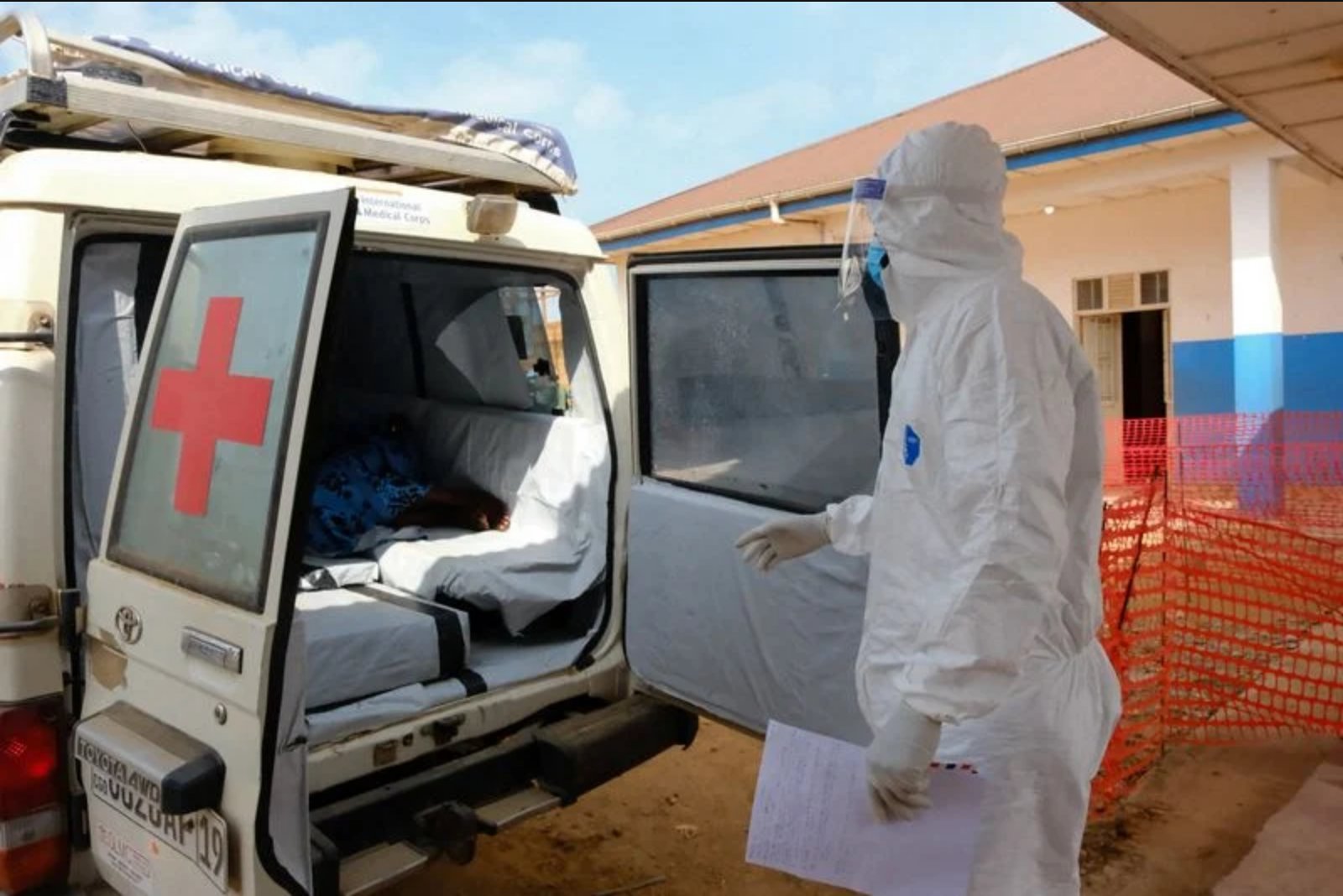
Health workers in eastern Democratic Republic of Congo say they are struggling to mount an effective response to a growing Ebola outbreak as shortages of staff, transport and construction materials undermine containment efforts.
A month after the World Health Organization declared an international emergency, the outbreak of the Bundibugyo strain has reached more than 800 confirmed cases, and officials warn it could evolve into the largest on record. Those on the front lines report that they lack the personnel to identify and follow up suspected cases, the ambulances to transfer patients safely, and even the building supplies required to erect isolation wards.
Jean Kaseya, director general of the Africa Centres for Disease Control and Prevention, told Reuters that tens of thousands of contacts remain untraced because response teams are overstretched and because insecurity and the urban, mining-heavy character of the affected area are impeding operations.
"After four weeks we have an outbreak in an urban area where there is insecurity, where there is this mining and trade activity, and also where we are not reaching all the people who must be in the contact list," Kaseya said. "If we don’t reach these people, we cannot say that we can win with this outbreak."
Gaps in case detection and isolation
Officials say even identified infections may not reflect the full burden of disease because of limited testing and incomplete data. Identified patients are not always isolated or receiving adequate care: some admitted patients leave treatment centers, others who test positive are not admitted, and there are cases where admitted patients appear not to be receiving appropriate support, according to Kaseya.
A World Health Organization report found that about one third of the 241 alerts for suspected new cases in Ituri province were not followed up as of June 14. In the city of Bunia, Oxfam Ebola Response Coordinator Manel Rebordosa described a recent visit to a Rwampara medical centre where a woman with fever and bleeding remained waiting for hours. Staff tried to call the surveillance system but responders did not arrive - the teams cover many health zones and do not have enough ambulances, he said.
Africa CDC data indicate teams responsible for safe burials and decontamination in Ituri have only about 15 percent of the required personnel and roughly 7 percent of the needed vehicles in place.
Government response and training
Congo's health minister, Samuel-Roger Kamba, rejected suggestions that the outbreak is outpacing government response. At a government briefing he said the ministry has trained 1,200 community relay workers and deployed 1,000 of them to conduct door-to-door tracking of contacts and suspected cases. Kamba said contact follow-up is currently running at 63 percent.
Shortages of supplies and construction materials
Professor Salim Abdool Karim, an adviser to the Africa CDC who recently visited Ituri, told officials that supplies are the most pressing constraint. "There is a need for more resources of almost everything from PPE (Personal Protective Equipment) to gravel," he said, and highlighted that gravel shortages have delayed the building of isolation wards. He also noted a lack of prefabricated panels for walls, floors and roofs. Abdool Karim said the absence of USAID - dismantled by U.S. President Donald Trump last year - was noticeable.
Medical teams face shortages of masks and other protective equipment, and dozens of health workers have contracted the Bundibugyo strain. For this strain there is no proven vaccine or treatment.
Kaseya said in some cases supplies that are needed are already available "sitting somewhere in a warehouse" but are not getting to the frontline.
Funding shortfalls and donor fatigue
The African Union reports it has received only about one fifth of the funding required for its $518 million response plan. Aid workers say donor support has lagged compared with previous Ebola outbreaks. Africa CDC’s Kaseya suggested Western governments are beginning to recognize the gravity of the situation, saying, "I think they are starting to understand that it’s serious."
What is clear and what remains uncertain
What is clear from accounts by health officials and aid workers is that operational capacity - staff, vehicles, construction materials and protective equipment - is inadequate relative to the needs on the ground. The gaps in surveillance and follow-up signal that a substantial number of contacts remain untraced, hampering efforts to contain transmission.
Several uncertainties remain visible in the response: how quickly supplies now in warehouses will reach operational teams; whether contact tracing can be expanded beyond its current coverage; and how funding shortfalls will be resolved. Officials and responders point to insecurity and the urban, mining-linked context of the outbreak as complicating factors that limit access and increase the difficulty of tracing and isolating cases.
This evolving situation poses challenges for public health authorities, humanitarian actors and donors as they try to scale up personnel, logistics and material support in an environment where both the epidemiological picture and the operational constraints are changing rapidly.