
Shares of Stratasys Ltd. (NASDAQ:SSYS) climbed 3.1% on Wednesday following the companys announcement of a new composite material aimed at rail and transportation manufacturers.
Stratasys introduced FDM PA6/66-GF30-FR, a flame-retardant thermoplastic composite formulated to enable production of certified end-use components and critical spare parts for rail applications. The company said the material is intended for use on Fortus 450mc and F900 systems.
The composite meets EN 45545-2 HL2 (R22/R23) and FMVSS 302 fire safety requirements. Its flame-retardant PA 6/66 base polymer is reinforced with 30% glass fiber, which Stratasys notes yields stronger and stiffer performance relative to PC-FR alternatives.
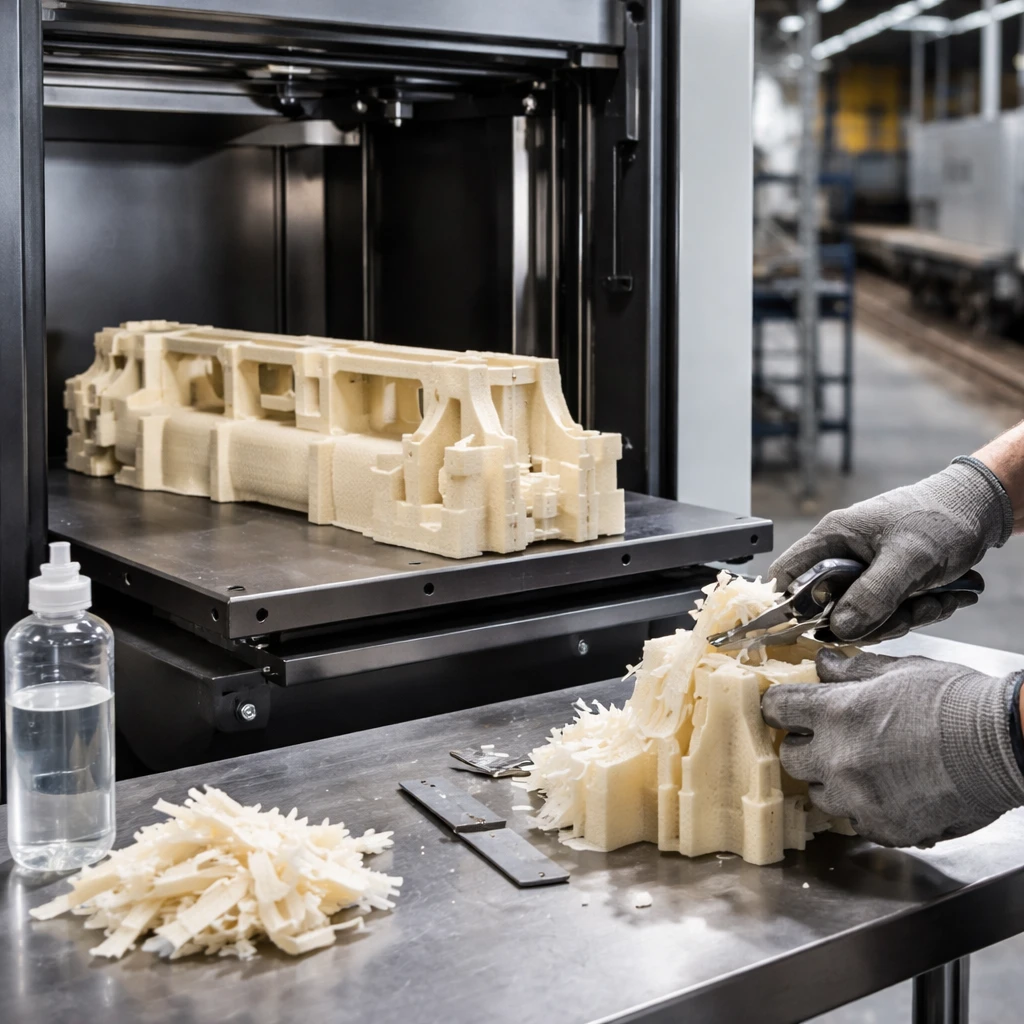
Stratasys highlighted compatibility with SUP4050B breakaway supports. According to the company, using SUP4050B enables efficient post-processing and supports throughput for producing end-use parts.
The company framed the launch as an expansion of its industrial-grade, rail-ready FDM thermoplastics portfolio. Stratasys said the material was developed in collaboration with railway original equipment manufacturers and service providers to address demand for certified, production-ready additive manufacturing solutions.
"With Stratasys, we can implement additive manufacturing in a controlled, certifiable way, which is essential for the rail industry," commented Lorenzo Gasparoni, 3D Printing Program Manager at Alstom Group. "FDM PA6/66-GF30-FR supports reliable, repeatable production of qualified spare parts, along with streamlined, easy support removal using SUP4050B. The surface finish is exceptional and directly reflects the quality and performance of the parts."
The firm emphasized that the new material is designed to enable production of qualified spare parts and other certified end-use pieces for rail applications while improving strength and stiffness compared with PC-FR alternatives. The company also positioned the launch as responding to collaborative feedback from railway OEMs and service providers seeking certified additive manufacturing options.
Market reaction: The stock movement reported Wednesday reflected investor response to the product announcement; Stratasyss new rail-grade material and stated system compatibility were cited as the drivers behind the news.
Technical and operational note: The materials compliance with EN 45545-2 HL2 (R22/R23) and FMVSS 302, combined with a 30% glass-fiber loading, positions it for applications requiring enhanced mechanical properties and flame-retardant performance on supported Fortus systems.