
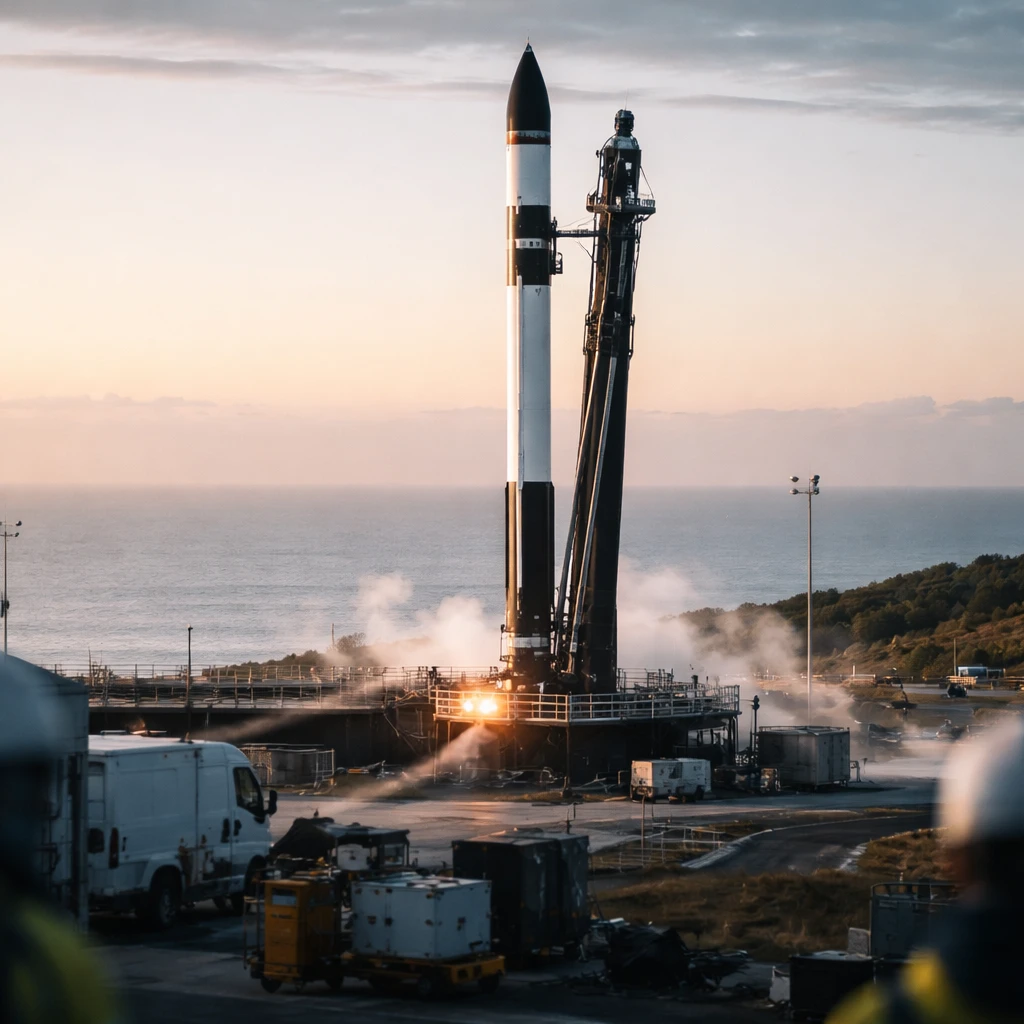
Shares of Rocket Lab Corporation (NASDAQ:RKLB) climbed 2.7% on Thursday following the company's announcement of a multi-launch agreement with the Institute for Q-shu Pioneers of Space, Inc (iQPS) for three dedicated Electron rocket missions.
The new contract represents iQPS's third multi-launch booking with Rocket Lab in under a year and raises the total number of launches that iQPS has booked with the company to 18.
Under the terms disclosed, the three missions will each carry a single QPS-SAR satellite into a 575km low Earth orbit as components of iQPS's Earth-imaging constellation. All three flights are scheduled to lift off from Rocket Lab Launch Complex 1, with operations planned to begin in late 2027.
QPS-SAR satellites employ synthetic aperture radar technology, which forms images by processing radio wave returns. That capability allows the satellites to gather imagery at any hour and in a wide range of weather conditions, enabling persistent data collection independent of daylight or cloud cover.
Rocket Lab also disclosed that iQPS purchased the company's Motorized Lightband satellite separation system for each of the three missions. The company noted that, since 2023, Electron has deployed seven QPS-SAR satellites for iQPS with what Rocket Lab says is a 100% mission success rate.
The announcement included a company statement that demand for Electron launches has reached record levels, framing the latest booking within broader commercial activity for the small launch vehicle.
Context and implications
- Rocket Lab recorded a single-day share-price increase of 2.7% on the news.
- The contract brings iQPS bookings with Rocket Lab to 18 missions total, marking a steady cadence of business between the two organizations.
- Each planned mission will deliver one QPS-SAR satellite to 575km, supporting iQPS's Earth-observation constellation capable of all-weather, day-and-night imaging.
The agreement reinforces ongoing commercial activity for Electron while extending a customer relationship that has included seven prior QPS-SAR deployments since 2023.