
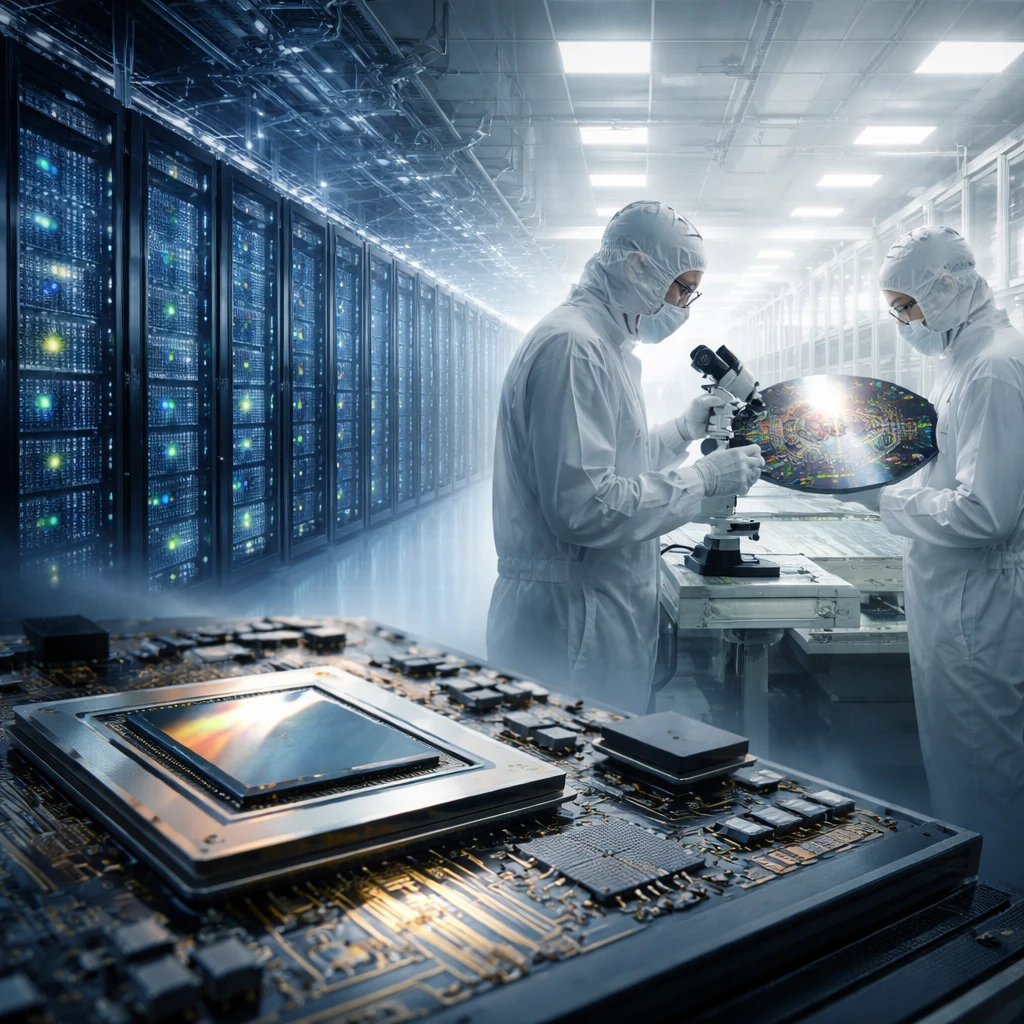
Equity research firm Lynx Equity Strategies has identified a single chip name as the primary beneficiary of ripple effects from the SpaceX IPO, arguing that the combination of an AI data center and an advanced fabrication facility under a single corporate umbrella will shape semiconductor demand for years.
Lynx frames the SpaceX transaction - which folds together xAI’s AI compute ambitions and the Terafab advanced wafer fab project - as a structural positive for both AI chipmakers and wafer fabrication equipment makers. The firm points to the S-1 disclosure of $300 billion in planned AI capital expenditure through the end of the decade and expects actual spending at both xAI and Terafab to extend beyond what was filed in that document.
On the AI compute side, Lynx says Nvidia is particularly well positioned. The research note states plainly that "there is little doubt that xAI is an NVDA house," noting that, unlike major hyperscalers, xAI does not plan to build proprietary AI chips. That dynamic, Lynx argues, makes xAI's reliance on Nvidia’s platform more persistent than the partnerships hyperscalers might pursue.
Despite Nvidia’s central role in Lynx’s thesis, the firm observed that shares have been relatively range-bound recently. Lynx said it dropped a yearlong cautious stance on Nvidia ahead of a major industry keynote and now expects renewed investor interest following the SPCX IPO. The firm also cited a post-IPO comment from Elon Musk - that he was "looking forward to taking our exciting partnership with Nvidia to the next level" - as a notable public signal in support of the relationship.
A technical element at the heart of Lynx’s bull case is Nvidia’s next-generation Rubin architecture. The firm describes Rubin as an inference-optimized platform intended to reduce token costs at a time when corporate buyers are demanding more efficient AI inference. Lynx also suggested that the Rubin ramp at xAI could be a motivating factor behind large, multiyear commercial arrangements between xAI and other AI companies, referencing a combined $75 billion in agreements with Google and Anthropic.
On the semiconductor equipment front, Lynx expects Terafab’s construction and ramp to drive substantial wafer fabrication equipment demand. The firm singled out Lam Research, Applied Materials, ASML and KLA as key beneficiaries, estimating roughly $25 billion to $30 billion of wafer fab equipment demand over 2027-28 tied to the buildout.
Memory and storage suppliers are also in Lynx’s list of winners. The analyst note identifies Micron, SanDisk, Seagate and Western Digital as names likely to benefit from the scale of demand the combined xAI and Terafab effort could create.
However, Lynx cautioned that the gains will not be evenly distributed. The firm warned that smaller, heavily leveraged "neocloud" companies are likely to face pressure as xAI’s scale and pricing power make it a formidable competitor for customers seeking AI infrastructure services. In Lynx’s view, that competitive dynamic creates a bifurcated outcome across the market.
Context and implications
Lynx’s research positions Nvidia as the clear strategic partner for xAI’s compute needs, while forecasting that substantial capital spending tied to Terafab’s construction will lift semiconductor equipment providers. Memory and storage vendors are also seen as beneficiaries, though Lynx warns that small, high-leverage cloud infrastructure providers may encounter headwinds from xAI’s scale.
Those conclusions form the basis of the firm’s expectation that the SPCX IPO will regenerate investor interest in names tied to AI compute, fabs and memory, reversing a period of relative share-price stasis for some of the stocks implicated.