
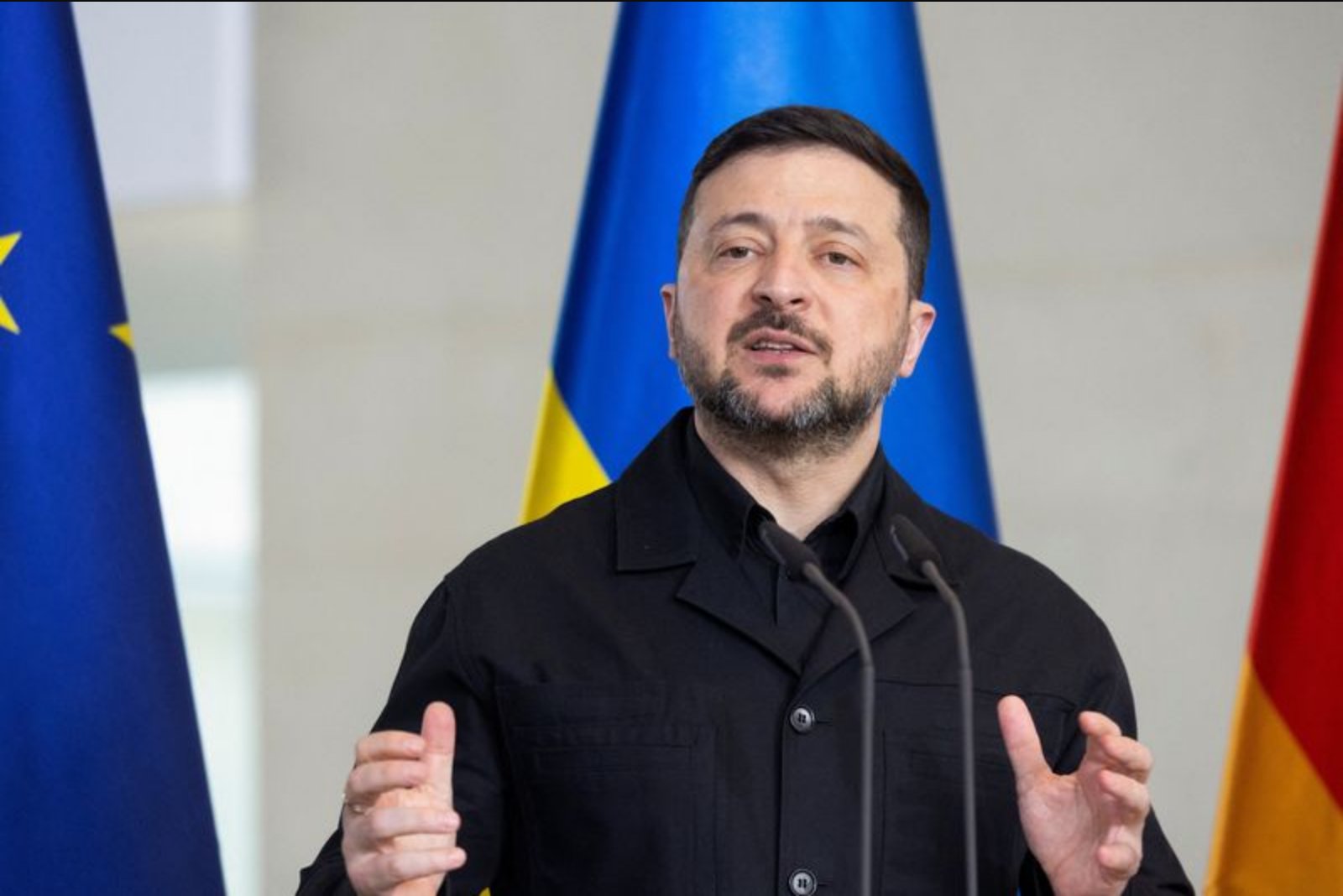
Ukrainian President Volodymyr Zelenskiy has pushed back against a German proposal that would allow Ukraine to join the European Union in an "associate" capacity, arguing in a letter to senior EU officials that the measure would be unjust because it would leave Kyiv without representation in decision-making.
The proposal, put forward by German Chancellor Friedrich Merz, envisages Ukraine attending EU meetings without voting rights as a temporary arrangement on the path to full membership. Merz has said the step could be an interim measure to help bring about a resolution to the four-year-old war triggered by Russia's invasion.
In a letter sent late on Friday, Zelenskiy addressed European Council President Antonio Costa, European Commission President Ursula von der Leyen and Cypriot President Nikos Christodoulides, who holds the rotating chair of the EU Council. The Ukrainian leader described the associate-membership idea as inequitable.
"It would be unfair for Ukraine to be present in the European Union, but remain voiceless," Zelenskiy wrote.
Zelenskiy said the recent removal of Hungarian Prime Minister Viktor Orban - identified in his letter as a strong opponent of Ukraine's EU membership - following elections last month created a fresh political opening to make meaningful progress on Ukraine's accession talks.
He thanked EU leaders for their support during the conflict and framed Ukraine's role as defensive on behalf of the entire 27-nation bloc. Zelenskiy argued that the country is protecting Europe in full and warned against partial measures.
"We are defending Europe - fully, not partially, and not with half-measures," he said. "Ukraine deserves a fair approach and equal rights within Europe."
The German proposal, as outlined by Chancellor Merz, is positioned as an interim diplomatic instrument intended to help facilitate a negotiated end to hostilities stemming from the invasion. Zelenskiy's letter, by contrast, underscores Kyiv's insistence on full and meaningful membership rather than a non-voting or symbolic presence inside EU institutions.
The letter signals Kyiv's stance in ongoing discussions about the shape and timing of EU accession, while highlighting a perceived opportunity created by recent political change in a key EU capital. The debate centers on whether transitional arrangements that stop short of full voting rights would be acceptable to Ukraine and the EU, and whether such arrangements would advance or impede efforts to resolve the conflict.