
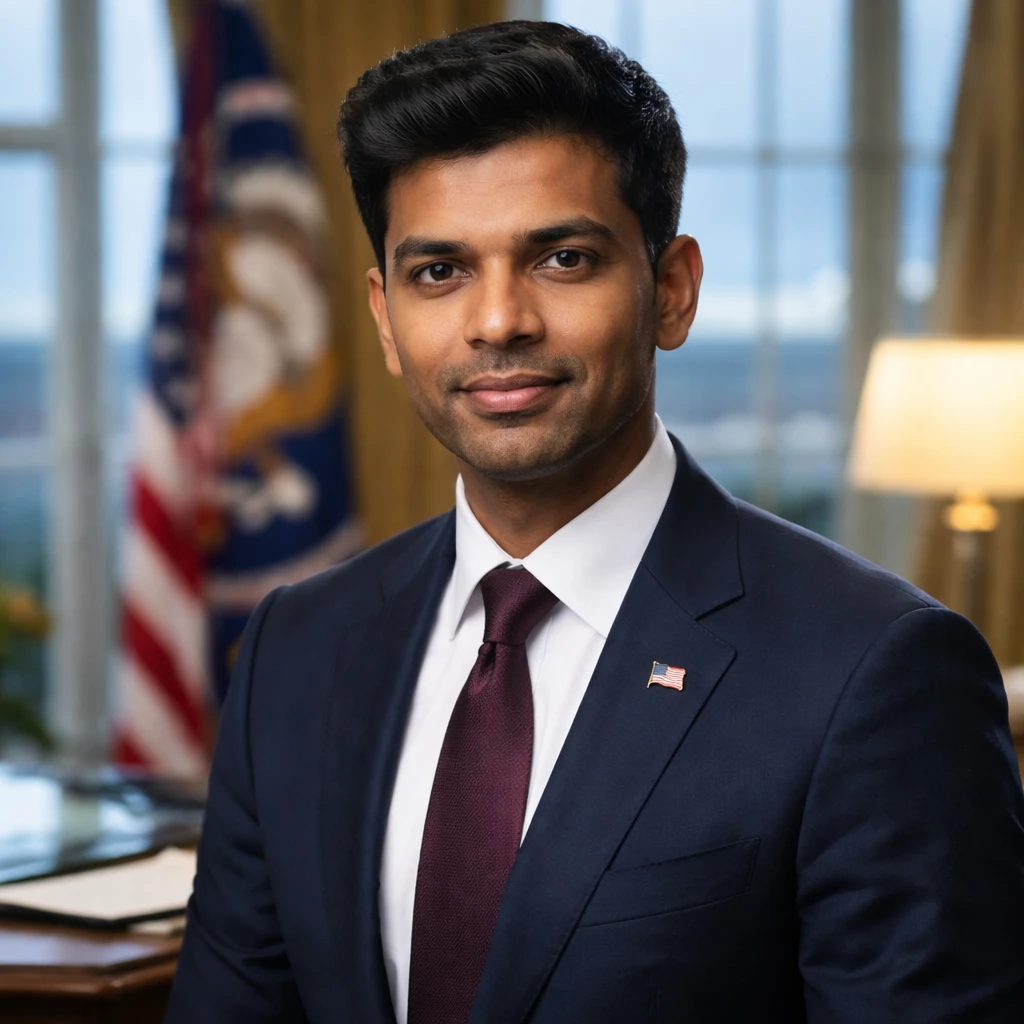
Sriram Krishnan has announced that he will be vacating his position as a leading White House adviser on artificial intelligence at the conclusion of June 2026. The announcement, made via a social media post on Saturday, marks the end of an 18-month period during which Krishnan was instrumental in shaping the administration's approach to AI policy.
A Legacy of Policy and Diplomacy
Appointed by President Donald Trump to assist in the development of AI strategy during his second term, Krishnan brought experience from his previous role as a partner at Andreessen Horowitz. His work was characterized by a close partnership with David Sacks, who serves as the White House AI and crypto czar. According to Sacks, their joint efforts were aimed at ensuring the United States maintains dominance in the field of artificial intelligence through strategic policy initiatives and international diplomatic engagement.
Krishnan's contributions to the national AI landscape are multifaceted, involving both domestic regulatory frameworks and global positioning:
- Policy Development: He was a co-author of the American AI Action Plan and contributed significantly to the National AI Policy Framework executive order.
- Global Infrastructure: He helped develop AI Acceleration Partnerships intended to position the American AI stack on a global scale.
- International Representation: Krishnan acted as a representative for American interests at high-level AI summits in both India and France, and he participated in various state visits involving the Middle East and the United Kingdom.
Looking toward his post-administration activities, Krishnan stated his intention to establish institutions dedicated to tackling complex issues facing the United States and its allies. These challenges include managing energy requirements, overseeing data center development, and ensuring that the benefits of AI technology are felt by the American population. While he is leaving his official capacity, Sacks noted that Krishnan will continue to serve as an outside adviser to the administration.
Broader Administrative Context
The transition in advisory leadership comes amid broader executive actions regarding AI and cybersecurity. On Tuesday, President Trump signed an executive order establishing a hands-off regulatory approach toward cybersecurity threats emerging from artificial intelligence. This order encourages developers to provide the U.S. government with voluntary access to their AI models. Additionally, following recent friction between the Pentagon and Anthropic PBC, President Trump instructed national security agencies on Friday to prioritize engagement with a variety of more than one AI provider.