
Economy May 22, 2026 10:17 AM

Waller Urges Fed to Remove 'Easing Bias' as Inflation Broadens

Governor says policy should stay restrictive until inflation shows clear progress toward 2% amid signs of broader price pressures

By Maya Rios

Federal Reserve Governor Christopher Waller told an economic forum in Frankfurt that the central bank should strip language signaling an easing bias from its policy statement, arguing that doing so would clarify that rate cuts are no more likely than increases. He said the central bank should keep the policy rate in place until inflation decisively moves back toward the 2% target; the Fed's preferred gauge stood at 3.8% in April. Waller voiced concern about inflation turning more persistent and spreading across goods and services, noted that the labor market is balanced, and flagged the potential for unanchored inflation expectations and the uncertain impact of the Iran conflict on policy decisions.

Waller Urges Fed to Remove 'Easing Bias' as Inflation Broadens

Key Points

  • Waller recommends deleting the Fed's 'easing bias' language to signal that rate cuts are not more likely than hikes; this affects monetary policy clarity and market expectations.
  • The Fed's preferred inflation measure was 3.8% in April, and Waller said policy should remain at current levels until inflation clearly heads back to the 2% target - impacting interest-rate-sensitive sectors and financial markets.
  • Waller noted balanced labor-market conditions, persistent high energy costs that have not reduced consumer spending, and continued strong investment in artificial intelligence, all factors relevant to policy decisions and sectors such as energy, consumer spending, technology, and financial services.

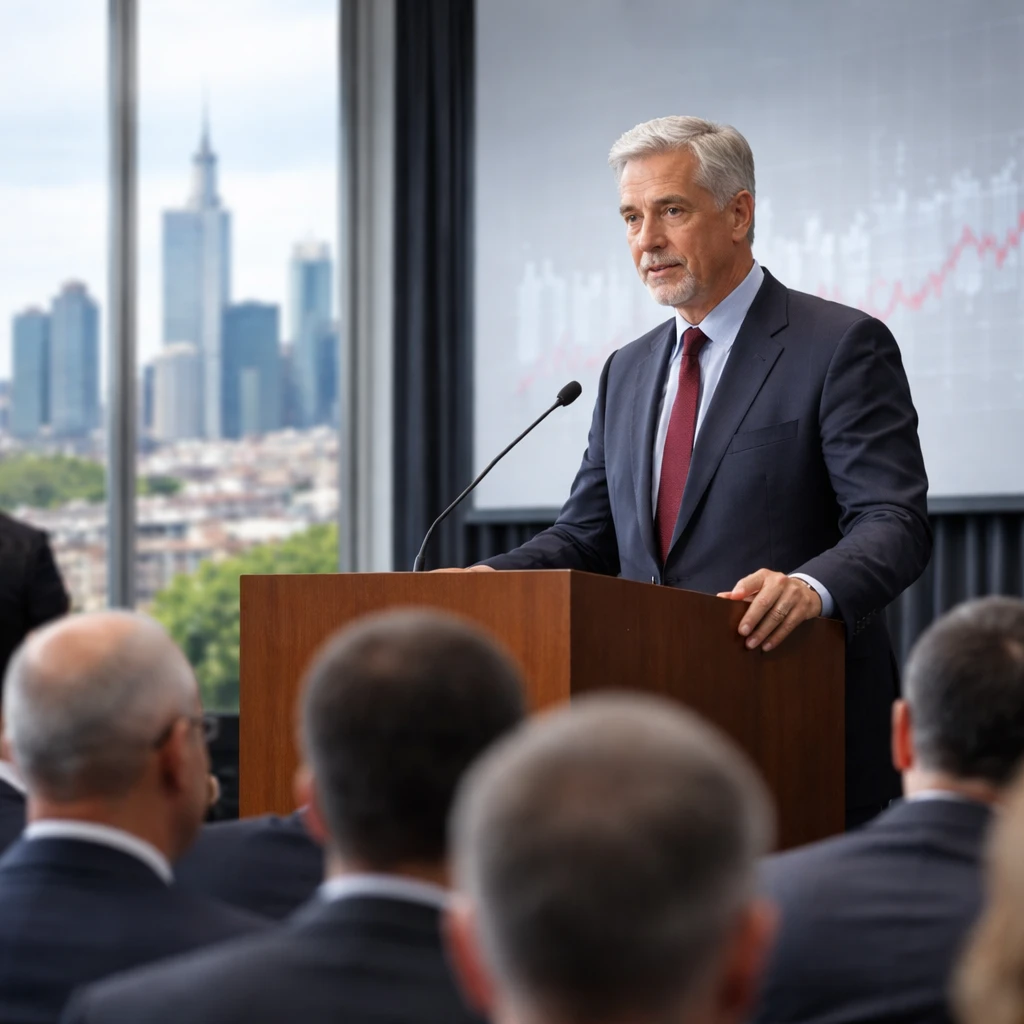
Frankfurt - Federal Reserve Governor Christopher Waller said Friday that the Fed should remove any suggestion of an easing bias from its policy statement, arguing the change would make clear that a rate cut is no more likely than a rate increase. Waller delivered the remarks at an economic forum in Frankfurt, Germany, and emphasized the need to maintain the current policy rate until inflation shows unmistakable signs of moving back toward the Fed's 2% objective.

Waller highlighted recent inflation readings, noting that the Fed's preferred inflation measure reached 3.8% in April. "Inflation is not headed in the right direction," he said in prepared remarks. He added that excising the easing-bias language would help signal that the next adjustment - whether a hike or a cut - will be driven strictly by incoming data, not by a predisposition in the statement.

Once a proponent of lower rates, Waller said his stance has shifted amid signs that inflation may be becoming more persistent and spreading more broadly across goods and services. "I would support removing the 'easing bias' language in our policy statement to make it clear that a rate cut is no more likely in the future than a rate increase," he said. He reiterated that "the next move, whether it is a hike or cut, will depend on the data," and that deleting language about the extent and timing of further adjustments would reinforce that point.

Waller said he does not expect to back a change in the policy rate in the near term. He also stressed that the eventual path of policy will hinge importantly on the duration of the conflict in Iran, describing that development as a material influence on outcomes. On the labor market, the governor said conditions are balanced and that labor-market tightness is no longer the central determinant of policy direction.

Waller expressed concern about rising inflation expectations as the Fed misses its 2% target into a sixth year. He warned that if expectations become unanchored, he would be prepared to support a rate increase. He also observed that elevated energy costs have not damped consumer spending and that there is no evidence the current wave of investment in artificial intelligence will slow.

Waller's remarks come as pressure mounts on incoming Fed Chair Kevin Warsh to take a more hawkish stance at the June policy meeting.


Clear takeaway: Waller wants the Fed to remove language suggesting an easing bias from its policy communications and to keep rates steady until inflation moves clearly toward 2%, while reserving the right to act if inflation expectations become unanchored or external shocks such as the Iran conflict alter the outlook.

Risks

  • Inflation expectations could become unanchored as the Fed misses its 2% target in a sixth year; if that occurs, Waller said he would not hesitate to support a rate increase - a risk to interest-rate-sensitive markets and borrowing costs.
  • The duration of the Iran conflict is an uncertainty Waller flagged as likely to heavily influence policy outcomes, creating potential volatility for energy markets and broader economic conditions.
  • Inflation appearing more persistent and broad-based across goods and services raises the risk that policy may need to remain restrictive longer, affecting sectors dependent on lower rates such as housing and certain corporate investment plans.

More from Economy

Australian house price momentum to slow to four-year low as borrowing costs bite Jun 4, 2026 Kevin O’Leary Scales Back Utah Data Center Plan Amid Lawmaker Concerns Jun 4, 2026 Fed's Daly Says AI Could Exert Downward Pressure on Prices Over Several Years Jun 4, 2026 Putin Says Moscow Willing to Make Concessions if Kyiv Reciprocates Jun 4, 2026 Putin Says Moscow and Beijing Near New Energy Deals, Offers Few Details Jun 4, 2026