
Overview
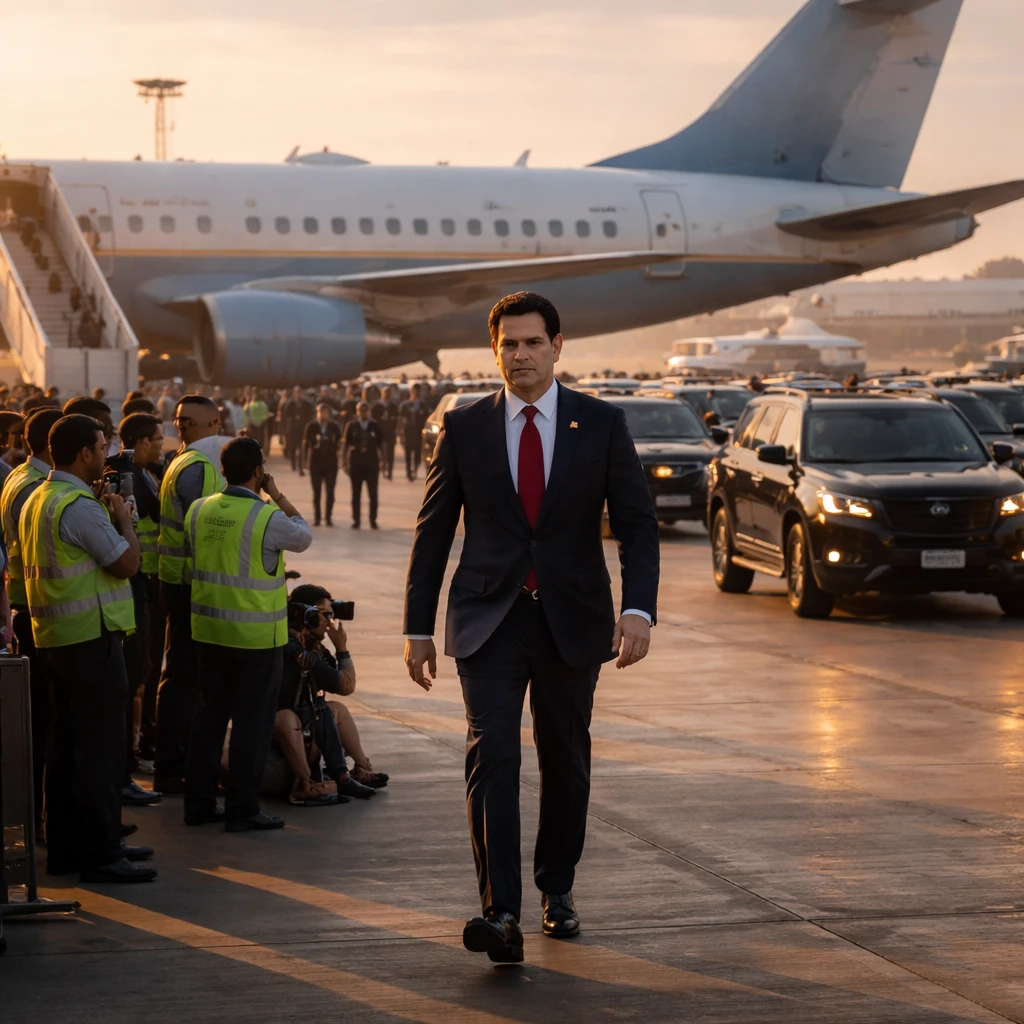
U.S. Secretary of State Marco Rubio landed in India on Saturday, beginning a four-day official visit intended to rebuild bilateral relations that have been strained by trade tariffs and shifts in Washington's regional foreign policy. The State Department said the itinerary will take Rubio to New Delhi, Kolkata, Agra and Jaipur, with senior-level meetings focused on trade frameworks, bilateral energy security and defense cooperation.
Itinerary and immediate engagements
Rubio arrived in Kolkata on Saturday morning and is due to meet Indian Prime Minister Narendra Modi in New Delhi later the same day. The visit marks Rubio's first trip to the South Asian nation and is structured around a series of high-level diplomatic discussions over the coming days.
Trade tensions and recent developments
The diplomatic outreach follows a recent period of elevated trade friction between Washington and New Delhi. While the two sides reached an interim arrangement at one point, they have not yet concluded a comprehensive trade agreement. Earlier this year, the countries set a preliminary framework in February to reduce certain duties on Indian goods to 18% from an initial level of 50%.
That negotiation dynamic shifted after a late-February U.S. Supreme Court ruling struck down the underlying tariffs. The legal decision effectively lowered the current duty rate on Indian imports to 10%.
Despite that change, New Delhi remains cautious. The article notes that the Trump administration continues to pursue parallel investigations under unfair trade practices legislation, and market analysts expect these inquiries could, in time, lead to the reinstatement of higher statutory levies.
Geopolitical context and diplomatic complications
Rubio's visit comes against a backdrop of competing diplomatic priorities that have complicated efforts to solidify a broader U.S.-India alignment. The ongoing U.S.-Israeli war on Iran is cited as one such competing priority that has affected diplomatic scheduling and focus.
Another source of friction is Washington's deeper engagement with Islamabad during the Middle East conflict, which has introduced fresh geopolitical tensions into the U.S.-India relationship. Rubio commented on Thursday that the United States is actively negotiating to expand its share of India's domestic energy supply.
Multilateral cooperation and the Quad
Institutional cooperation within the Quadrilateral Security Dialogue has also encountered operational delays. India has repeatedly requested a leader-level Quad summit in New Delhi, but those requests have not been granted. Rubio is scheduled to meet regional foreign ministers in New Delhi next week; that gathering will be the third consecutive ministerial meeting held without a corresponding summit of heads of state.
Defense specialists cited in the article view this pattern as a functional downgrade of the Quad, which was originally formed to push back against Chinese influence in the Indo-Pacific region.
Outlook for the visit
Throughout his four-day trip, Rubio is expected to press for progress on trade terms, deepen cooperation on energy security and pursue enhanced defense ties, all while navigating an array of logistical and geopolitical obstacles that have complicated bilateral and regional diplomacy.
Note: This article reports only information explicitly provided about the visit, negotiations and multilateral engagements and does not add further details beyond those facts.