
Economy May 23, 2026 02:49 AM

U.S. Says Taiwan Arms Sales Follow Routine Timelines, Not Linked to Iran Munitions Needs

Officials push back on testimony that transfers were paused to replenish ammunition for strikes in the Middle East

By Leila Farooq

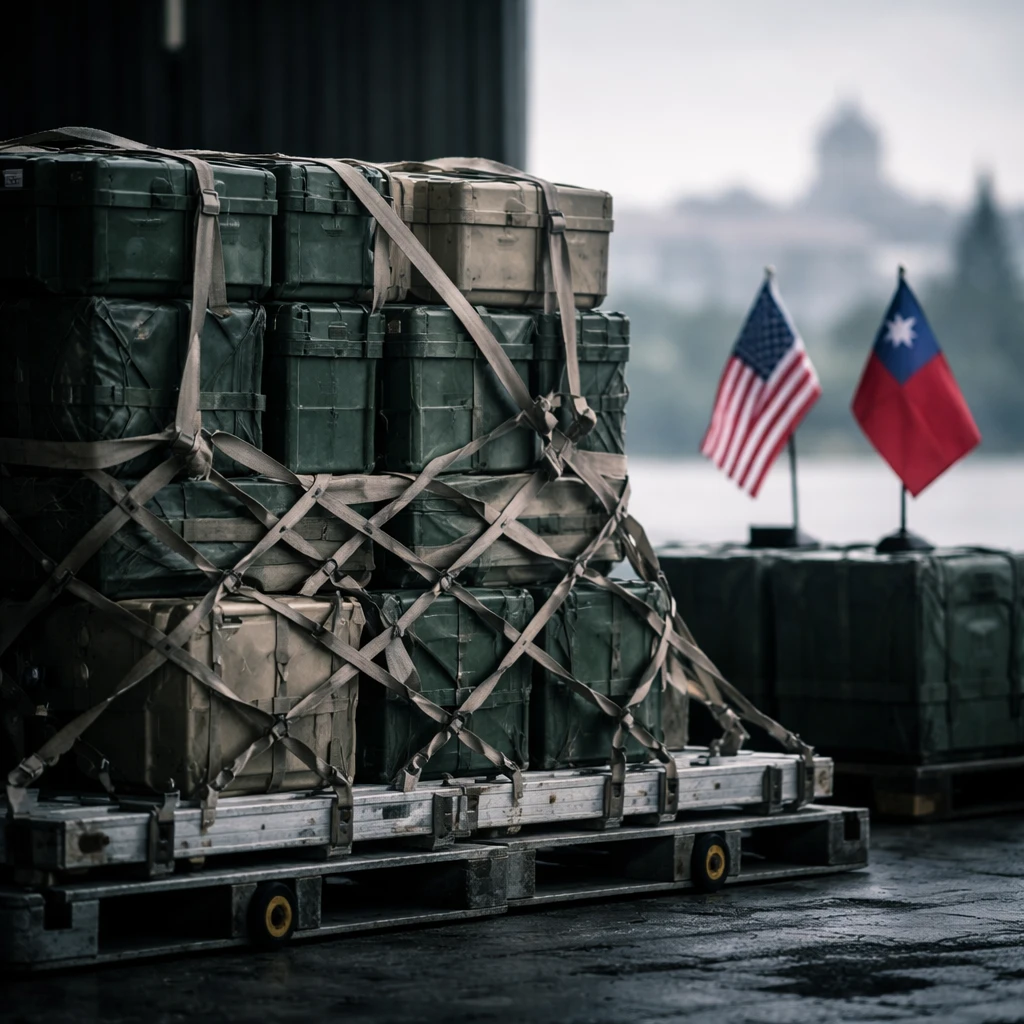
A source familiar with U.S. defense channels told Reuters that arms transfers to Taiwan follow multi-year administrative schedules and are not connected to U.S. munitions requirements for operations in the Middle East. The clarification counters congressional testimony that suggested a pause to preserve ammunition for Operation Epic Fury, while the fate of a roughly $14 billion package remains under presidential review.

U.S. Says Taiwan Arms Sales Follow Routine Timelines, Not Linked to Iran Munitions Needs

Key Points

  • U.S. arms transfers to Taiwan follow multi-year administrative processing and are described by a source as distinct from Middle East military operations - impacts defense policy and regional security markets.
  • A roughly $14 billion defense package remains under presidential review after President Trump said he had not decided following a summit with China's leader - relevant for defense contractors and geopolitical risk assessments.
  • Conflicting public statements - testimony by Acting Navy Secretary Hung Cao that transfers were paused to conserve ammunition for Operation Epic Fury, and a source denying that linkage - add policy uncertainty that could influence defense sector sentiment.

A source familiar with the matter told Reuters that U.S. arms sales to Taiwan are governed by multi-year administrative processing timelines and remain entirely separate from current military operations in the Middle East.

That account was provided after congressional testimony had raised the prospect that a pause in shipments was intended to preserve munitions for U.S. actions overseas.

The defense package at issue, valued at about $14 billion, has come under closer scrutiny since President Trump said he had not yet decided whether to approve it following a recent summit with Chinese President Xi Jinping earlier this month.

Uncertainty increased during testimony on Thursday when Acting U.S. Navy Secretary Hung Cao told a Senate Appropriations Defense Subcommittee that transfers to Taiwan had been paused so the U.S. military could retain sufficient ammunition supplies for Operation Epic Fury attacks against Iran.

According to the source who spoke to Reuters, that testimony does not reflect how Taiwan arms sales are processed. The source said U.S. military stockpiles are adequate to meet required objectives and that the Taiwan transfers are structurally unrelated to the conflict launched by the U.S. and Israel in February.

The legal framework shaping Washington's obligations toward Taiwan remains the Taiwan Relations Act of 1979, which requires the United States to provide Taiwan with defensive capabilities needed to resist threats in the region.

Beijing has repeatedly demanded an immediate halt to all U.S.-Taiwan military transfers. Taiwan's government, meanwhile, said on Friday it had received no formal notifications indicating delays in U.S. supplies and reiterated its rejection of China's sovereignty claims.

President Trump is expected to make a formal determination on the multi-billion-dollar weapons package in the near term.


Context note - The clarification from the source followed public testimony that had suggested a link between ammunition needs for operations in the Middle East and the timing of Taiwan arms shipments. Officials familiar with the matter told Reuters that such a link does not alter the multi-year administrative procedures governing the sales.

Risks

  • Uncertainty over the approval timing of the $14 billion package - creates near-term risk for defense contractors and suppliers.
  • Conflicting official accounts about whether transfers are paused to preserve munitions - could increase political and market volatility around U.S.-Taiwan security commitments.
  • Heightened diplomatic tensions with Beijing, which demands cessation of transfers, leave continued arms sales and regional deterrence arrangements vulnerable to escalation or political pressure.

More from Economy

Australian house price momentum to slow to four-year low as borrowing costs bite Jun 4, 2026 Kevin O’Leary Scales Back Utah Data Center Plan Amid Lawmaker Concerns Jun 4, 2026 Fed's Daly Says AI Could Exert Downward Pressure on Prices Over Several Years Jun 4, 2026 Putin Says Moscow Willing to Make Concessions if Kyiv Reciprocates Jun 4, 2026 Putin Says Moscow and Beijing Near New Energy Deals, Offers Few Details Jun 4, 2026