
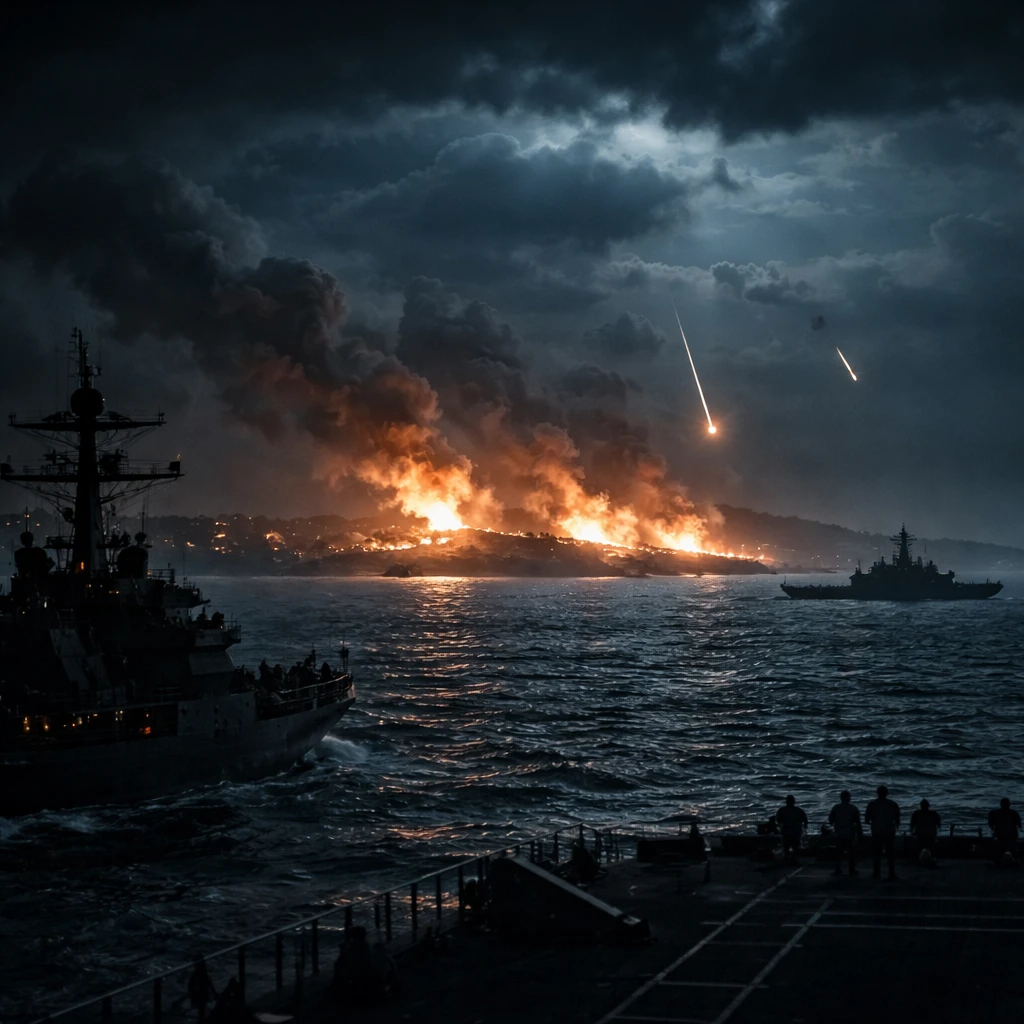
In a significant escalation of regional tensions, the United States military has carried out additional strikes against Iranian targets, according to reports on Wednesday evening. These developments follow statements from President Donald Trump, who indicated that he is not yet satisfied with any proposed peace deal. The timing of the kinetic action has cast doubt on the stability of the current ceasefire between the two nations.
Local media outlets reported hearing three distinct explosions in the vicinity of Bandar Abbas, Iran. Reuters attributed these sounds to new strikes being conducted by the U.S. military at an Iranian location. According to a U.S. official cited by Reuters, the military intercepted drones that had been launched from Iran and subsequently executed strikes on an Iranian military site. These actions were reportedly taken because the site posed a threat to both U.S. forces and commercial maritime traffic operating within the Strait of Hormuz.
Key Developments and Market Implications
- Military Escalation: This represents the second round of U.S. strikes against Iran within a single week, following Monday's attacks on sites located in Southern Iran. While Washington maintains that a ceasefire is still in effect, officials have characterized these recent strikes as necessary acts of "self-defence."
- Diplomatic Stagnation: President Trump dismissed reports suggesting that Iran and Oman would take over the management of shipping through the Strait of Hormuz as part of a deal to conclude the war. While the President noted that Iran has expressed a desire to reach an agreement, he emphasized his own lack of satisfaction with the current terms.
- Energy Market Volatility: The sudden military action caused oil prices to jump by more than 1%. This surge follows a period of significant downward pressure on crude prices throughout the week, which had been driven by speculation regarding a potential U.S.-Iran deal and the possible reopening of shipping lanes in Hormuz.
Economic Risks and Uncertainties
- Disruption of Global Shipping: The uncertainty surrounding the Strait of Hormuz poses a direct risk to commercial maritime operations. An unofficial draft of a peace deal, as reported by Iranian media, suggested that Tehran would work to restore commercial shipping in the area to pre-war levels within a one-month period through joint management with Oman. However, the continuation of strikes and the dismissal of these reports by U.S. leadership leave the status of these trade routes uncertain.
- Negotiation Breakdown: A framework deal had been reported by various sources as being close to an agreement between Washington and Tehran. This purported framework included the lifting of a U.S. blockade on Iranian ports. The dismissal of these reports by President Trump introduces significant uncertainty into the diplomatic process and the potential for market-stabilizing agreements.
The intersection of military action and stalled diplomacy suggests that the reopening of Hormuz and a formal end to the conflict remain elusive objectives for both parties involved.