
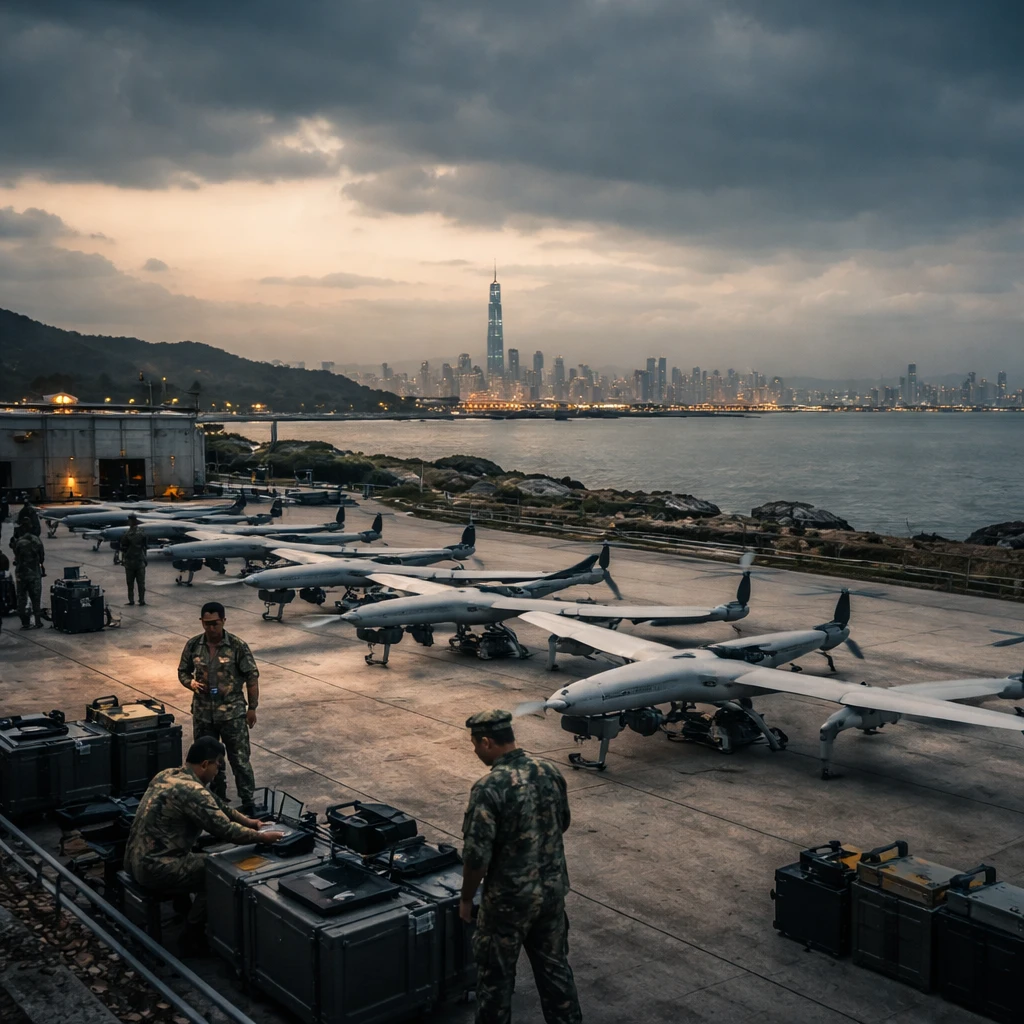
Taipei - The United States' leading diplomatic representative in Taipei said Taiwan should direct its defense budget toward more unmanned systems, including drones, to improve deterrence against China and to make better use of limited resources.
Raymond Greene, director of the American Institute in Taiwan, made the call on Saturday at a forum in Taipei. He pointed to recent combat operations in Ukraine and the Middle East as evidence that drones are changing the character of contemporary conflict and offering smaller militaries tools to counter larger forces.
Greene suggested that a shift toward accelerated investment in unmanned systems and other asymmetric capabilities would help rebalance military strength across the Taiwan Strait. His comments came amid ongoing domestic debate in Taiwan over the size and composition of a proposed defense spending package.
Legislators in Taiwan’s opposition-controlled parliament approved roughly two-thirds of an additional $40 billion in military funding requested by President Lai Ching-te, leaving parts of the plan subject to further negotiation. The proposed funds are aimed at supporting Taiwan-made defense projects, including drone and missile programs, as Taipei works to modernize its armed forces in response to growing pressure from China.
Washington has consistently supported Taipei’s efforts to expand defense spending and enhance military readiness. Greene reiterated that the United States remains Taiwan’s most important arms supplier, even in the absence of formal diplomatic relations between the two governments.
He also highlighted a longstanding U.S. position that peace and stability in the Taiwan Strait are essential not only for Taiwan and the United States but also for the health of the broader global economy.
The remarks arrive at a moment of ambiguity over whether Washington will proceed with a reported new arms package for Taiwan, valued at about $14 billion. President Donald Trump has said he is still weighing whether to move forward with the sale after recent meetings with Chinese President Xi Jinping in Beijing.
Taiwan’s government continues to reject Beijing’s claims of sovereignty over the island, asserting that the island’s future should be decided by its people. Separately, Deputy Mainland Affairs Council Minister Shen Yu-chung emphasized that Taipei must rely on deterrence through strength and resist any attempts to change the status quo by force.
Shen added that Taiwan’s security is closely linked to the interests of the wider Indo-Pacific region and to democratic partners around the world.
Context and implications
The discussion centers on how Taiwan allocates additional military resources and the role unmanned systems might play in offsetting conventional advantages. The legislative outcome for the $40 billion request, the potential U.S. arms package, and Beijing’s posture remain central uncertainties shaping Taipei’s defense strategy.