
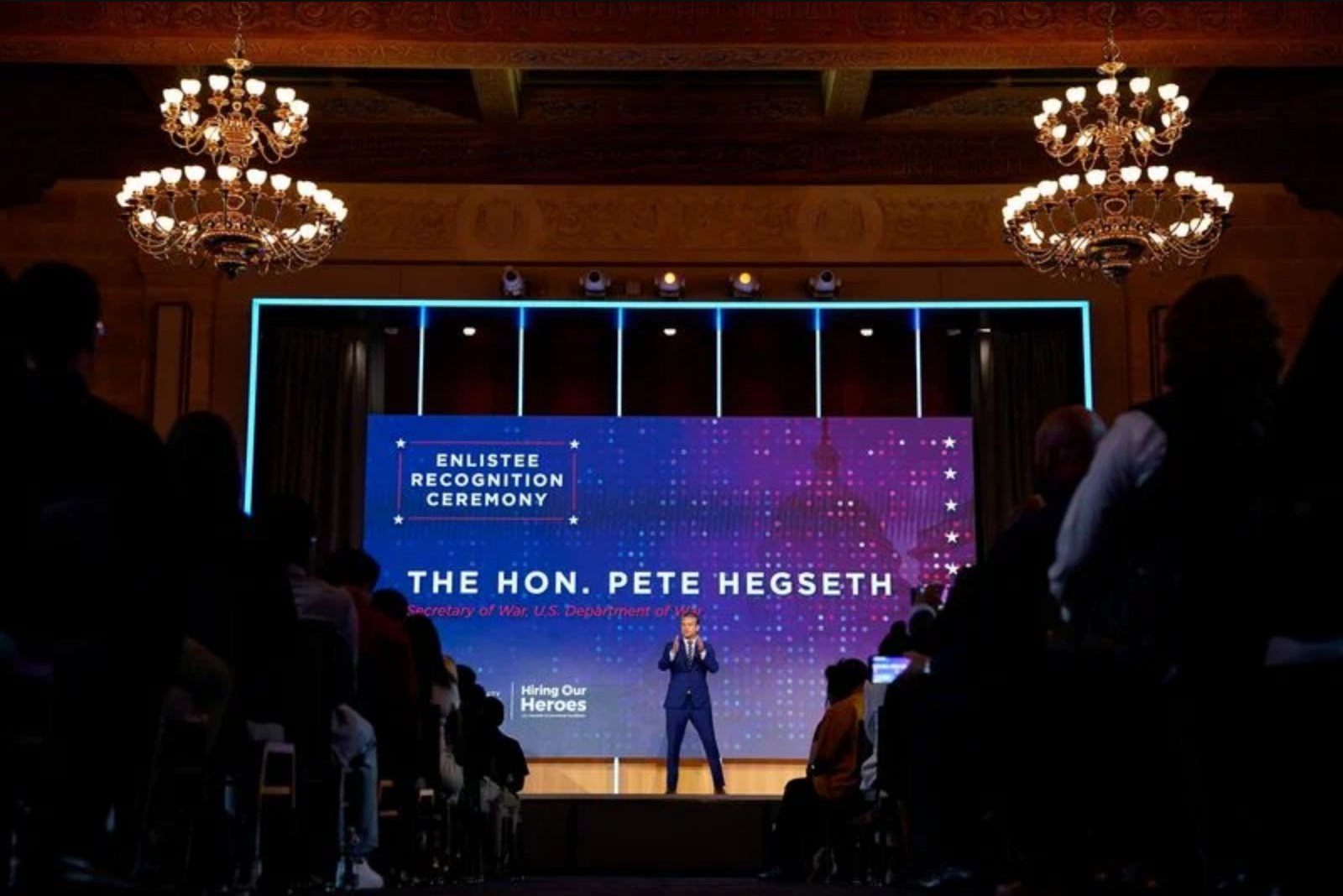
PARIS, June 6 - U.S. Defense Secretary Pete Hegseth used remarks at a Normandy commemoration on Saturday to warn that Europe is confronting what he described as an "invasion" of dangerous political ideologies coming by sea. Speaking at the Normandy American Cemetery in Colleville-sur-Mer during ceremonies marking the 82nd anniversary of the Allied landings, Hegseth linked contemporary migration patterns to the symbolism of the D-Day operation.
"Sadly, today, different European beaches are stormed by different, dangerous ideologies. Beaches in Spain, Italy, Greece and Bulgaria, boats and men arrive," Hegseth said in his address. He asked rhetorically: "When will European capitals do something about that invasion or is it too late? I pray not, and I believe not."
Hegseth made his comments during official remembrance events that honour the Allied crossing of the English Channel and the campaign to free Western Europe from Nazi occupation. His remarks reflect lines of criticism voiced by senior U.S. officials, including President Donald Trump and, more recently, Vice President JD Vance, who have argued that some European governments have not done enough to control immigration.
A U.S. National Security Strategy document released last year was cited in the remarks' broader context as warning that Europe faces "civilizational erasure" unless it changes course. That document and similar statements by senior U.S. officials have, in turn, unsettled longstanding assumptions about the transatlantic relationship and focused attention in European capitals on reducing dependence on U.S. technology and defence.
Observers will note that the comments were delivered at a site heavy with historical symbolism, where the 1944 landings remain a central touchstone for discussions of security and alliance obligations. Hegseth's framing explicitly ties current political and migration challenges to that legacy, and places a public question before European policymakers about whether and how to respond.
The speech adds to a string of public statements from U.S. officials criticizing Europe's handling of immigration and defence capability. Within the limits of the remarks and related documents cited, European capitals face renewed pressure to consider strategic diversification in security and technology partnerships.
Key points
- Hegseth warned that Europe is experiencing an "invasion" of dangerous ideologies arriving by sea, naming Spain, Italy, Greece and Bulgaria as examples.
- His comments were made at the Normandy American Cemetery during the 82nd anniversary commemorations of the D-Day landings.
- A U.S. National Security Strategy document cited in the wider discussion warned of "civilizational erasure," prompting European considerations about diversifying away from reliance on U.S. technology and defence.
Risks and uncertainties
- Political tension between the U.S. and European capitals over immigration policy could strain defence and technology cooperation - relevant to defence and technology sectors.
- Public rhetoric linking migration to security threats may heighten political polarisation in Europe, affecting government policy and market sentiment in sectors exposed to regulatory change.