
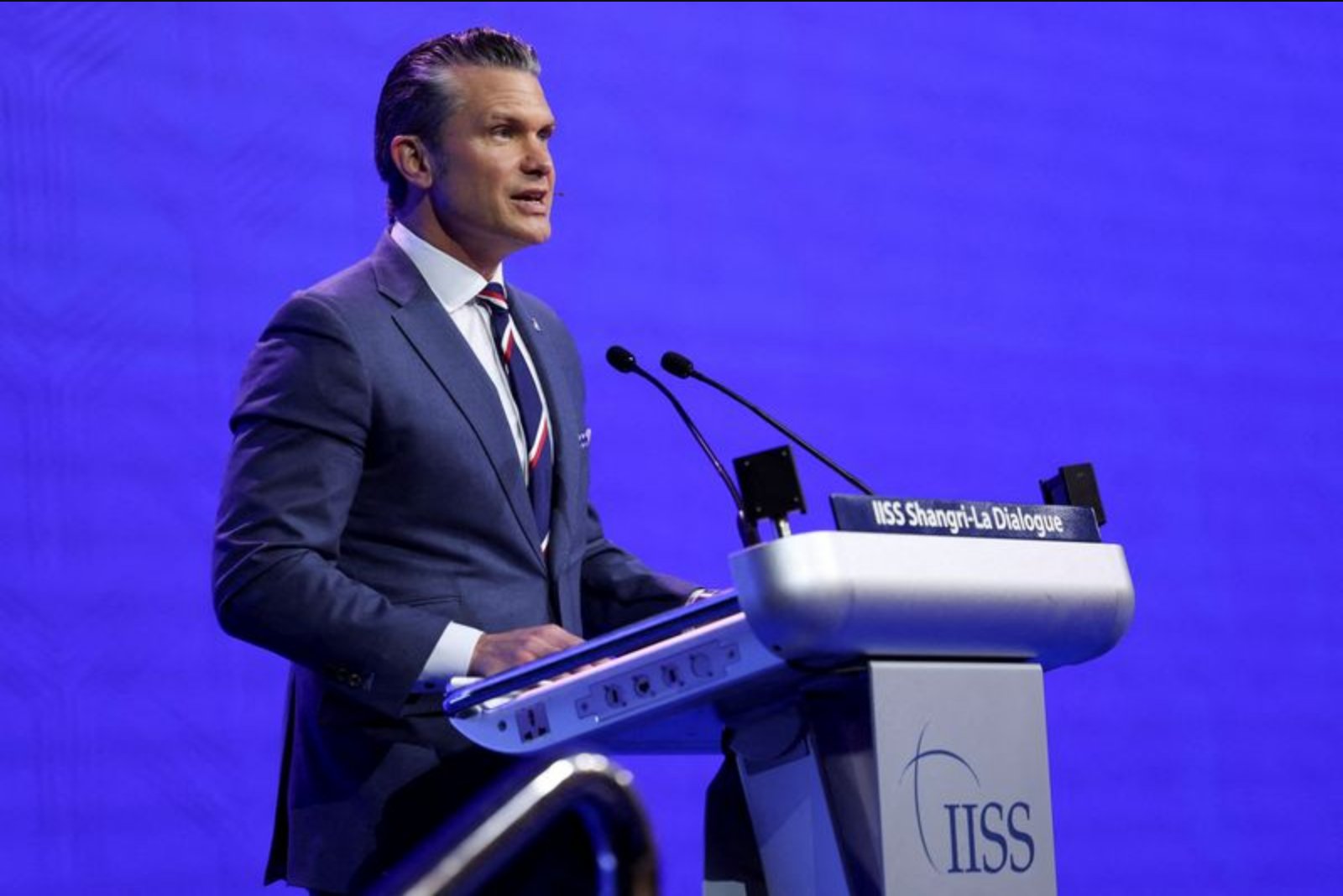
At the Shangri-La Dialogue held in Singapore, U.S. Defense Secretary Pete Hegseth delivered a pointed message regarding the shifting security architecture in Asia. Hegseth warned of a "rightful alarm" stemming from China's continuous and rapid military expansion. He suggested that for deterrence to be effective, allies must become stronger and more self-reliant in their defense capabilities.
Hegseth emphasized that a Pacific region dominated by a single hegemon would lead to the unraveling of the existing regional balance of power. He stated clearly that no state, including China, has the authority to impose hegemony or threaten the security of the United States and its allied nations. To support this posture, the Pentagon chief indicated that the United States expects its Asian partners to raise their defense spending to 3.5% of their GDP, a move that aligns with the U.S. commitment to a $1.5 trillion investment in its own military forces.
Strategic Objectives and Communication
Despite the calls for increased spending, Hegseth noted that the primary objective for allies is achieving stability rather than inciting escalation. He described the American approach as one of disciplined strength and steady resolve, characterized by leadership that can speak softly while maintaining significant capabilities. Interestingly, Hegseth also touched upon the current state of relations with Beijing, noting that ties are currently better than they have been in many years. This improvement is attributed to increased military-to-military communications and more frequent meetings between counterparts.
The Shift Toward Partner Responsibility
The Secretary's remarks also reflected a broader policy shift directed by President Donald Trump, who has demanded that allies increase their defense contributions and reduce their dependence on Washington. Hegseth underscored this by stating that the era of the United States subsidizing the defense costs of wealthy nations has concluded. He articulated a preference for "partners, not protectorates," arguing that true alliances require all members to have "skin in the game." He concluded with a firm stance against what he termed "freeloading" among allies.
Key Economic and Market Drivers
- Defense Sector Procurement: The push for allies to reach 3.5% of GDP in defense spending, coupled with the U.S. $1.5 trillion military investment, signals increased demand for hardware and services within the global defense industry.
- Fiscal Policy Shifts: The move toward requiring allies to self-fund more of their security needs could shift capital allocation patterns in partner nations, impacting government budgets and long-term fiscal planning.
Risks and Uncertainties
- Regional Geopolitical Instability: Hegseth's warnings about China's buildup suggest a heightened risk of tension in the Pacific, which could impact global trade routes and market volatility.
- Alliance Cohesion: The directive to end "subsidizing" wealthy nations introduces uncertainty regarding how traditional security frameworks will evolve and whether partners will meet the new 3.5% GDP spending threshold.