
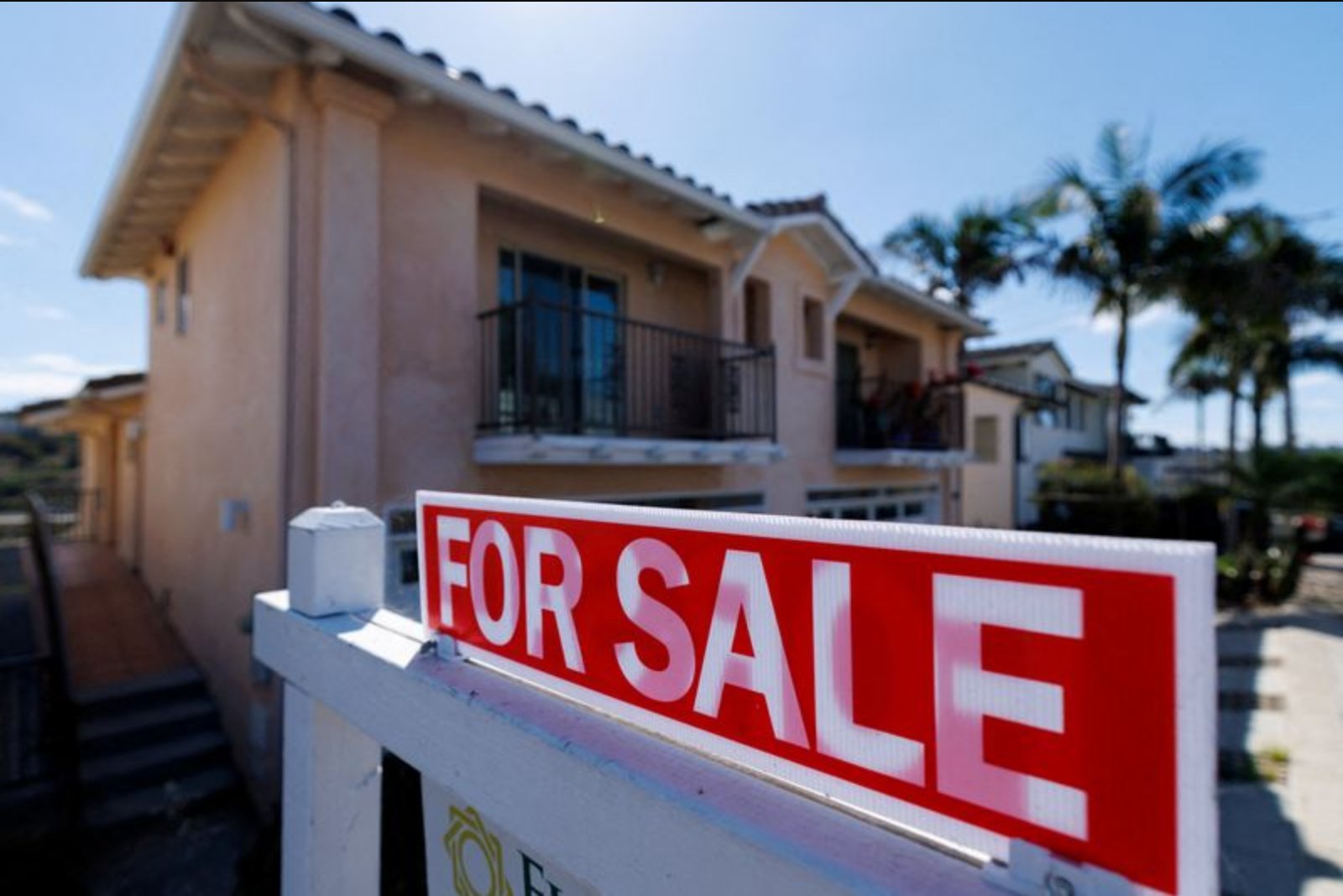
May 20 - The average 30-year fixed-rate U.S. mortgage increased by 10 basis points to 6.56% for the week ended May 15, reaching its highest point in seven weeks, the Mortgage Bankers Association reported on Wednesday.
Mortgage demand weakened alongside the uptick in rates. Applications for home loans fell 2.3% from the prior week, slipping to their lowest level in five weeks. Nearly 10% of mortgage applicants sought adjustable-rate mortgages, attracted by interest costs that were roughly 80 basis points lower than the average fixed 30-year rate.
Market participants attributed the rise in mortgage rates to higher benchmark Treasury yields rather than changes in the Federal Reserve's short-term policy rate. Mortgage rates tend to track the 10-year Treasury yield more closely, and a global selloff in bond markets over the past week has pushed up long-term yields. That selloff followed stalled U.S.-Iran peace talks and persistently elevated energy prices, factors that helped drive the 30-year Treasury bond yield to its highest level in 19 years and the 10-year Treasury yield to its highest since January 2025.
The increase in consumer borrowing costs comes just two days before President Donald Trump is scheduled to swear in Kevin Warsh as the Federal Reserve's new chair, replacing Jerome Powell. Powell drew criticism from the President over what Trump described as rates that were kept too high. Despite the leadership change, financial markets are pricing in no short-term rate cuts for this year and even assign some probability to further increases in short-term rates if higher oil prices feed more broadly into inflation, a concern some Fed officials have expressed.
This environment of higher Treasury yields and rising mortgage rates has immediate implications for potential homebuyers and the housing finance sector. With fixed 30-year rates elevated, a portion of borrowers has shown increased interest in adjustable-rate mortgages, which currently offer substantially lower initial rates relative to fixed-term loans.
Commentary from political and regulatory figures has underscored uncertainty around future monetary policy. President Trump told the Washington Examiner that he will allow Warsh discretion over rate decisions, and Warsh informed lawmakers last month that he has made no promises to the President regarding the Fed's policy path.
For now, the combination of higher energy prices, stalled diplomacy, and the resulting move higher in Treasury yields appears to be the proximate driver of the recent uptick in mortgage costs and the corresponding pullback in application activity.