
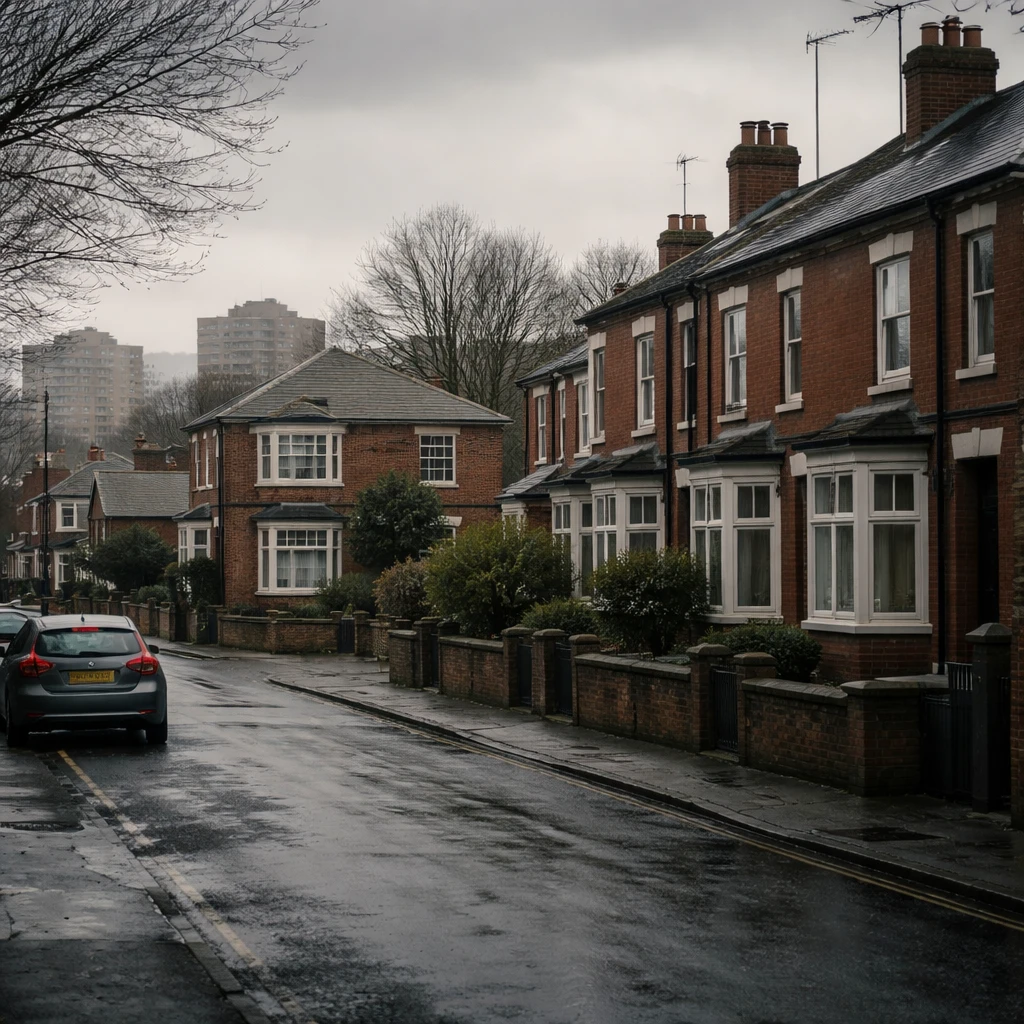
UK house prices showed no annual growth in the year to March, with the average dwelling valued at £268,000 ($358,810), the Office for National Statistics reported on Wednesday. The flat 12-month reading is the first period without year-on-year growth in nearly two years.
Measured month-to-month on a seasonally adjusted basis, prices fell by 0.2% in March. That decline is the first monthly drop since December.
Analysts note that broader economic strains are exerting pressure on the housing market. The ongoing Iran war has tightened household budgets through higher energy bills and has coincided with a sharp rise in borrowing costs for prospective buyers. Traders have priced in the prospect of further Bank of England interest rate increases as policymakers respond to inflationary pressures.
Mortgage pricing reflects that tightening. According to Moneyfacts, the average two-year fixed-rate mortgage stood at 5.73%. That level represents a 0.9 percentage point increase from late February, a point in time cited as just before the US and Israel attacked Iran.
Price moves across the UK were not uniform. London saw the largest annual contraction at 2.1%, making it the weakest-performing region. Several regions across northern England also posted annual falls: the North West, the North East and Yorkshire and the Humber each recorded their first year-on-year price declines since 2024. In contrast, prices continued to rise in Northern Ireland, Scotland and Wales.
The combination of higher mortgage rates and elevated energy costs has translated into a more constrained housing market, with regional variation reflecting differing local dynamics. The monthly dip in March underlines the vulnerability of recent gains to shifts in financing costs and real-world household budgets.
Summary
The average UK house price was unchanged year-on-year in March at £268,000, marking the first 12-month period without growth in nearly two years. Seasonally adjusted prices fell 0.2% month-on-month in March, the first monthly decrease since December. Rising energy prices tied to the Iran war and sharply higher mortgage rates have increased pressure on household finances and the housing market.
Key points
- Average UK home price held at £268,000 in March, unchanged from a year earlier.
- Seasonally adjusted prices fell 0.2% in March - the first monthly decline since December.
- The average two-year fixed-rate mortgage is 5.73% per Moneyfacts, up 0.9 percentage point since late February, a move coinciding with the US and Israel attack on Iran; regional performance varied with London down 2.1% and price gains continuing in Northern Ireland, Scotland and Wales.
Risks and uncertainties
- Higher mortgage rates - further increases in borrowing costs could continue to depress activity in the housing market, affecting mortgage lenders and homebuyers.
- Energy price pressure from the Iran war - rising household energy bills can squeeze disposable income and reduce affordability, impacting consumer spending and housing demand.
- Policy response uncertainty - traders' expectations of Bank of England rate rises to curb inflation create uncertainty for financing conditions and the pace of any housing market recovery.