
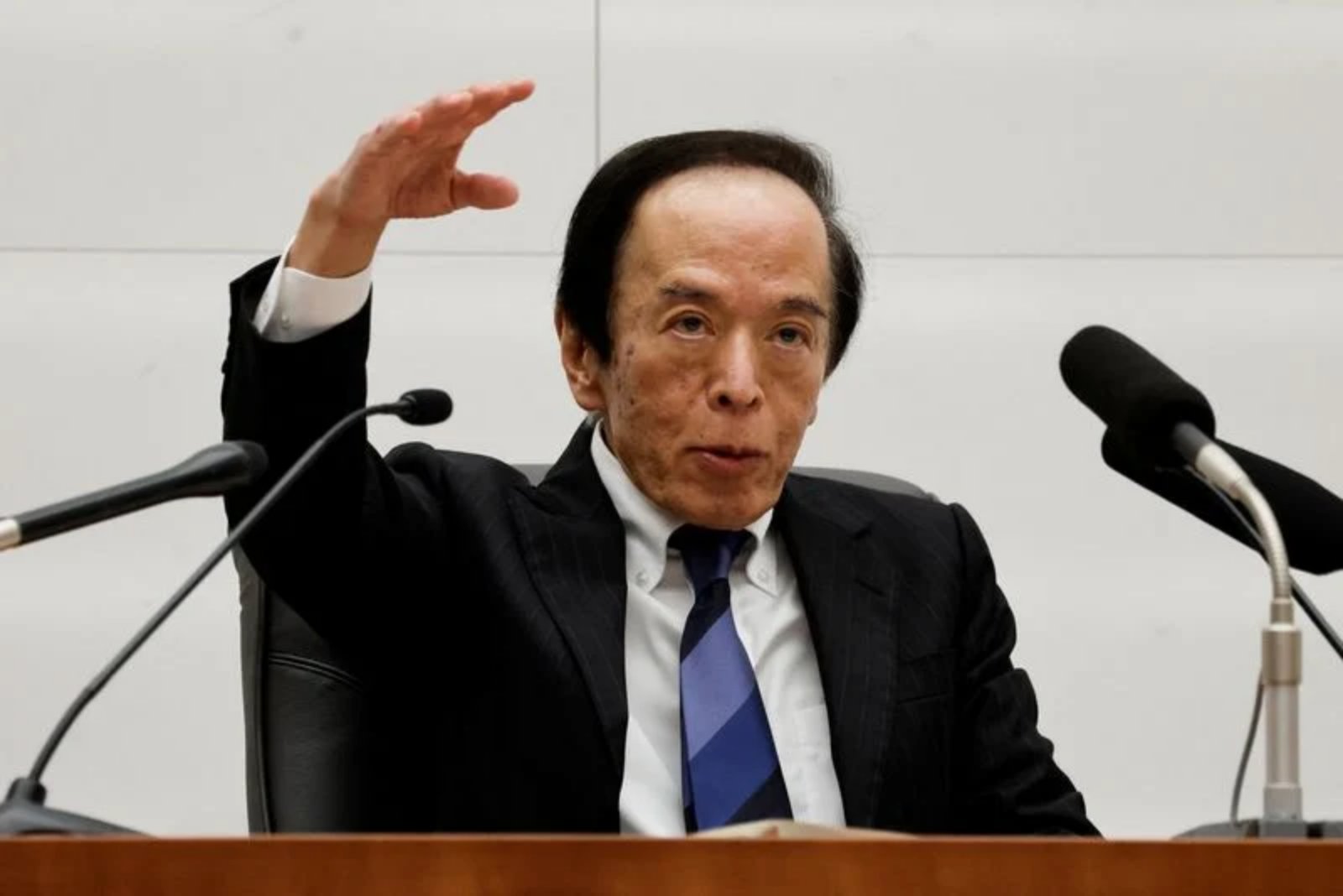
Bank of Japan Governor Kazuo Ueda has effectively repositioned the central bank’s stance toward a more conventional, inflation-centric role, setting the stage for a likely policy rate increase in June. In public remarks on Wednesday, Ueda abandoned the more dovish signals that marked earlier phases of his tenure and emphasized the BOJ’s willingness to act if mounting price pressures threaten the wider economy.
The shift places the potential for higher inflation at the centre of monetary decision-making, rather than focusing solely on the gradual achievement of a stable 2% inflation target. Ueda made clear that war-driven supply shocks will no longer be treated as automatically temporary if they risk producing broader, second-round effects across the economy.
“Even if the situation surrounding the Middle East remains unclear, we must discuss the pros and cons of raising the policy rate if we judge that upside risks to prices outweigh downside risks to economic activity,” Ueda said, language that reinforced prevailing market expectations of a rate increase at the central bank’s June 15-16 meeting.
This language echoes comments Ueda made ahead of December’s rate rise when he opened a similar “pros and cons” debate. The notable difference this time is that he broadened the triggers for tightening. Until now, the BOJ’s moves away from aggressive stimulus had been framed as a careful, gradual process linked to securing a stable 2% inflation outcome. Ueda’s latest remarks add a new, separate condition - a focus on inflation risks themselves as a justification for raising policy rates.
Officials pointed to the potential for energy-driven cost increases to ripple through prices as firms adjust their price-setting behaviour. Ueda warned that rising raw material costs are already feeding into wholesale prices and could widen into the broader economy if left unchecked. That prospect, in the view of central bank officials, tilts the balance toward taking action sooner rather than later.
“Unless there’s a severe escalation in the conflict, the BOJ will probably hike rates in June,” said a source familiar with the bank’s thinking, a view echoed by another source. Those assessments underline how the leadership now interprets the recent surge in energy and commodity costs as a material upside risk to inflation rather than a purely transitory shock.
The change in communication marks a new phase in Ueda’s five-year term. In his early years he dismantled elements of his predecessor’s extraordinary stimulus framework; more recently the BOJ moved out of a decade-long regime of massive accommodation in 2024 and has raised its policy rate several times, including a rate increase in December. The central bank’s recent path has therefore been one of progressive normalization, and Ueda’s comments indicate a firmer commitment to keeping inflation anchored as part of that normalization.
Veteran BOJ watcher Mari Iwashita characterized the remarks as evidence of mounting concern over price pressures, saying she regards a June rate hike as effectively assured. “The war-induced wave of price increases has only just begun and is likely to intensify around summer,” she said. “Ueda’s remarks suggest the BOJ is bracing for the chance of being forced to raise rates in autumn, possibly at a faster pace.”
At the same time as signalling a hawkish tilt, Ueda sought to address worries within the government about the potential economic cost of higher borrowing costs. He framed timely policy tightening as a defensive measure to prevent the erosion of household purchasing power, and as a way to anchor market confidence so that bond yields do not jump in an unstable fashion.
Market reactions have been mixed. Despite the hawkish communication, the yen remained weak, hovering near the 160-per-dollar level that Tokyo has previously viewed as a threshold for possible intervention. Continued yen weakness keeps upward pressure on import prices and feeds into the cost of living, complicating the BOJ’s task of returning inflation to target while limiting disruptive moves in financial markets. Some analysts caution that even a June rate rise may not be sufficient to produce a sustained rebound in the yen.
“Even if the BOJ raises rates in June, any rebound in the yen will be limited,” said Rinto Maruyama, a strategist at SMBC Nikko Securities. That view highlights the uncertainty around currency dynamics and suggests market participants will be looking for a clearer, sustained tightening signal from the BOJ to shift exchange rate trends meaningfully.
The evolving stance signals a readiness to respond more frequently to inflationary pressures, particularly those amplified by external shocks to energy and commodity markets. For policy makers, the central consideration now is whether upside price risks have reached a level that justifies pre-emptive tightening to avoid broader and more entrenched inflationary effects.
Implications for markets and the economy
- Monetary policy - The BOJ’s pivot increases the probability of near-term tightening and a more conventional policy approach aimed at anchoring inflation.
- Currency - Persistent yen weakness near 160 per dollar could continue to add to import costs and inflationary pressures.
- Inflation and prices - Rising raw material and wholesale prices, along with adjustments in firms’ price-setting, raise the risk of broader price pass-through.