
Economy May 20, 2026 09:48 AM

UAE’s Hormuz-bypass crude pipeline is half finished, ADNOC says

Construction accelerated after Strait of Hormuz disruptions; delivery being pushed toward 2027

By Leila Farooq

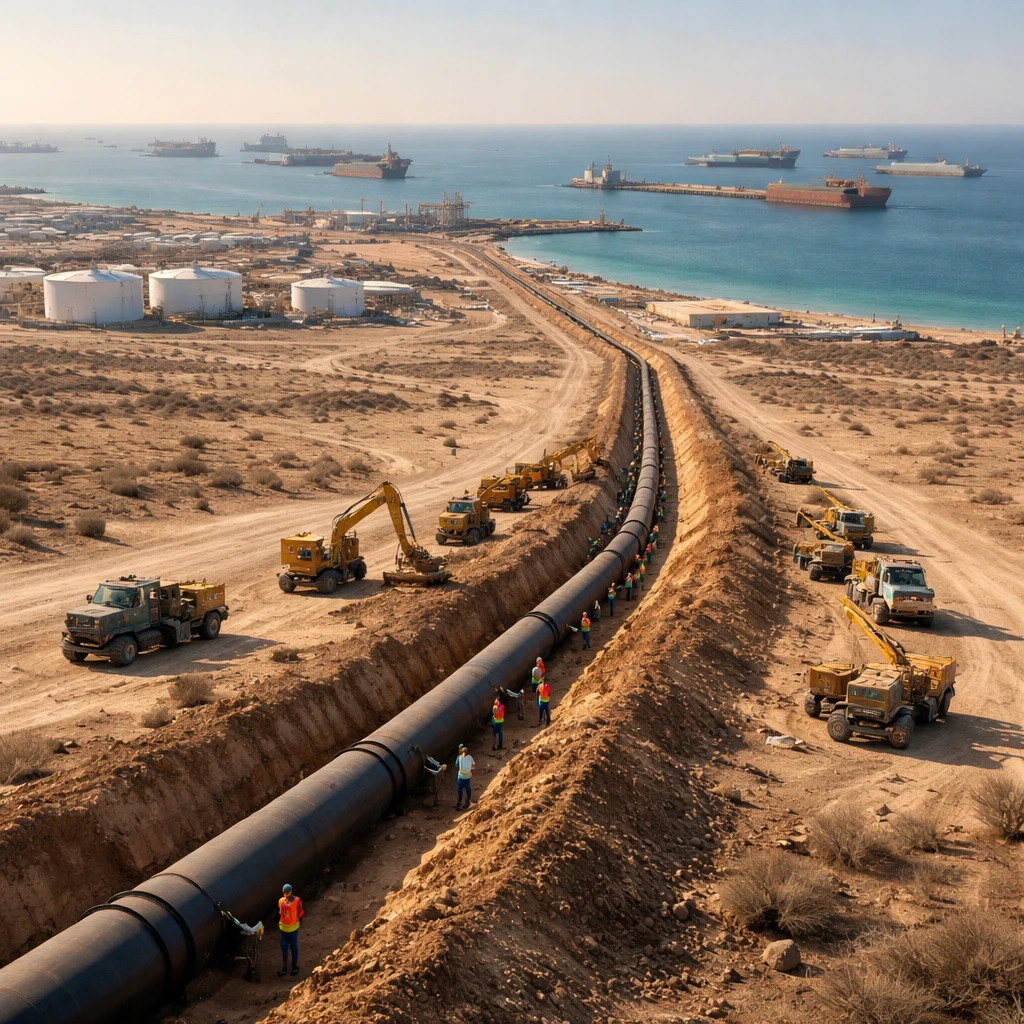
ADNOC reports the United Arab Emirates' new crude pipeline intended to route oil around the Strait of Hormuz has reached roughly 50% completion. The project was publicly disclosed last week and is being expedited to double Fujairah export capacity by 2027 amid continued restrictions on non-Iranian vessels transiting the strait and damage assessments at some ADNOC facilities.

UAE’s Hormuz-bypass crude pipeline is half finished, ADNOC says

Key Points

  • ADNOC says the new West-East crude pipeline is roughly 50% complete and its delivery is being accelerated toward 2027.
  • The Abu Dhabi Media Office announced plans to speed construction to double export capacity through Fujairah port by 2027; the move follows instructions from Abu Dhabi Crown Prince Sheikh Khaled bin Mohamed bin Zayed.
  • The existing Habshan-Fujairah pipeline can move up to 1.8 million barrels per day; expanding bypass capacity affects oil export logistics, shipping routes, and energy markets.

The United Arab Emirates has reached the halfway mark on a new crude oil pipeline designed to bypass the Strait of Hormuz, ADNOC Chief Executive Sultan Al Jaber said Wednesday.

Al Jaber, speaking at a live-streamed Atlantic Council event, said the West-East Pipeline is "already almost 50% complete, and we are accelerating its delivery toward 2027." The project was publicly disclosed last week by the Abu Dhabi Media Office, which said the UAE will speed up construction to double export capacity through Fujairah port by 2027.

According to the Abu Dhabi Media Office, Abu Dhabi Crown Prince Sheikh Khaled bin Mohamed bin Zayed instructed ADNOC to accelerate the West-East Pipeline project during an executive committee meeting. The move comes as Iran has kept the Strait of Hormuz largely closed to non-Iranian vessels since U.S.-Israeli strikes in February, a development that has pushed energy prices and inflation higher and raised concerns about broader economic effects.

"Right now, too much of the world’s energy still moves through too few choke points. That is exactly why the UAE made the decision more than a decade ago to invest in infrastructure that bypasses the Strait of Hormuz," Al Jaber said.

The existing Abu Dhabi Crude Oil Pipeline, commonly known as the Habshan-Fujairah pipeline, has a transportation capacity of up to 1.8 million barrels per day. ADNOC has relied on that route to boost exports from the Gulf of Oman coast outside the strait, and officials say the new work will further expand throughput to Fujairah.

Al Jaber also reported that some ADNOC facilities were directly targeted and that portions of infrastructure were struck. He said damage assessments are underway and that returning sites to full operational capacity will vary - taking weeks in some cases and months in others.

With the project now at approximately 50% completion and official instructions to accelerate delivery, the UAE is moving to increase export flexibility and reduce reliance on the Strait of Hormuz. Progress toward the 2027 delivery window will be closely watched as repair work at damaged facilities continues and as the political and maritime situation around the strait remains constrained.


Reporting note: The statements above reflect comments made by ADNOC leadership and disclosures from the Abu Dhabi Media Office as reported publicly.

Risks

  • The Strait of Hormuz has been largely closed to non-Iranian vessels since U.S.-Israeli strikes in February, which has already contributed to higher energy prices and inflation - a continued maritime restriction risks further market volatility affecting energy and inflation-sensitive sectors.
  • ADNOC reported that some facilities and infrastructure were struck; damage assessments are ongoing and recovery to full capacity will take weeks in some cases and months in others, posing operational and supply risks for the energy sector.
  • Until the bypass pipeline is completed and operational, export capacity may remain constrained and markets reliant on Gulf shipments could face supply disruptions, affecting shipping and oil trading sectors.

More from Economy

Australian house price momentum to slow to four-year low as borrowing costs bite Jun 4, 2026 Kevin O’Leary Scales Back Utah Data Center Plan Amid Lawmaker Concerns Jun 4, 2026 Fed's Daly Says AI Could Exert Downward Pressure on Prices Over Several Years Jun 4, 2026 Putin Says Moscow Willing to Make Concessions if Kyiv Reciprocates Jun 4, 2026 Putin Says Moscow and Beijing Near New Energy Deals, Offers Few Details Jun 4, 2026