
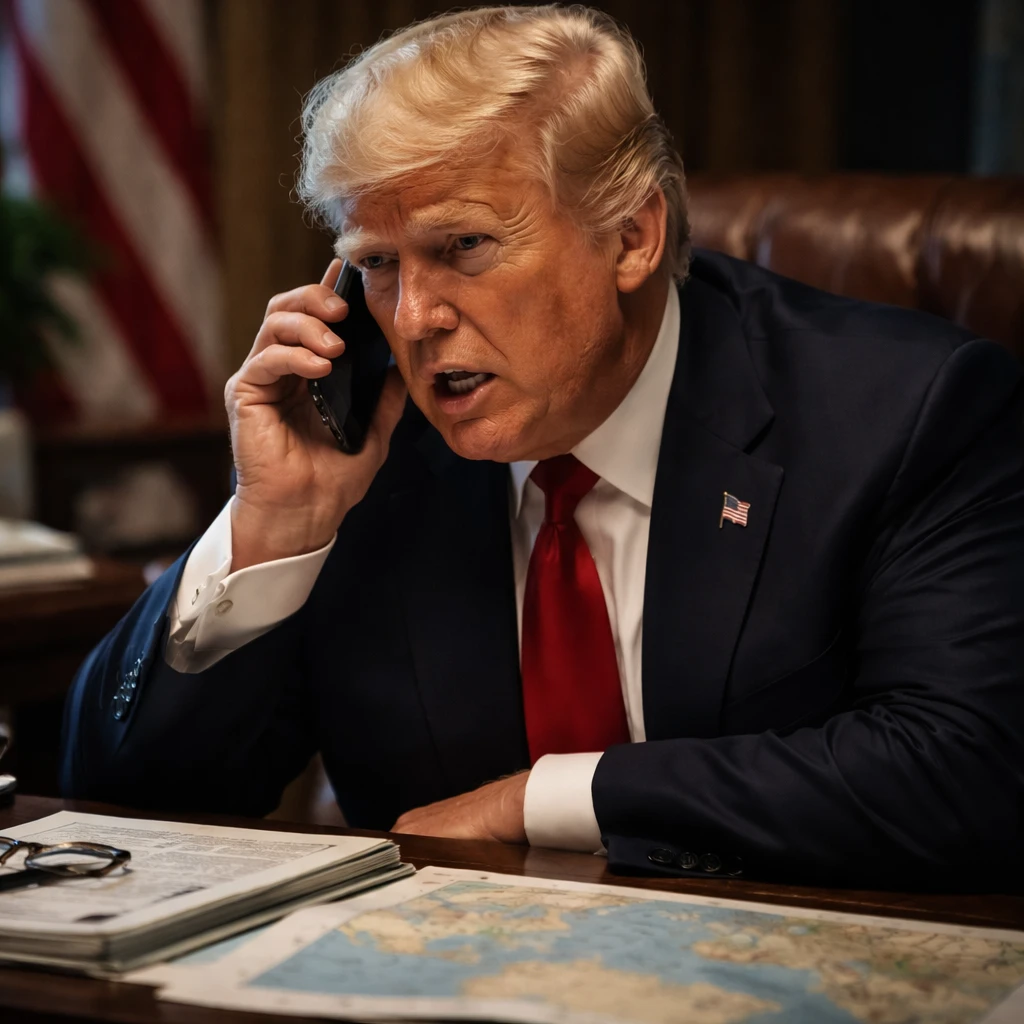
President Donald Trump has confirmed that he employed strong language while speaking with Israeli Prime Minister Benjamin Netanyahu earlier this week, saying he attempted to curb Israeli military actions in Lebanon and protect an ongoing diplomatic track with Iran.
In a discussion published on the Pod Force One podcast that aired on Wednesday, Trump acknowledged telling Netanyahu he was upset by Israel's military posture toward Lebanon. "I was a little bit perturbed at him constantly fighting with Lebanon," he said, and added that at one point he told the Israeli leader: 'Bibi, we have to stop this.'
The president said the exchange occurred on Monday, a call that followed an Iranian warning that Tehran might suspend talks with the United States and impose stricter limits on commercial passage through the Strait of Hormuz in response to Israeli threats to bomb Beirut.
Trump also addressed the broader context in which the call took place, affirming a personal affinity for Netanyahu while rejecting the notion that the Israeli leader had manipulated U.S. policy toward Iran. "I liked Bibi a lot," he said, and when confronted with suggestions that Netanyahu had "tricked" him into striking at Iran, Trump replied: "I'm the one that started it. I started it because they can't have a nuclear weapon. If it wasn't me, there would be no Israel right now."
The president's account referenced the ongoing confrontation between Israel and Tehran-backed Hezbollah militants operating in Lebanon. The group launched drones at population centers in northern Israel, prompting thousands of civilians to evacuate, in the period after U.S. and Israeli strikes on Iran late in February. The United States classifies Hezbollah as a terrorist organization.
Trump said he had also communicated on Monday with representatives of Hezbollah. According to his account, both Hezbollah and Israeli officials agreed to a mutual cessation of fire, and Israeli forces refrained from conducting raids on Beirut.
Despite the president's description of a temporary de-escalation, fighting has persisted in southern Lebanon since the Netanyahu-Trump conversation. Trump said Israel has avoided strikes on Beirut and that Hezbollah's drone operations targeting Israel have declined in frequency.
The picture the president painted is one of tense diplomacy coupled with sporadic violence: an effort to halt escalation between Israel and Lebanon while managing a fragile negotiating stance with Iran and addressing interruptions to maritime traffic threatened by Tehran.
Key points:
- Trump confirmed he used expletives to press Netanyahu to stop fighting with Lebanon during a Monday phone call, saying "Bibi, we have to stop this."
- The call followed Iranian threats to suspend talks with the U.S. and to tighten restrictions on traffic through the Strait of Hormuz after Israeli threats to bomb Beirut.
- Hezbollah fired drones into northern Israel, prompting mass evacuations; Trump said he spoke to Hezbollah representatives and that both sides agreed to cease fire, though fighting in southern Lebanon has continued.
Risks and uncertainties:
- Diplomatic negotiations with Iran may be endangered - the article reports Iran threatened to suspend talks with the United States.
- Maritime traffic through the Strait of Hormuz faces potential restrictions - Iran threatened to increase limitations on shipping in that passage.
- Persistent localized conflict in southern Lebanon creates continued security risks - the article notes fighting has continued despite reported agreements to stop firing, affecting civilian safety and regional stability.