
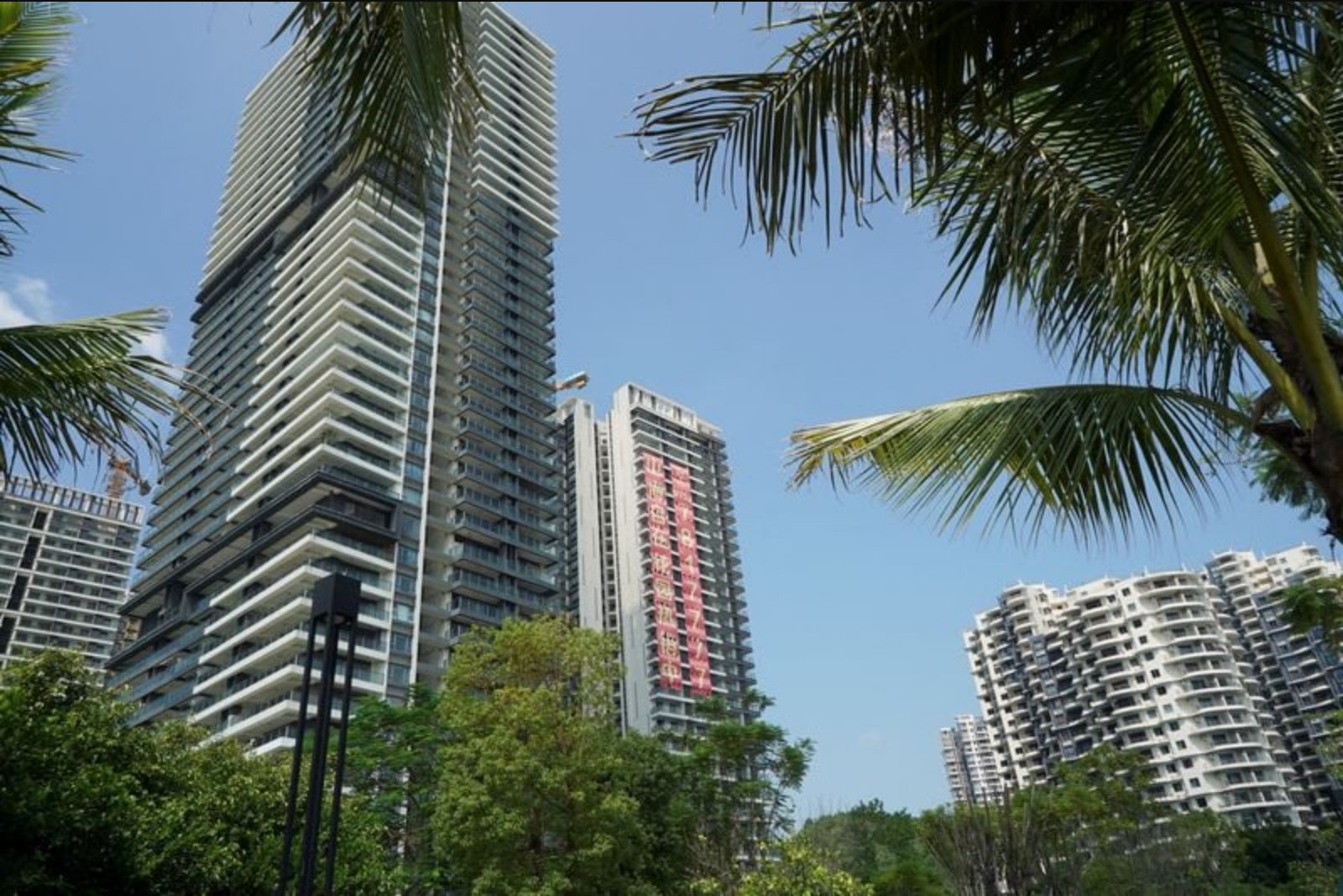
The protracted slump in China's real estate market has begun to exert significant pressure on a secondary but vital sector: property service providers. These companies, responsible for the day-to-day management and maintenance of residential compounds, are finding it increasingly difficult to secure the management fees necessary to sustain operations. This struggle is creating a ripple effect that threatens both the stability of service providers and the broader valuation of residential real estate.
The crisis is driven by several converging factors within the current economic climate. In many instances, homeowners are facing financial constraints that make paying monthly management fees difficult. In other cases, residents are intentionally withholding payments as a tactical move to pressure management companies into reducing their service costs. Additionally, investors who purchased multiple apartments during the preceding market boom may see little incentive to continue paying administrative costs for assets they no longer believe will recover in value.
Furthermore, the issue of oversupply continues to weigh heavily on the sector. Many residential developments remain partially vacant following decades of intensive construction. In these unoccupied areas, the responsibility for management fees often falls upon distressed property developers who are themselves struggling with the broader real estate downturn. According to estimates from ANZ, China's unsold housing stock represents a total floor area roughly twice the size of Greater London.
A Declining Trend in Revenue Collection
Data indicates a sharp deterioration in the ability of firms to collect owed fees. Research firm CRIC reports that the average collection rate for the top 500 property management companies in China dropped to 71% last year, a significant decline from the 89% recorded in 2021. While CRIC did not provide a specific annual breakdown, industry executives have noted that 2025 saw the most substantial drop, with the downward trend continuing since that period.
The implications of these figures are profound for the operational viability of management firms. He Shuhua, the chief operating officer of Onewo - which operates under the Vanke Service brand and is a management unit of state-backed developer China Vanke - noted during a recent conference that risks from the wider real estate slowdown are spilling over into the property management industry. He emphasized that falling home prices have altered the expectations of homeowners, making fee collection a widespread issue across the entire sector.
Industry experts describe this as a "vicious cycle." As collection rates fall, management firms are increasingly forced to abandon various projects. This withdrawal creates anxiety among both homeowners and developers, who fear that a lack of professional management will lead to further erosion of property values. Lower valuations, in turn, decrease the motivation for owners to invest in the maintenance of their assets through fee payments.
The Impact on Residential Infrastructure and Value
The physical consequences of these financial struggles are becoming visible in residential communities. As service providers withdraw from contracts or reduce staff to manage costs, many developments are left grappling with deteriorating infrastructure. Reported issues include uncollected waste, unmanned security posts, faulty lighting, and malfunctioning elevators.
Sam Radwan, chief executive of Enhance International, a real estate consultancy with operations in Greater China, characterized this as a unique and major issue not typically seen in other property crises. He noted that apartments located in compounds suffering from management deficiencies could see their value decline by up to 25%. This occurs alongside other systemic pressures such as high vacancy rates, rising foreclosures, and declining demand.
The lived experience of residents reflects these systemic failures. In Qinhuangdao, resident Linda Cao reported that Vanke Service issued a notice stating it would withdraw from her compound in June after six years of service, citing an unsustainable decline in fee collection. Residents there have reportedly withheld fees for two years to try and force a reduction in monthly costs from 3.8 yuan per square meter to 2.4 yuan per square meter. There is significant concern among residents that only weaker, less capable companies would be willing to take over such a hostile environment, which could lead to further price drops of perhaps 20%.
Similarly, in Beijing, resident Jenny Zhao reported that her management firm, Shoukai Property, is preparing to exit her compound following the departure of a previous company in 2023 that faced collection rates as low as 45%. The estate already shows signs of neglect, including poor waste management and crumbling alleyways. Zhao noted that these issues have already caused prices at her compound to be quoted at 5,000 yuan per square meter less than neighboring developments.
Sector-Wide Contraction and Financial Viability
The scale of the withdrawal by management firms is substantial. During the era of rapid expansion, China's top 100 property management companies saw their average managed area grow from 9.8 million square meters in 2012 to approximately 71 million square meters per company in 2025, according to the China Property Management Institute. However, that trend is now reversing.
Recent data shows significant exits from major players:
- China Overseas Property: The state-owned firm pulled out of projects totaling 55.6 million square meters last year, representing a 25% increase compared to the previous year.
- Country Garden's management unit: This entity withdrew from approximately 80 million square meters of projects in 2025.
Financial health for smaller, unlisted firms is even more precarious, with CRIC reporting that they generally collect less than 65% of fees. John Lam, who leads China and Hong Kong property research at UBS, stated that management firms typically encounter negative cashflow once collection rates fall below the 85% threshold. This 85% benchmark is also cited by Sam Radwan as a level below which U.S. real estate trusts are generally considered "uninvestable." Lam further identified vacant properties and non-occupying speculative owners as primary drags on revenue for these firms.
Pressure on Local Governance
The breakdown in property management is placing an increasing burden on local governments. As private companies withdraw, authorities are facing pressure to intervene to maintain basic services and prevent social unrest. There is a growing need to address uncollected waste and security lapses through state-backed entities.
Some industry executives, speaking on the condition of anonymity, indicated that their firms often prefer to exit contracts rather than engage in protracted legal battles with non-paying residents. However, this leaves communities in a state of dispute over costs and replacement services. In some instances, local authorities have reportedly blocked management companies from withdrawing after homeowners failed to secure new providers within the required three-month notice period. One executive noted that such situations can impact social stability.
In response to these tensions, at least five county-level governments have issued directives instructing public officials and Communist Party members to "take the lead" by ensuring they pay their management fees on time, according to reports from state media.